In rare case for Pakistan, Christian woman triumphs in legal battle over husband’s second marriage

In this still image taken from a video, Aster Younus is seen speaking with Pastor Shafiq Kanwal in Karachi, Pakistan, on December 12, 2023. (AN Photo)
Short Url
Updated 14 December 2023
Follow

In rare case for Pakistan, Christian woman triumphs in legal battle over husband’s second marriage

  • Aster Younus’s husband Joshua Ilyas tied the knot for a second time while she was away for work in Dubai
  • Christians view marriage as a lifelong bond and consider another wedding a sin while the first spouse is alive

KARACHI: A young Christian woman said this week she would rebuild her life and career after winning a year-long legal battle with her husband for contracting a second marriage, in what is a rare case in Pakistan of someone from her community being punished for polygamy. 

Many Christians believe marriage is a lifelong bond and consider contracting a second marriage while the spouse is alive a sin.

According to a copy of the police complaint registered by the woman, it was filed under Section 494 of the Pakistan Penal Code which addresses second marriages for Christians during a spouse’s lifetime without meeting specific requirements such as divorce. In Pakistan, the Christian Marriage Act 1872 and the Christian Divorce Act 1869 both forbid second marriages while the first contract is valid.

This is not the first time, however, though it is rare, that a Pakistani Christian man has been punished by a court for marrying for a second time while the wife was alive. Almost two decades ago, the Lahore High Court sentenced a man to four years in prison and a fine of Rs20,000 for a similar offense.

According to details of the latest case, Aster Younus, a marketing executive from Karachi, married Joshua Ilyas in December 2020 before accepting a job offer in Dubai with the consent of her husband and in-laws. She returned home for a cousin’s wedding a year later only to discover her husband had contracted a second marriage, against which she filed a case. 

A judicial magistrate for Karachi’s District South on Dec. 9 handed Ilyas a three-year prison term and a fine of Rs20,000.

“We should never spoil our lives because of someone leaving,” Younus told Arab News. 

“Instead, learn to live. I will restart my job [in Dubai as well].”

When Younus first found out about the second marriage, she consulted a pastor, Shafiq Kanwal, and spent the next three months gathering evidence while living with her husband. A police complaint was registered in June 2023 after which Younus moved the court against him, which handed Ilyas a sentence of three years in prison and a fine of Rs. 20,000 under Section 494 of the PPC for contracting an unlawful second marriage.

He was also sentenced to three years in jail and fined Rs5,000 each under the PPC’s Sections 468 and 471 for fraudulently creating another marriage certificate. 

The jail terms will run concurrently and conclude with the completion of his three-year jail term.

“When the decision was made and the punishment was pronounced, it was very good news for me,” Younus said. “Because when I started this case, many people told me that I would face humiliation and waste my money.”

Her decision to pursue the case, she said, wasn’t solely about punishing her husband but also to encourage other women in her community to break their silence.

“When I raised my voice, believe me, other girls started calling me, saying, ‘We are facing the same issue, stand with us, help us too’,” she said, giving the example of two women who had sought her advice recently.

“Both of them said the lawyer they hired told them it was not a murder case where they should pursue punishment for the boy,” Younus said.

Pastor Kanwal said Christian law only allowed one marriage and contracting a second one while the first spouse was alive was thought to be a sin.

“When they [Younus and her family] first brought it into my knowledge, I told them ‘You take the stand, and we will send him behind bars’,” he said, adding that he had presented the religious point of view on the matter before the court.

“Today, the accused is behind bars.”

The pastor said it was now up to Younus if she wanted to continue her life afresh or go back to her husband.

“If he confesses to his sins and returns, my religion allows me to forgive him,” Younus said.

“In my religion, there is no concept of divorce, and my religion does not forbid me from forgiving. If he comes back into my life, I will definitely forgive him.”

Pakistan joins regional talks on Afghanistan in Iran as Kabul stays away

Updated 6 sec ago
Follow

Pakistan joins regional talks on Afghanistan in Iran as Kabul stays away

  • China, Pakistan, Pakistan, Tajikistan, Uzbekistan, Turkmenistan all joined talks organized by Iran, as did Russia
  • Afghanistan was invited but decided not to attend, Taliban-led government was tight-lipped on the reasons

TEHRAN, Iran: Afghanistan’s neighbors met in Iran and agreed to deepen regional coordination to address political, economic and security challenges, as well as calling for sanctions on Afghanistan to be lifted. 

The only absent party? Afghanistan itself.

China, Pakistan, Pakistan, Tajikistan, Uzbekistan and Turkmenistan all joined the talks organized by Iran, as did Russia, according to a statement released after the meeting on Sunday.

Afghanistan was invited but decided not to attend. Its Taliban-led government was tight-lipped on the reasons, with the foreign ministry saying only that it would not participate because Afghanistan “currently maintains active engagement with regional countries through existing regional organizations and formats, and has made good progress in this regard.”

The statement from the talks in Iran stressed the importance of maintaining economic and trade ties with Afghanistan to improve living conditions and called for the country’s integration into regional political and economic processes.

The Taliban were isolated after they retook power in Afghanistan in August 2021, but in the past year, they have developed diplomatic ties. They now raise several billion dollars every year in tax revenues to keep the lights on.

However, Afghanistan is still struggling economically. Millions rely on aid for survival, and the struggling economy has been further impacted by the international community not recognizing the Taliban government’s seizure of power in the wake of the chaotic withdrawal of US-led troops in 2021. Natural disasters and the flow of Afghans fleeing Pakistan under pressure to return home have underlined Afghanistan’s reliance on foreign aid to meet essential needs.

The countries at the talks also voiced security concerns and pledged cooperation in combating terrorism, drug trafficking and human smuggling, while opposing any foreign military presence in Afghanistan. They underscored the responsibility of the international community to lift sanctions and release Afghanistan’s frozen assets, and urged international organizations to support the dignified return of Afghan refugees from neighboring countries.

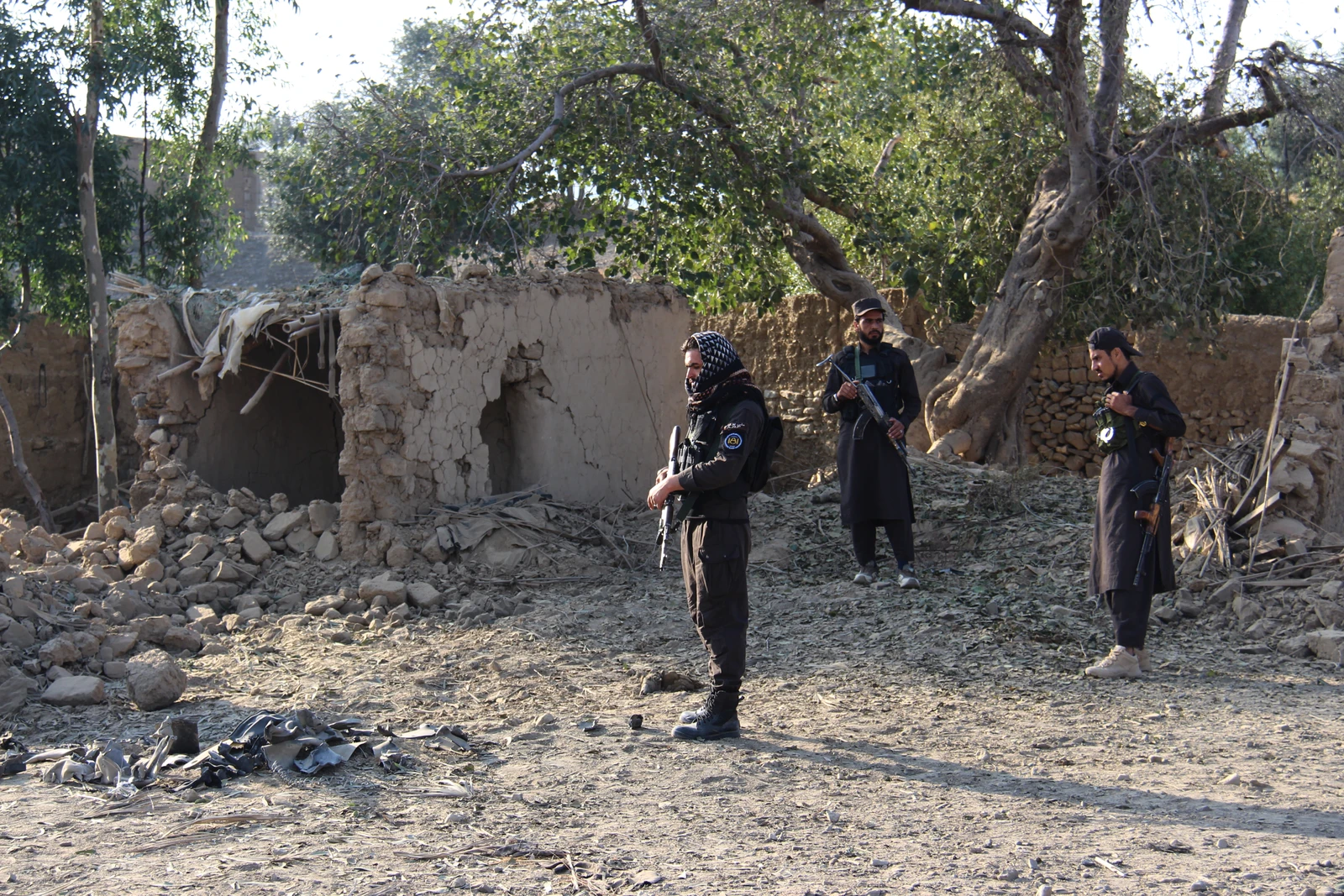
The participants backed efforts to reduce tensions between Afghanistan and Pakistan, which have been particularly strained, with border clashes between the two sides killing dozens of civilians, soldiers and suspected militants and wounding hundreds more.

The violence followed explosions in Kabul on Oct. 9 that Afghan authorities blamed on Pakistan. A Qatar-mediated ceasefire has largely held since October, although there have been limited border clashes. The two sides failed to reach an overall agreement in November despite three rounds of peace talks.

Asif Durrani, Pakistan’s former special representative for Afghanistan, said the Taliban government’s decision to skip the meeting reflected a “lack of political maturity.” 

Writing on X, Durrani said the move reinforced concerns that the Taliban were unwilling to negotiate, instead adopting an “I don’t accept” stance that he said would do little to resolve serious regional problems.

Mohammad Sadiq, the current Pakistani special representative for Afghanistan who attended the talks, wrote on X that the Afghan people had already suffered enough and deserved better.

Only an Afghanistan that does not harbor militants would inspire confidence among neighboring and regional countries to engage meaningfully with Kabul and help unlock the country’s economic and connectivity potential, he wrote.

Participants agreed to hold the next meeting of foreign ministers of Afghanistan’s neighboring countries as soon as possible in Ashgabat, Turkmenistan, and welcomed Pakistan’s offer to host the next round of special envoys’ talks in Islamabad in March.

Iran’s foreign ministry spokesman, Esmail Baghaei, on Sunday said that the meeting had not been held for about two years and marked the first such gathering attended by special envoys on Afghanistan from neighboring countries as well as Russia. Russia and Uzbekistan sent the special envoys of their presidents, while Pakistan was represented by a delegate from the prime minister’s office.

Landlocked Afghanistan is sandwiched between the Middle East, Central Asia, and South Asia, making it strategically located for energy-rich and energy-hungry nations.