

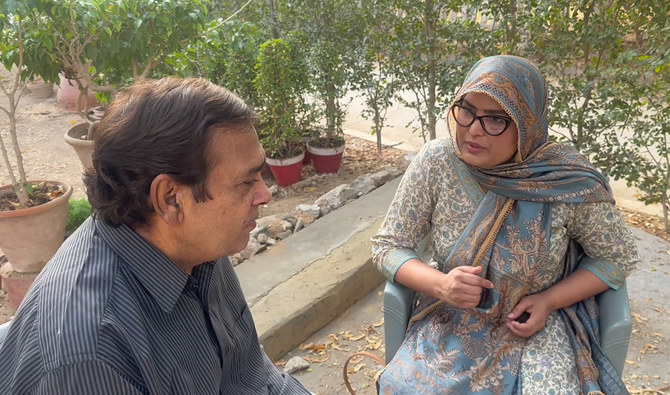

KARACHI: A young Christian woman said this week she would rebuild her life and career after winning a year-long legal battle with her husband for contracting a second marriage, in what is a rare case in Pakistan of someone from her community being punished for polygamy.
Many Christians believe marriage is a lifelong bond and consider contracting a second marriage while the spouse is alive a sin.
According to a copy of the police complaint registered by the woman, it was filed under Section 494 of the Pakistan Penal Code which addresses second marriages for Christians during a spouse’s lifetime without meeting specific requirements such as divorce. In Pakistan, the Christian Marriage Act 1872 and the Christian Divorce Act 1869 both forbid second marriages while the first contract is valid.
This is not the first time, however, though it is rare, that a Pakistani Christian man has been punished by a court for marrying for a second time while the wife was alive. Almost two decades ago, the Lahore High Court sentenced a man to four years in prison and a fine of Rs20,000 for a similar offense.
According to details of the latest case, Aster Younus, a marketing executive from Karachi, married Joshua Ilyas in December 2020 before accepting a job offer in Dubai with the consent of her husband and in-laws. She returned home for a cousin’s wedding a year later only to discover her husband had contracted a second marriage, against which she filed a case.
A judicial magistrate for Karachi’s District South on Dec. 9 handed Ilyas a three-year prison term and a fine of Rs20,000.
“We should never spoil our lives because of someone leaving,” Younus told Arab News.
“Instead, learn to live. I will restart my job [in Dubai as well].”
When Younus first found out about the second marriage, she consulted a pastor, Shafiq Kanwal, and spent the next three months gathering evidence while living with her husband. A police complaint was registered in June 2023 after which Younus moved the court against him, which handed Ilyas a sentence of three years in prison and a fine of Rs. 20,000 under Section 494 of the PPC for contracting an unlawful second marriage.
He was also sentenced to three years in jail and fined Rs5,000 each under the PPC’s Sections 468 and 471 for fraudulently creating another marriage certificate.
The jail terms will run concurrently and conclude with the completion of his three-year jail term.
“When the decision was made and the punishment was pronounced, it was very good news for me,” Younus said. “Because when I started this case, many people told me that I would face humiliation and waste my money.”
Her decision to pursue the case, she said, wasn’t solely about punishing her husband but also to encourage other women in her community to break their silence.
“When I raised my voice, believe me, other girls started calling me, saying, ‘We are facing the same issue, stand with us, help us too’,” she said, giving the example of two women who had sought her advice recently.
“Both of them said the lawyer they hired told them it was not a murder case where they should pursue punishment for the boy,” Younus said.
Pastor Kanwal said Christian law only allowed one marriage and contracting a second one while the first spouse was alive was thought to be a sin.
“When they [Younus and her family] first brought it into my knowledge, I told them ‘You take the stand, and we will send him behind bars’,” he said, adding that he had presented the religious point of view on the matter before the court.
“Today, the accused is behind bars.”
The pastor said it was now up to Younus if she wanted to continue her life afresh or go back to her husband.
“If he confesses to his sins and returns, my religion allows me to forgive him,” Younus said.
“In my religion, there is no concept of divorce, and my religion does not forbid me from forgiving. If he comes back into my life, I will definitely forgive him.”


