

Pakistan’s central bank to hold rates steady as inflation seen easing— poll

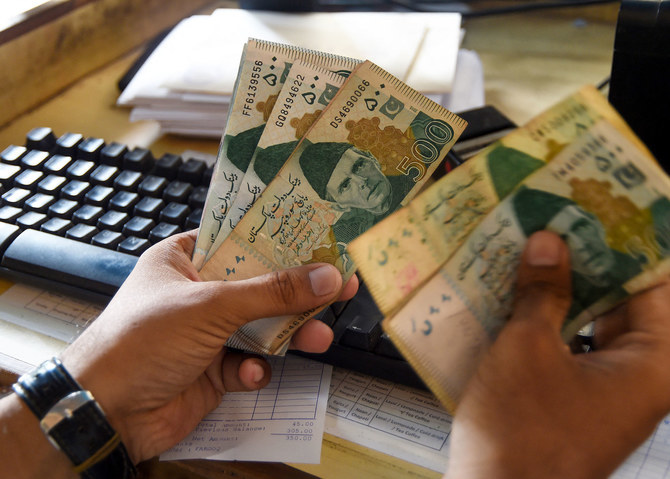
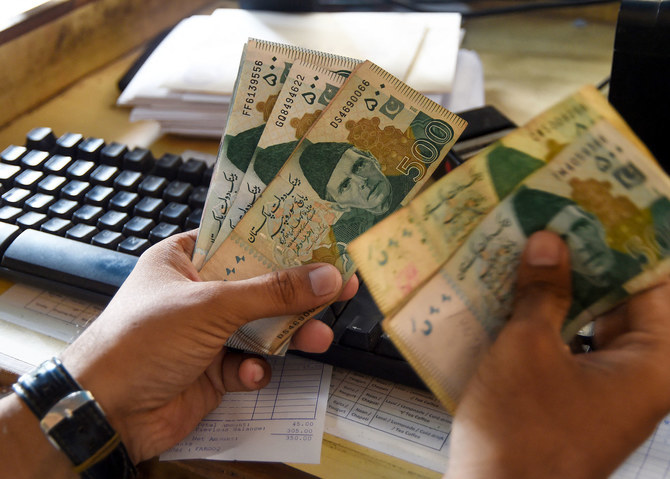
A Pakistani man counts Pakistan's rupees at his shop in Karachi on May 16, 2019. (AFP/File)
Short Url
Updated 11 December 2023
Follow

Pakistan’s central bank to hold rates steady as inflation seen easing— poll

  • State Bank of Pakistan is expected to announce its new monetary policy on Dec. 12
  • Median estimate in a Reuters poll of 12 analysts predicts no change in rates on Tuesday

KARACHI: Pakistan’s central bank is expected to hold its key rate steady at a fourth straight policy meeting on Tuesday, with inflation forecast to start easing in coming months paving the way for rate cuts to boost the economy, analysts said. 

The South Asian nation has embarked on a difficult path to economic recovery under a caretaker government after a $3 billion loan program was approved by the International Monetary Fund (IMF) in July that helped avert a sovereign debt default, but contained conditions that complicated efforts to curb inflation. Pakistan’s key rate was raised to an all-time high of 22 percent in June and has stayed unchanged for the last three rate meetings. 

The median estimate in a Reuters poll of 12 analysts predicts no change on Tuesday, with one analyst calling for a 100 basis point cut. The market consensus is for rates to start easing gradually in the first half of next year, depending on the trajectory of inflation.

“Inflation is still too high and negative real interest rates do not justify any easing at this point. Our trading partners like the US are already at positive real interest rates,” said Usman Zahid, director research at AKD Securities. 

Zahid said the 2.7 percent month-on-month jump in November inflation was due to the increase in gas prices among other things but annual inflation is likely to start easing from February 2024. Annual inflation clocked in at 29.2 percent in November, data from the Pakistan Bureau of Statistics (PBS) showed, a slight increase from October but well below a high of 38 percent in May. 

Investors have already priced in a peak in Pakistan interest rates and the expected successful completion of the IMF program has buoyed stock markets and the currency. Pakistan’s benchmark index crossed a psychological barrier of 66,000 points to trade at a new all-time high, up 4,532 points or 7.3 percent in the week ending Dec. 8, the highest ever weekly return in terms of points. 

“Stable currency, low current account deficit and likely fall in inflation in coming months may convince members of committee to adjust rates downwards,” said Mohammad Sohail, CEO of Topline Securities adding that he thinks the key rate could fall by 100 bps on Tuesday itself.


Rating firm S&P says it won’t rush Iran war downgrades, sees risks for countries like Pakistan

Updated 4 sec ago
Follow

Rating firm S&P says it won’t rush Iran war downgrades, sees risks for countries like Pakistan

  • Agency says it is monitoring indebted energy importers as higher oil prices strain finances
  • Gulf economies seen better placed to weather shock, though Bahrain flagged as vulnerable

LONDON: S&P Global ‌said it would not make any knee-jerk sovereign rating cuts following the outbreak of war in the ​Middle East, but warned on Thursday that soaring oil and gas prices were putting a number of already cash-strapped countries at risk.

The firm’s top analysts said in a webinar that the conflict, which has involved US and Israeli strikes ‌against Iran and Iranian ‌strikes against Israel, ​US ‌bases ⁠and Gulf ​states, ⁠was now moving from a low- to moderate-risk scenario.

Most Gulf countries had enough fiscal buffers, however, to weather the crisis for a while, with more lowly rated Bahrain the only clear exception.

Qatar’s banking sector could ⁠also struggle if there were significant ‌deposit outflows in ‌reaction to the conflict, although there ​was no evidence ‌of such strains at the moment, they ‌said.

“We don’t want to jump the gun and just say things are bad,” S&P’s head global sovereign analyst, Roberto Sifon-Arevalo, said.

The longer the crisis ‌was prolonged, though, “the more difficult it is going to be,” he ⁠added.

Sifon-Arevalo ⁠said Asia was the second-most exposed region, due to many of its countries being significant Gulf oil and gas importers.

India, Thailand and Indonesia have relatively lower reserves of oil, while the region also had already heavily indebted countries such as Pakistan, Bangladesh and Sri Lanka whose finances would be further hurt by rising energy prices.

“We ​are closely monitoring ​these (countries) to see how the credit stories evolve,” Sifon-Arevalo said.