




GAZA: Hamas said it was striking back against Israeli forces across Gaza on Monday and Palestinians and international relief agencies said public order was disintegrating as hunger spread, fueling fears of a mass exodus to Egypt.
The narrow coastal strip has been under a full Israeli blockade since the start of the conflict more than two months ago and the border with Egypt is the only other way out.
Most of Gaza’s 2.3 million people have been driven from their homes and residents say it is impossible to find refuge, or increasingly food, in the densely populated enclave, with around 18,000 people already killed and conflict intensifying.
Gazans said people forced to flee repeatedly were dying of hunger and cold as well as bombardment, describing desperate attacks on aid trucks and sky high prices.
“Had any of us expected that our people may die of hunger, had it crossed anyone’s mind before?” said Rola Ghanim, among many expressing bewilderment on social media.
Aid trucks risked being stopped by desperate residents if they even slowed down at an intersection, Carl Skau, said deputy executive director of the UN World Food Programme.
“Half of the population are starving, nine out of 10 are not eating every day,” he told Reuters on Saturday.
One Palestinian told Reuters he had not eaten for three days and had to beg for bread for his children.
“I pretend to be strong but I am afraid I will collapse in front of them at any moment,” he said by telephone, declining to be named for fear of reprisals.
After the collapse of a week-long cease-fire on Dec. 1, Israel began a ground offensive in the south last week and has since pushed from the east into the heart of the city of Khan Younis, with warplanes attacking an area to the west.
On Monday, militants and some residents said fighters were preventing Israeli tanks moving further west through the city and clashing with Israeli forces in northern Gaza, where Israel had said its tasks were largely complete.
Israel said dozens of Hamas fighters had surrendered and urged others to join them. The armed wing of Hamas said it had fired rockets toward Tel Aviv, where Israelis fled to shelters.
UN officials say 1.9 million people — 85 percent of Gaza’s population — are displaced and describe the conditions in the southern areas where they have concentrated as hellish.
“I expect public order to completely break down soon and an even worse situation could unfold including epidemic diseases and increased pressure for mass displacement into Egypt,” UN Secretary General Antonio Guterres said on Sunday.
ISRAEL DENIES SEEKING TO EMPTY GAZA
Philippe Lazzarini, the commissioner general of UNRWA, the UN body responsible for the welfare of Palestinian refugees, wrote on Saturday that pushing Gazans closer and closer to the border pointed to “attempts to move Palestinians into Egypt.”
The border with Egypt is heavily fortified, but Hamas militants blew holes in the wall in 2008 to break a tight blockade. Gazans crossed to buy food and other goods but quickly returned, with none permanently displaced.
Egypt has long warned it would not allow Gazans into its territory this time, fearing they would not be able to return.
Jordan, which absorbed the bulk of Palestinians after the creation of Israel in 1948, accused Israel on Sunday of seeking “to empty Gaza of its people.”
Israeli government spokesperson Eylon Levy called the accusation “outrageous and false,” saying his country was defending itself “from the monsters who perpetrated the Oct. 7 massacre” and bringing them to justice.
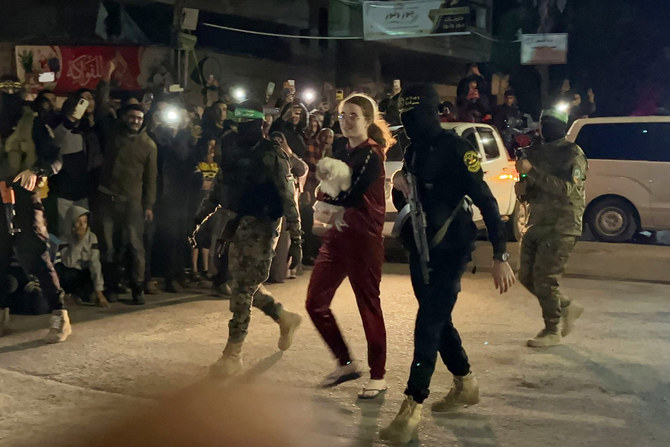
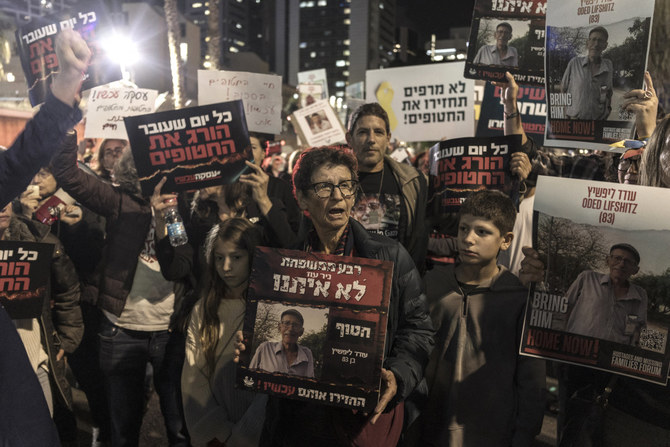
Hamas gunmen on Oct. 7 killed 1,200 people and took 240 hostage, according to Israeli tallies. About 100 hostages were freed during the truce, some with relatives left behind.
“I am petrified I will get bad news that he is no longer alive,” Sharon Alony-Cunio, released with her two little girls, told Reuters of her husband, who is still being held.
Israel has vowed to annihilate the militant Islamist group, which has ruled Gaza since 2007 and is sworn to Israel’s destruction.
Since Oct 7. at least 18,205 Palestinians have been killed in Gaza and 49,645 wounded, according to the Gaza health ministry. The toll no longer includes northern Gaza and many people there and elsewhere remain trapped under rubble.
Israel says the instructions to move are among measures to protect the population. It accuses militants from Hamas, which controls Gaza, of using civilians as human shields and stealing humanitarian aid, which Hamas denies.
The Israeli military accused Hamas of hiding weapons in UNRWA facilities in Jabalia and distributed video purporting to show Hamas gunmen beating people and taking aid in the Gaza City district of Shejaia.
Israel has prevented most aid from moving into Gaza, saying it fears it will just fuel Hamas attacks.
Government spokesman Eylon Levy said Israel was working to open the Kerem Shalom crossing which processed most aid before the war and blamed international agencies for holdups at the crossing from Egypt, which is designed for pedestrians.
In the Israeli-occupied West Bank and neighboring Jordan, most shops and businesses closed in response to Palestinian calls for a strike but the impact on Israel was unclear.
The Gaza health ministry said 32 Palestinians were killed in Khan Younis overnight. The armed wing of Hamas said it had hit two Israeli tanks with rockets and fired mortars at Israeli forces.
Militants and residents said fighting was also fierce in Shejaia, east of the center of Gaza City, the northwestern Sheikh Radwan district and Jabalia further north.
In central Gaza, where Israel told people to move on Monday toward “known shelters in the Deir Al-Balah area” health officials said the Shuhada Al-Aqsa hospital had received 40 dead.
Medics also said an Israeli air strike had killed four in a house in Rafah, one of two places near Egypt where Israel says Palestinians should take refuge.


