- Only one percent of land in the northern Pakistani region has been used for agriculture, according to the UNDP
- Officials say the move will ensure food security by helping farmers increase production of wheat, maize and potato
GILGIT: The government in Pakistan’s northern Gilgit-Baltistan region has signed an agreement with China’s Gansu province for the transfer of high-mountain agriculture technology and machinery to the mountainous region that will help local farmers increase their production of various crops, a GB agriculture official said on Saturday.
GB has not officially been part of Pakistan but forms part of the portion of disputed Kashmir that is administered by Pakistan. The region is Pakistan’s only land link to China and is at the heart of the $65 billion China-Pakistan Economic Corridor (CPEC) infrastructure development plan.
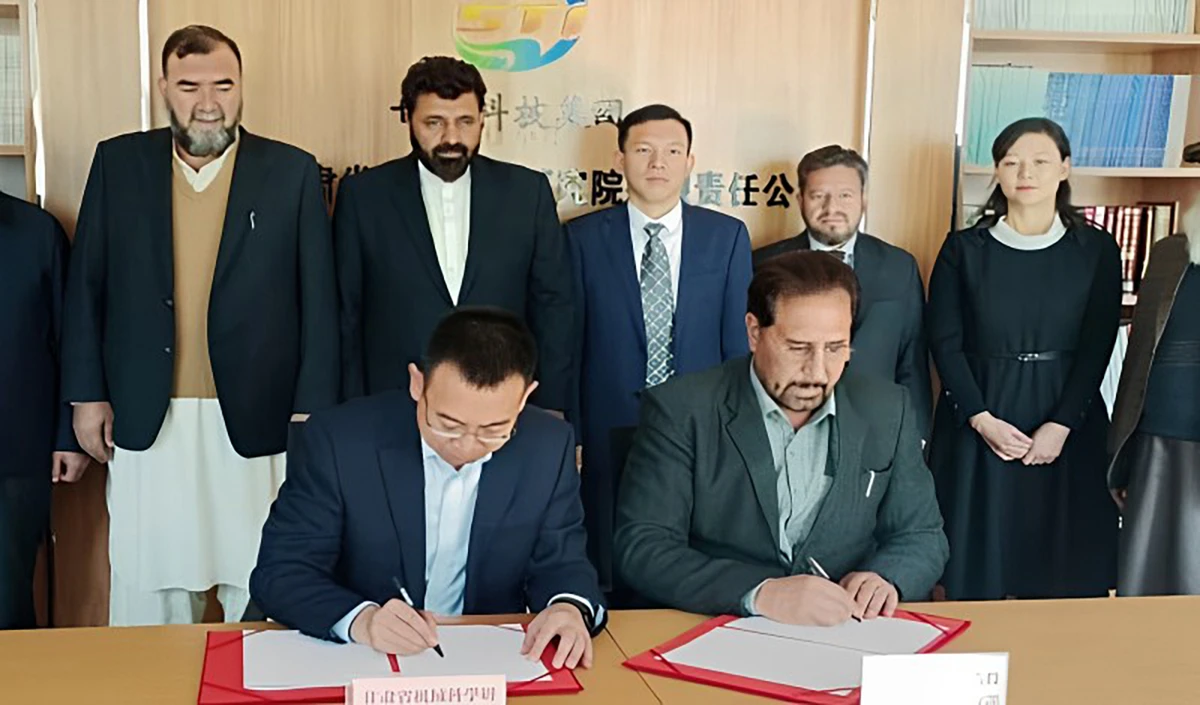
The Memorandum of Understanding (MoU) between the GB government and China’s Gansu province was signed on Friday during the visit of an eight member GB government delegation, led by GB Agriculture Minister Muhammad Anwar, to China’s Gansu province.
The transfer of technology will modernize the GB agriculture sector and help local farmer increase production of wheat, maize, potato and buckwheat, according to officials.
“The objective of the cooperation is to promote agriculture, food security, livestock and human development in Gilgit-Baltistan,” Khadim Hussain, a coordinator of the GB Economic Transformation Initiative who was also part of the delegation that visited Gansu, told Arab News.
“From the Chinese side, Gansu province is the center of the Belt and Road Initiative and Gilgit-Baltistan is the gateway of CPEC. So, to improve communication between these two regions, the Chinese government will help the government of Gilgit-Baltistan for the development of agriculture, food security, and human and livestock development.”
Hussain noted the geography and weather of China’s Gansu was quite similar to GB, which is home to five out of 14 world peaks above the height of 8,000 meters.
However, only one percent of GB land has been used for agriculture, according to the United Nations Development Programme (UNDP) and the GB agriculture department. The rest of nearly 72,000 square kilometers of administrative territory consists of 52 percent rangelands, four percent forests, while the remaining portion has mountains and barren land.
“Under this agreement, Gansu Agriculture and Mechanical Company will provide machinery to the [GB] agriculture department that could be used for sowing, harvesting and silage. The company will train local farmers in running the machines. They will also provide technical and vocational training to locals,” Hussain said.
“The cooperation will be boosted in the future and R&D (research and development) in the field of agriculture, livestock and fisheries will also be strengthened with the help of China.”
Ghulamullah Saqib, a deputy director at the GB agriculture department, described the move as a “good omen” for the region.
“The commitment of Gansu province to uplift the agriculture sector by transferring technology to GB is a good omen and welcoming thing,” Saqib told Arab News.
“Only two percent area of the whole GB is arable. Of which, farming is happening at only one percent and the rest one percent is facing a water crisis.”
The official said only one percent of agricultural land was not enough for the region, which was why the government had been purchasing wheat from the Pakistan Agricultural Storage & Services Corporation (PASSCO).
“GB can produce food for its population for two months only and if we do not pay attention to the agriculture sector and modern farming, we will have to face famine in future,” Saqib said.
“After this MoU, a ray of hope has emerged because it will help grow the agriculture sector in the region.”