

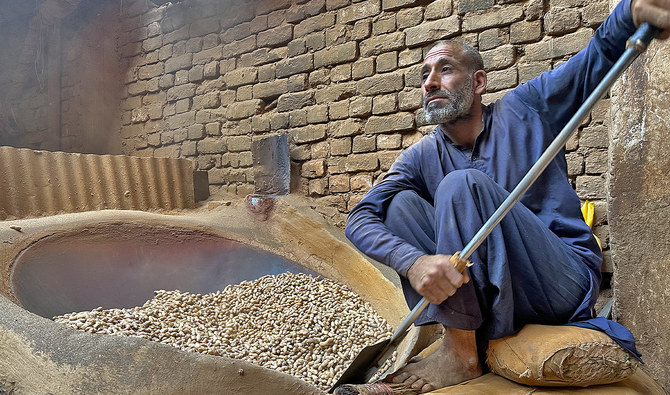

RAWALPINDI/ISLAMABAD: Abdul Hakeem Gilgiti used a stainless steel food shovel to scoop up a generous helping of peanuts from a large sack in front of him, poured them into a plastic shopping bag and handed it over to an eager customer.
The scene is from Rawalpindi’s famous Ganj Mandi Bazaar, where, like many other such markets in the Pakistani city, customers arrive in droves in the winter months to buy peanuts, known as moongphali in Urdu, which can be bought with or without the shell, as well as plain, roasted, or salted.
Peanuts are packed with essential nutrients, including protein, fiber, healthy fats, vitamins, and minerals, and during winter, when the body needs additional energy to stay warm, the nutrient density of peanuts makes them a valuable food choice.
There is no significant summer sale of peanuts, according to the trade union head at Gunj Mandi as well as owners of peanut processing units.
“The common man mostly buys peanuts in winters,” Gilgiti told Arab News as he served customers at his stall. “People who can afford it buy [more expensive dry fruits like] pinenuts, pistachio and cashew nuts.”
“This snack is not only affordable but also a favorite among children during the winter,” customer Muhammad Shahid Baig said as he cracked open some peanuts on his palm at the Ganj Mandi Bazaar. “It is a special gift of winter and although [we have other] dry fruit at home, peanuts are different.”
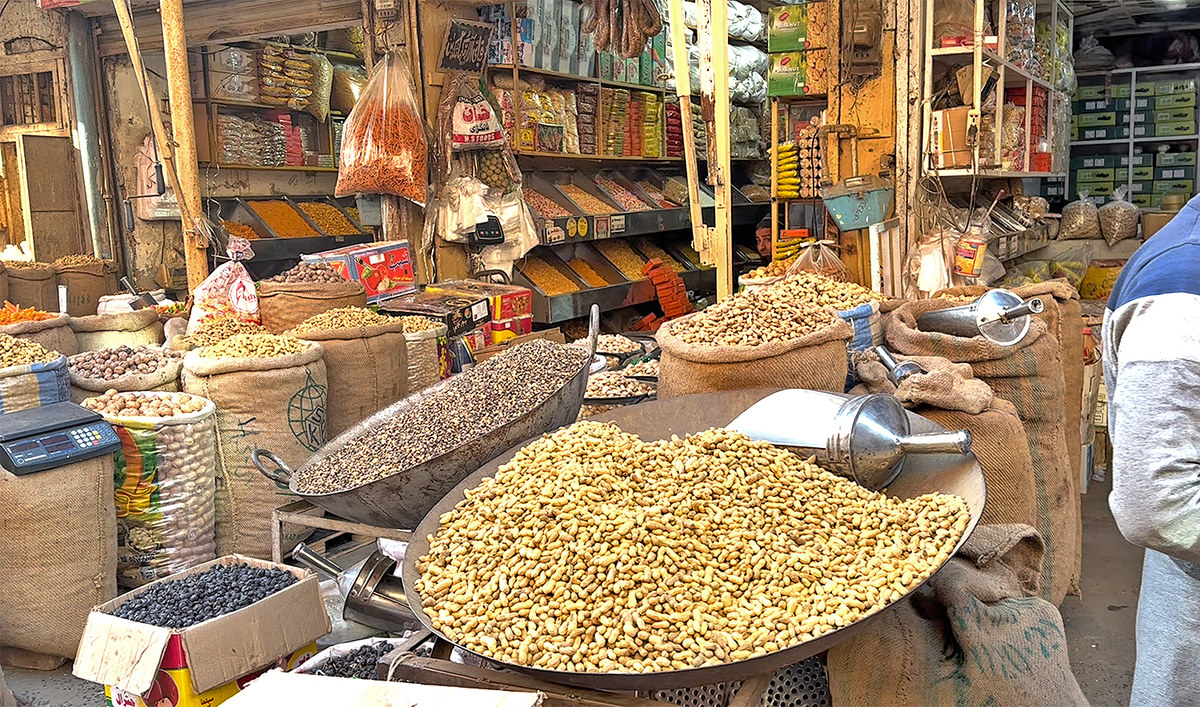
Different types of peanuts are pictured at a market in Rawalpindi, Pakistan, on December 4, 2023. (AN photo)
One difference is that peanuts are much cheaper compared to other nuts, with the price per kilogram ranging between Rs600-Rs800.
“I specifically came to this market for its reasonable prices and fresh quality,” Baig added.
Another customer, Shahbaz Ahmed, said peanuts were not just a snack but the “warm embrace” of Pakistani winters, especially during precious evening moments spent with family post-dinner.
“Peanuts are the heartbeat of winter for our family,” he told Arab News. “As we gather around, the warmth of these little treats not only brings joy to every member, but also provides us a chance to spend good family time together.”
Pakistan produced 144,000 tons of peanuts from 2021-2022 on 0.37 million acres of land, according to official data from Pakistan’s ministry of food security, a 68 percent growth over the past five years, fueled primarily by an expansion in cultivated land and farmers shifting to high-return crops amid challenging economic conditions.
Pakistan’s most populous Punjab province dominates in peanut production, contributing nearly 95 percent to the country’s total output of the nut.
Muhammad Usman, who owns a peanut processing unit in Rawalpindi, said he starts processing peanuts in September each year and continues until March.
“We deal with four to five types of peanuts, with one of the finest varieties originating from Gujar Khan,” said Usman, who also sources peanuts from the northwestern Pakistani town of Parachinar, southern city of Sukkur, and a few areas in Jhang in Punjab.
People from villages around the country, but mostly from the northern Azad Kashmir region, came to work at Usman’s processing unit during winters, where peanut roasting takes place both by hand and machine, he said.
“The traditional manual method which has existed for centuries results in a superior taste compared to the machine method,” Usman explained.
But inflation, which rose to record highs this year and still remains in the 30 percent range, has hit both customer sentiment and raised the worries of traders this winter, the peanut processor added.
“Inflation is very high these days, peanuts are not being sold the way they used to sell previously,” Usman said. “Now peanuts are also not affordable for everyone, it has also become expensive. Peanuts from Gujjar Khan cost Rs800 per kg ($2.81). Similarly, [peanuts] from Parachinar are also expensive.”
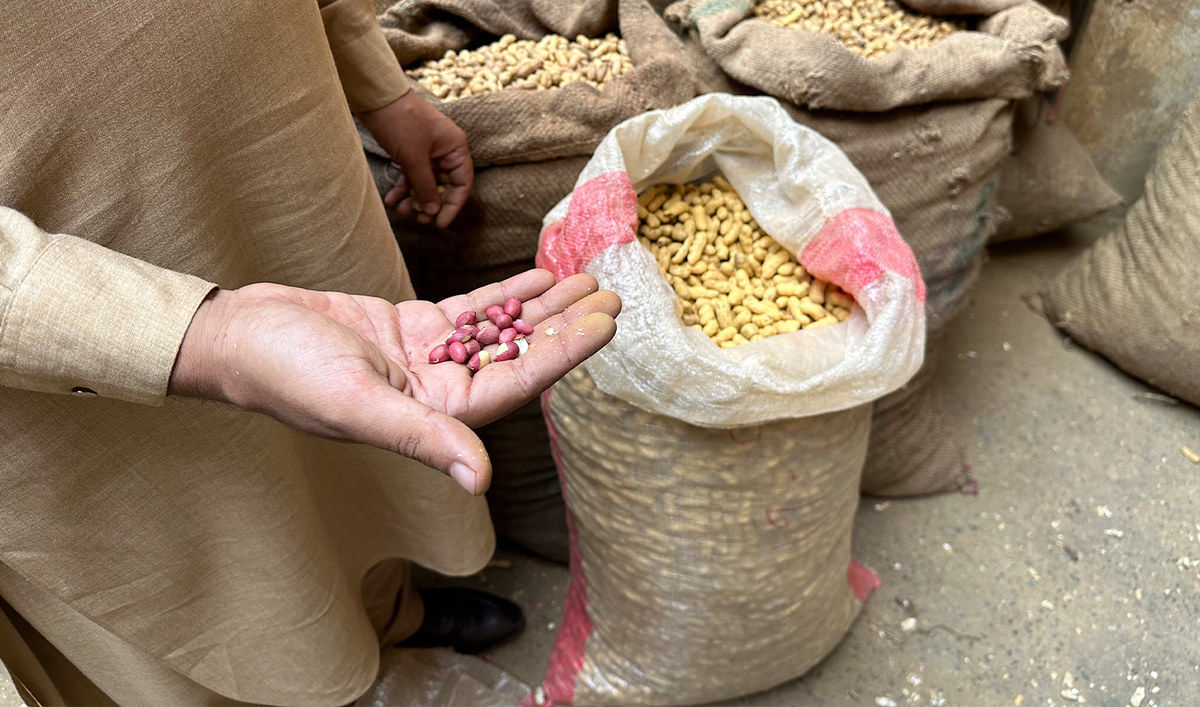
Muhammad Usman, a peanut processing owner, shows peanuts from Parachinar in Rawalpindi, Pakistan on December 8, 2023. (AN photo)
Mohammad Bilal Khan, who sells dry fruits in Ganj Mandi Bazaar, said locals and especially people traveling abroad came each year to buy peanuts during winters as gifts for friends and family members. This year, however, there were both fewer customers and lower sales.
“This year, prices are higher than before and sales are comparatively low due to reduced purchasing power caused by high inflation,” Khan lamented. “Right now, the common man cannot buy vegetables, let alone dry fruits.”
Muhammad Ramzan, a customer buying peanuts from a cart in Islamabad, said inflation had made even buying something as simple as peanuts feel like “heartache.”
“I came to buy for the first time this season on the persistent demand of my children,” he told Arab News.
“But it is not just tightening our budget, it is also taking away a piece of the comfort we used to find in these little winter moments.”


