

Pakistani PM tasks authorities to prepare emergency polio eradication plan for 2024 

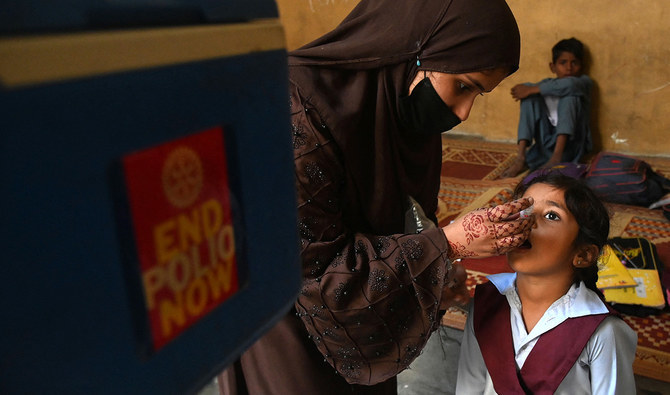
A health worker administers polio vaccine drops to a child during a vaccination campaign in Lahore on October 24, 2022. (AFP/File)
Short Url
Updated 06 December 2023
Follow

Pakistani PM tasks authorities to prepare emergency polio eradication plan for 2024 

  • Caretaker PM Anwaar-ul-Haq Kakar chairs high-level meeting of Pakistan’s task force on polio eradication 
  • PM notes recent cases of polio reported in Pakistan, calls for integrated anti-polio campaigns in high-risk areas 

ISLAMABAD: Caretaker Prime Minister Anwaar-ul-Haq Kakar tasked authorities on Wednesday to prepare an emergency polio eradication plan for the next year to target high-risk areas, the Prime Minister’s Office (PMO) said. 

Polio is a highly infectious disease caused by poliovirus mainly affecting children under the age of ten years. It invades the nervous system and can cause paralysis or even death. 

Pakistan and Afghanistan are the only two countries in the world where polio continues to threaten the health and well-being of children, with Pakistani authorities reporting six polio cases this year. 

Kakar chaired a meeting of Pakistan’s task force on polio eradication during which he stressed monitoring polio vaccination campaigns through technology, the PMO said in a statement. 

“The prime minister gave directions [to authorities] to prepare an anti-polio emergency plan for next year,” the statement said. 

Kakar called for the resumption of regular polio immunization campaigns across the country, emphasizing that best international practices and research be adopted for the use of Inactivated Polio Virus (IPV) vaccines. 

The prime minister said integrated anti-polio programs should be adopted in high-risk areas, the PMO said. Kakar said important stakeholders of Pakistani society such as parents, religious scholars and teachers should be included in polio awareness campaigns as well. 

He issued directions that a Ulema Convention should be held to shed light on the importance of the role of ulema in anti-polio campaigns, the statement added. 

Participants of the meeting were told polio teams are administering vaccines to children at Afghan repatriation camps in Peshawar, Nowshera, and Chaman cities. They were also briefed that Punjab, Balochistan, Azad Kashmir, and Gilgit-Baltistan were polio-free areas, whereas some union councils in southern Khyber Pakhtunkhwa province were more affected, the PMO said. 

Pakistan’s efforts to eradicate polio have encountered difficulties as many Pakistanis harbor suspicions about foreign entities that fund vaccination campaigns. Many believe in the conspiracy theory that polio vaccines are part of a plot by Western outsiders to sterilize Pakistan’s population. 

The masses’ doubts regarding polio campaigns were exacerbated in 2011 when the US Central Intelligence Agency set up a fake hepatitis vaccination program to gather intelligence on former Al-Qaeda chief Osama bin Laden. 


Amnesty urges Pakistan to halt deportations of Afghan refugees

Updated 4 sec ago
Follow

Amnesty urges Pakistan to halt deportations of Afghan refugees

  • Rights group’s letter to PM Sharif warns deportations violate non-refoulement, expose Afghans to abuse
  • Pakistan says it has hosted Afghans for decades with respect, denies mistreatment during repatriation

ISLAMABAD: Amnesty International has urged Pakistan to stop the detention and deportation of Afghan refugees, warning that mass expulsions could expose many to serious human rights violations, according to an open letter the group’s South Asia office posted on X on Friday.

The letter, dated Jan. 1, was addressed to Prime Minister Shehbaz Sharif and comes as Pakistan presses ahead with a multi-phase campaign to repatriate undocumented foreign nationals, most of whom are Afghans who fled decades of war and persecution.

“Amnesty International calls on the Pakistani authorities to halt the deportation of Afghan refugees and ensure that individuals with international protection needs are safeguarded as per international human rights law,” the organization said, warning that the policy violated the principle of non-refoulement, which prohibits returning people to countries where they risk serious abuse.

Amnesty said Pakistan had provided sanctuary to Afghan nationals for decades, but its policy has shifted sharply since the launch of the “Illegal Foreigners Repatriation Plan” in September 2023, describing it as potentially “one of the largest forcible returns of refugees in modern history,” which it said was marked by a lack of transparency, due process and accountability.

The rights group cited data from the United Nations High Commissioner for Refugees, saying arrests and detentions of Afghan refugees had increased tenfold last year, with more than 115,000 cases recorded. It said detainees often had little access to legal representation or family members, and that children were among those arrested.

According to the International Organization for Migration, nearly 1.5 million Afghans have returned since the deportation drive began, with almost half of those returns taking place in 2025 alone. Amnesty said deportations were frequently carried out swiftly, with limits imposed on the money and belongings refugees could take with them.

The group also warned that journalists, human rights defenders, women dissidents and former government officials were being deported despite heightened risks under Taliban rule in Afghanistan, where Amnesty has documented extrajudicial killings, arbitrary detention, torture and severe restrictions on women and girls.

Pakistan has not issued a response to the letter.

However, officials in Islamabad have previously said Pakistan has hosted Afghan nationals for decades with respect, sharing its resources despite limited international support. The Pakistan Foreign Office said last year that mechanisms were in place to ensure no one was mistreated or harassed during the repatriation process.

Pakistan has also claimed that Afghan nationals have remained involved in militancy and crime, though the mass expulsions are widely seen as an attempt to pressure Afghanistan’s Taliban authorities to curb cross-border militant attacks by armed factions targeting Pakistani forces, particularly in Khyber Pakhtunkhwa and Balochistan.

International organizations, including the UN refugee agency, have also urged Pakistan in the past to halt forced deportations and ensure that any returns are voluntary, gradual and dignified.