UAE’s non-oil activities steady as PMI hits 57 in November: S&P Global

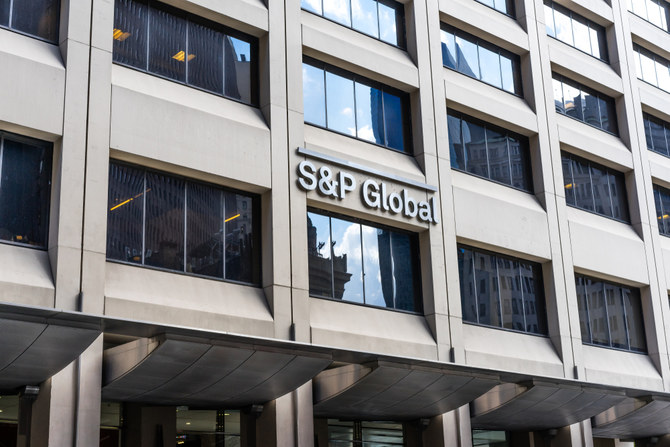
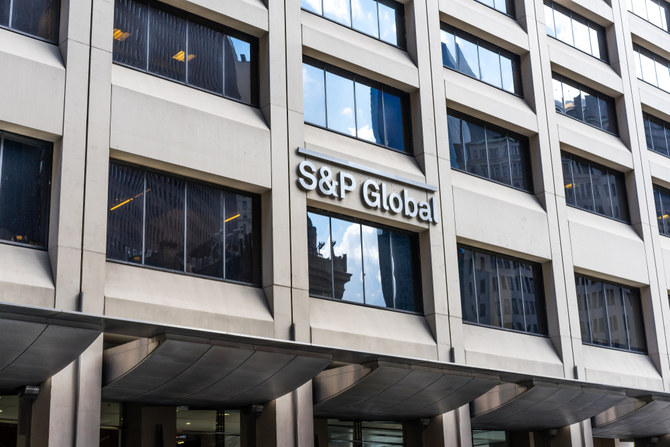
S&P Global added that sustained growth in new business also led to an acceleration in purchasing activity in November. Shutterstock.
Short Url
Updated 06 December 2023
Follow

UAE’s non-oil activities steady as PMI hits 57 in November: S&P Global

RIYADH: The growth of non-oil activities in the UAE was steady in November, driven by a sharp rise in new business inflows and efforts to rapidly replenish and build stocks in the face of healthy demand conditions, an economy tracker showed.  

The latest S&P Global Purchasing Managers’ Index report revealed that the UAE’s PMI hit 57 in November, slightly down from 57.7 in October.  

Despite this slight decline, the PMI of the Emirates remained well above the neutral threshold of 50, indicating a continued improvement in business conditions.  

David Owen, senior economist at S&P Global Market Intelligence, said: “The strong run of demand growth in the UAE non-oil economy sparked a rapid increase in input buying during November, as firms looked to ensure they were in a good position to take advantage of growth opportunities.”  

He added: “Indeed, the uplift in buying — the fastest since July 2019 — supported the most rapid build-up of stocks in close to six years, benefiting both local businesses and trade partners.” 

The report revealed that operating conditions for non-oil private firms improved rapidly midway through the final quarter, supported by strong trends for new business, output and inventories.  

S&P Global added that sustained growth in new business also led to an acceleration in purchasing activity in November. 

The report pointed out that overall cost inflation in November remained stronger than recent trends, but selling prices were largely stable.  

On the flip side, some companies that took part in the PMI survey expressed a clear drop in their confidence level about the future due to concerns about competitive pressures.  

Even though the expansion in total sales was one of the fastest seen in close to four-and-a-half years, it slowed markedly from October, as some firms noted greater competitive pressures and a softer rise in new export business.  

“Businesses were much less upbeat about the future path of activity, as some survey panellists reiterated concerns that a large number of firms are entering the market. The build-up of competition was likely a key factor behind stock-building efforts, with businesses wary of falling behind in a fast-growing economy,” explained Owen.  


G7 countries to release oil reserves as IEA agrees to largest ever market intervention

Updated 11 March 2026
Follow

G7 countries to release oil reserves as IEA agrees to largest ever market intervention

  • IEA recommends release of 400 million barrels

RIYADH: Germany, Japan and Austria will release part of their oil reserves after the International Energy Agency recommended the release of 400 million barrels of oil ‌from stockpiles, the largest ‌such move in IEA ​history.

In a statement, IEA Executive Director Fatih Birol said the flow of oil, gas and other commodities through the Strait of Hormuz have all but stopped, leading global energy supply to fall by around 20 percent.

Ahead of the confirmation of the move — a larger intervention than the 182.7 million barrels that were released in 2022 by in response to Russia’s invasion of Ukraine — several countries began setting out plans to bring their reserves into play as countries grapple with ​soaring crude prices amid ​the US-Israeli war with Iran. 

Birol said: “I can now announce that IEA countries have decided to launch the largest ever release of emergency oil stocks in our agency's history. 

“IEA countries will be making 400 million barrels of oil available to the market to offset the supply lost through the effective closure of the strait.

“This is a major action aiming to alleviate the immediate impacts of the disruption in markets.”

Germany’s Economy ⁠Minister ​Katherina Reiche ⁠confirmed on Wednesday her government plans to limit petrol price increases at filling stations to once a day and to introduce more stringent antitrust regulation of the sector.

She did not ⁠give an exact timing for ‌those measures, but added that ‌the US and ​Japan would be the ‌largest contributors to the release of the ‌oil reserves.

The US has not confirmed it would do so, but its Interior Secretary Doug Burgum told Fox News on Wednesday that “these are the kinds of moments that these reserves are used for.”

The announcements did not stop oil prices rising, with Brent crude up 3.26 percent to $90.66 a barrel at 4:29 p.m Saudi time, and West Texas Intermediate up 3.12 percent to $86.05. Both were some way below the $119 a barrel seen earlier in the week.

“The situation regarding oil supplies is tense, as the Strait of Hormuz is currently virtually impassable,” Germany’s Reiche said.

“We will comply with this request and ‌contribute our share, because Germany stands behind the IEA’s most important principle: mutual ⁠solidarity,” Reiche ⁠said about the IEA’s request.

According to a statement by Reiche’s ministry, Germany will contribute 2.64 million tonnes of oil. This corresponds to 19.51 million barrels.

Reiche stressed there was no supply shortage in the country, which has a legally mandated reserve of oil and oil products intended to cover 90 days’ demand.

South Korea will release 22.46 million ​barrels of oil, which represents 5.6 percent of the total IEA ask, the ⁠country's industry ministry said.

“The government will consult with the IEA ⁠secretariat on details, such ‌as ‌the ​timing ‌and amount, from ‌the perspective of national interests in accordance with domestic conditions,” ‌the ministry said in a statement.

The ⁠ministry ⁠said it would continue to coordinate closely with major countries in responding to high oil prices to minimise any domestic ​impact.

Austrian Economy Minister Wolfgang Hattmannsdorfer said his country was releasing part of the emergency oil reserve and extending the national strategic gas reserve, adding: “One thing is clear: in a crisis, there must be no crisis winners at the expense of commuters and businesses.”

Acting ahead of the IEA move, G7 ​member Japan announced plans to release 15 days' worth of ‌private-sector oil reserves and one month's worth of state oil reserves.

“Rather than wait for formal IEA approval ‌of a coordinated international reserve release, Japan will act first to ease global energy market supply and demand, releasing reserves as early as the 16th of this month,” Prime Minister Sanae Takaichi said in a broadcast statement.

Following a meeting with the IEA on Wednesday, G7 energy ministers said: “In principle, we support the implementation of proactive measures to address the situation, including the use of strategic reserves.”

All IEA member countries are required to keep 90 days’ worth of their nation’s oil use in reserve in case of global disruption.