- Pakistan imported more than 31,000 metric tons of dry fruit worth $17.74 million between July-Oct. 2023
- Demand for dry fruit booms in Balochistan in winters, key trade route with neighbors Iran and Afghanistan
QUETTA: Bashir Ahmed always waits for winters to start, knowing it will drive customers to his dry fruit shop in the southwestern Pakistani city of Quetta.
As the cold weather sets in, demand for dry fruit, which is believed to keep the body warm and strengthen immunity against common winter diseases, booms across Pakistan but especially in bitterly cold Balochistan, a key trade route with neighboring Afghanistan and Iran, from where much of the dry fruit is imported.
Customers also throng to Ahmed’s shop on Quetta’s bustling Tola Ram Road market in winters, hoping to buy a range of dry fruits including almonds, pistachios, cashews, figs, raisins, walnuts, and salted seeds, sourced both locally and from other countries.
According to the Pakistan Bureau of Statistic (PBS), Pakistan imported more than 31,000 metric tons of dry fruits worth Rs5 billion ($17.745 million) between July-Oct. 2023. The imports come primarily from Iran, Afghanistan, Indonesia, Montenegro and Philippines.
“Every winter season, people from Sindh, Punjab and Khyber Pakhtunkhwa [provinces] come to this market to buy dry fruit and we welcome these customers by offering them quality merchandise to taste,” Ahmed told Arab News, as he handed a bag of nuts to a customer.
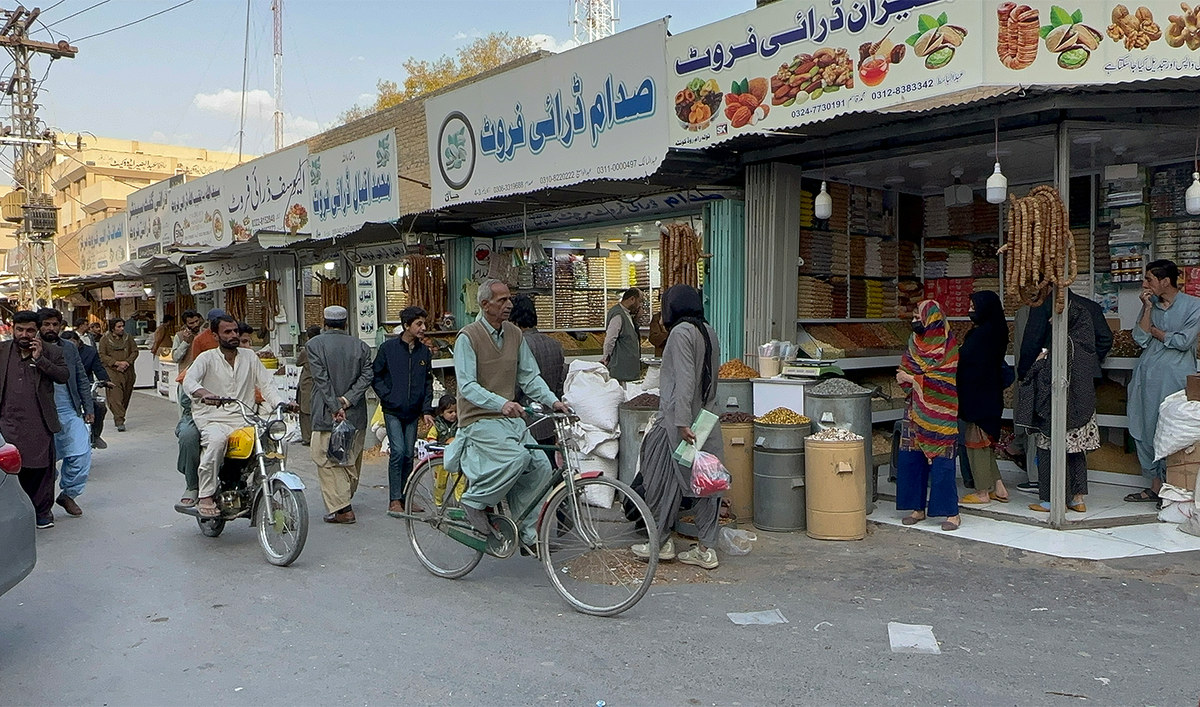
He said the market sold eight different types of almonds and two varieties of figs.
High-quality almonds, imported from Afghanistan, were sold at the market for Rs2,600 ($9.15) per kilogram. Local dealers also brought in two special varieties of cashews from India and Vietnam, priced at Rs2,900 ($10.21) per kilogram.
“We have been importing seven types of pistachios from Iran, but Akbari, Ahmadghai and Doda pistachios have a very special taste which we have been selling at Rs3,600 [$12.67] per kilogram,” Ahmed said.
Dry fruits and nuts are high in fat, which produces heat in the body, and provide energy, protein, vitamins, and essential nutrients, thus making them a winter essential in Balochistan, especially in the freezing temperatures of December and January.
“In Quetta’s sub-zero temperatures, the human body needs warmth, and almonds, cashews, and other dry fruits help maintain it,” Fahad Shahzad, a 39-year-old customer, said.
But inflation, which rose to record highs this year in Pakistan, and still remains in the 30 percent range, has hit customer sentiment and raised the worries of traders.
Customer Ehsan Ilahi, a professor, lamented the rising prices of dry fruits but emphasized their importance in the diet, especially for older citizens, due to their disease-preventing properties and ability to keep the body and mind fresh.
“The prices of dry fruits have skyrocketed, but everyone should consume these healthy nuts if they can within their financial means,” he said, “as each type, be it cashew, pistachio, walnut, almond or fig, has significant health benefits.”
Bismillah Khan, 50, whose family has been linked with the dry fruit business for the last fifty years, said he was worried about the increasing prices of dry fruit in the global markets.
“For this season the price of dry fruit items [locally] has risen up to 50 to 80 percent,” he said, “Hence the majority of ordinary citizens can’t afford to eat the healthy, fat nuts.”