KARACHI: Pakistani industrialists in the country’s commercial capital of Karachi switched off their production facilities on Monday to protest about 100 percent rise in gas tariffs, resulting in an estimated $48 million loss to the country’s export earnings.
The government announced a sharp increase in the price of natural gas for most households and industries in October this year to meet a key condition imposed by the International Monetary Fund (IMF) ahead of its first review under a $3 billion bailout program.
Gas tariffs for industry have been raised by about Rs2,600 per metric million British thermal unit (mmbtu), which industry leaders say should be brought down to Rs1,350.
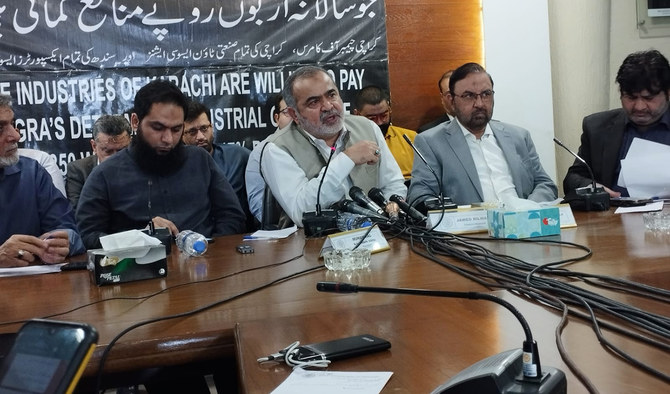
“Nearly 80 to 90 percent industries in Sindh and Balochistan have shut down operations in response to a strike call given to protest the unviable gas tariffs,” Jawed Bilwani, Chief Coordinator of Karachi Industrial Alliance (KIA), told Arab News on Monday.
He said the industrial shutdown in the two provinces was likely to make the country suffer about $48 million losses due to a reduction in exports.
The KIA chief coordinator said the gas tariff hike, ranging from 100 to 130 percent, was driving industries to collapse.
“Some of the industries have been closed while others are on the verge of collapse,” Bilwani said, adding that over 100 percent tariff hike was making Pakistan’s “industrial production unviable and uncompetitive in the international market.”
“The government says this step [to raise gas tariffs] is to curtail circular debt,” he continued. “But neither our industries are responsible for this debt nor they are contributing to it.”
Local industrialists noted the government was charging them to pay subsidies to other sectors. They also pointed out that energy line losses were far higher when it came to domestic consumers than industries.
“Nowhere in the world, export-oriented industries are burdened with cross-subsidy to benefit other sectors,” Bilwani said. “But this is happening in Pakistan.”
Pakistan’s energy woes stem from its fast-depleting local gas reserves at a pace of five to seven percent annually, making the country rely on expensive imported fuel as a result.
Inadequate gas pricing during the tenure of previous governments dented the national exchequer and created a circular debt stock of Rs2.1 trillion without including interest, according to a note released by the Oil and Gas Regulatory Authority (OGRA) earlier this month.
Pakistan is 71.3 percent self-sufficient in natural gas production, with annual average daily consumption of 4,100 mmcfd and production of 2,923 mmcfd.
The country previously raised gas tariffs in January – its first increase in the last 2.5 years – that resulted in an increase of Rs461 billion during the last fiscal year.
OGRA says if the caretaker administration of the country does not proceed to increase prices and fund the RLNG diversion to domestic segment in the absence of subsidies, there shall be a further addition in circular debt of about Rs400 billion ($1.42 billion).
The caretaker commerce minister and ministry of energy did not respond to requests for comments until the filing of this story.


![]()

Pakistani industrialists halt production to protest gas tariff hike, causing $48 million export loss
Short Url
https://arab.news/vxda7
Pakistani industrialists halt production to protest gas tariff hike, causing $48 million export loss
- The government raised gas tariffs between 100 to 130 percent ahead of the IMF review in November
- Representative of a local industrial alliance says the decision is making Pakistani products uncompetitive
Latest updates


© 2026 SAUDI RESEARCH & PUBLISHING COMPANY, All Rights Reserved And subject to Terms of Use Agreement.