

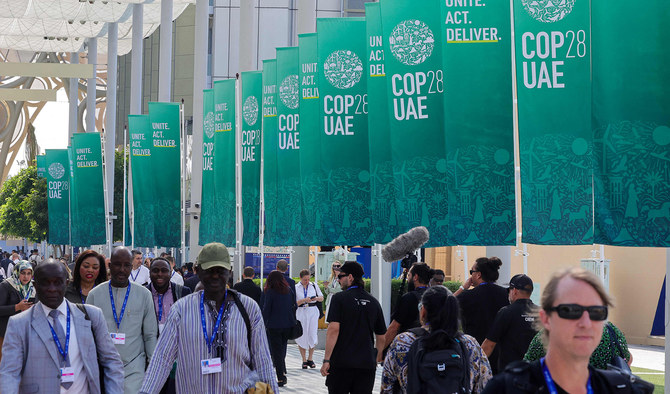

DUBAI: Physicians, activists and country representatives at this year's COP28 U.N. climate summit in Dubai have called for greater global efforts to protect people from the increasing health and safety risks posed by climate change.
With global temperatures set to continue climbing for decades, experts say countries will need to boost funding for healthcare as heatwaves become more dangerous and diseases like malaria and cholera spread.
Climate-related impacts "have become one of the greatest threats to human health in the 21st century", COP28 President Sultan Ahmed Al-Jaber said in a statement.
Late on Saturday, 123 of the nearly 200 countries gathered at COP28 signed a declaration acknowledging their responsibility to keep people safe. The declaration made no mention of fossil fuels, the main source of climate-warming emissions.
Thanks to climate change, cases of malnutrition, malaria, diarrhoea and heat stress are already on the rise in some regions.
A small group of physicians in white coats and climate activists held a small demonstration within the COP28 compound to raise awareness of the issue on Sunday.
"We are in a lot of trouble," said Joseph Vipond, an emergency physician from Alberta, Canada. He recalled the case of a child dying from an asthma attack made worse by smoke inhalation from Western Canada's record wildfires this year. "This is having real world impacts."
Climate change is also increasing the frequency of dangerous storms and more erratic rainfall.
In September Storm Daniel killed more than 11,000 people in Libya, and last year's massive flooding in Pakistan fueled a 400% increase in malaria cases across the country, according to the World Health Organization.
Governments and philanthropic bodies are expected later on Sunday to announce new financing for climate-related health issues.
The World Bank on Sunday launched a new Climate and Health program to explore possible interventions and public health solutions for developing countries.
Ten of the world's top development banks including the World Bank also said on Sunday they would work together to help countries track climate impacts, including public health risks, and to identify investment opportunities and priorities.
In a statement, the banks said the window of opportunity to secure a liveable planet was "rapidly closing".
Microsoft co-founder turned philanthropist Bill Gates said scientists were working on new treatments for and prevention of mosquito-spread malaria as the rise in temperatures creates more hospitable habitat for the insects to breed.
"We have new tools at the lab level that decimate mosquito populations," said Gates, whose foundation supports public health research and projects for the developing world.
"These new innovations give us a chance, at a reasonable cost, to make progress."
Former U.S. Secretary of State Hillary Clinton also spoke on Sunday at COP28, urging reform to the world's insurance system as another key requirement to keep people safe.
"Right now insurance companies are pulling out of so many places, they're not insuring homes, they're not insuring businesses," Clinton said, addressing a panel on women and climate resiliency
"As the climate changes, as storms increase and drought and heat increase ... it's people everywhere who are going to be left out with no backup, no insurance for their business or their home," she said.


