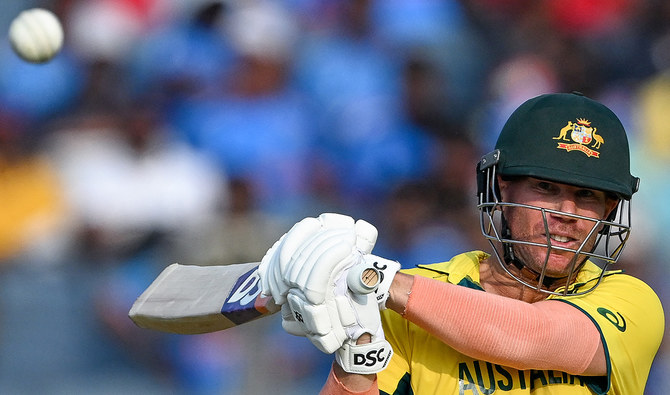
SYDNEY: David Warner has been handed the chance of a hoped-for Sydney Cricket Ground farewell after being named in Australia’s squad for the first of three home tests against Pakistan.
The squad named Sunday, which includes the 37-year-old opener, is only for the first test at Perth from Dec. 14-19.
If he holds his place for the second test at the Melbourne Cricket Ground starting on Boxing Day, Warner will be in line for his dream farewell on his home ground in Sydney from Jan. 3 to 7.
Warner’s recent test form has been mixed and he has averaged 28 in test matches since the summer of 2019 when he made a triple century against Pakistan at Adelaide. He has made clear his wish to end his Baggy Green career at Sydney while continuing to play for Australia in white ball cricket.
Warner will start the summer opening the batting with Usman Khawaja while opener candidates Cameron Bancroft, Matt Renshaw and Marcus Harris will have a chance to stake their claims with the Prime Minister’s XI which plays Pakistan at Canberra from Dec. 6 to 9.
Fast bowler Lance Morris is closer to a test debut after being recalled to the 14-man squad. Cameron Green also returns after previously losing his test spot to Mitch Marsh and Alex Carey has been named wicketkeeper after losing that role at the recent one-day World Cup.
Spinner Nathan Lyon is back after recovering from a calf injury which ruled him out of the latter stages of the Ashes series. He replaces Todd Murphy.
Chairman of selectors George Bailey said the incumbents had earned the opportunity to play the first test of the summer after an outstanding winter in which Australia won the World Test Championship and retained the Ashes.
“Thirteen members of the squad were part of the victorious World Test Championship and successful Ashes tours over the winter and Lance Morris has been recalled after recovering from his back injury over the same period,” Bailey said.
“As ever, there will be opportunities in the short to medium term to break into this squad and we look forward to seeing the continued strong performances from players who have been performing domestically, many of whom will get a tremendous opportunity in the PM’s XI fixture against Pakistan later this week.”
Morris has taken 11 wickets at 25.5 in three Sheffield Shield matches for West Australia since returning from the back injury which ruled him out of the Ashes.
Warner’s decision to publicly announce his hope for a Sydney finish was met with strong criticism from his former Australia teammate, fast bowler Mitchell Johnson.
In a column Sunday in the West Australian newspaper, Johnson took issue with Warner.
“As we prepare for David Warner’s farewell series, can somebody please tell me why?” Johnson wrote. “Why a struggling test opener gets to nominate his own retirement date.
“And why a player at the center of one of the biggest scandals in Australian cricket history warrants a hero’s send-off?”
Johnson made reference to the Sandpapergate ball-tampering scandal involving the Australia team in South Africa in 2018. Warner received a 12-month ban for his role in the scandal.
“Although Warner wasn’t alone in Sandpapergate, he was at the time a senior member of the team and someone who liked to use his perceived power as a “leader,” Johnson wrote. “Now the way he is going out is underpinned by more of the same arrogance and disrespect to our country.”


![]()

Despite criticism, David Warner named in Australia squad for first Pakistan test
Short Url
https://arab.news/rn2tw
Despite criticism, David Warner named in Australia squad for first Pakistan test
- Warner wants to end his career at Sydney, his home ground, while continuing to play white ball cricket
- Pakistan are scheduled to play against the Prime Minister’s XI at Canberra between December 6 and 9
Latest updates


© 2026 SAUDI RESEARCH & PUBLISHING COMPANY, All Rights Reserved And subject to Terms of Use Agreement.