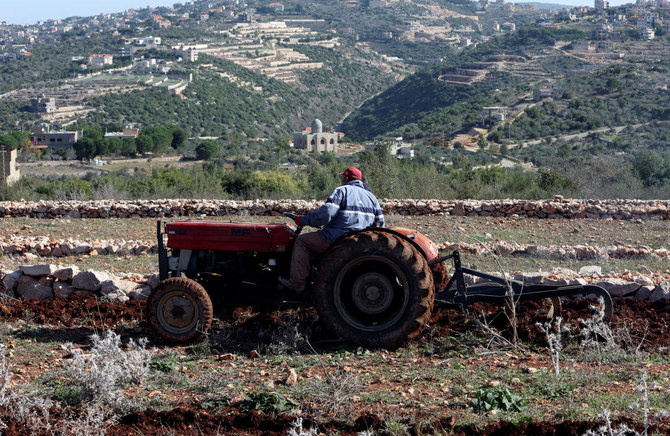
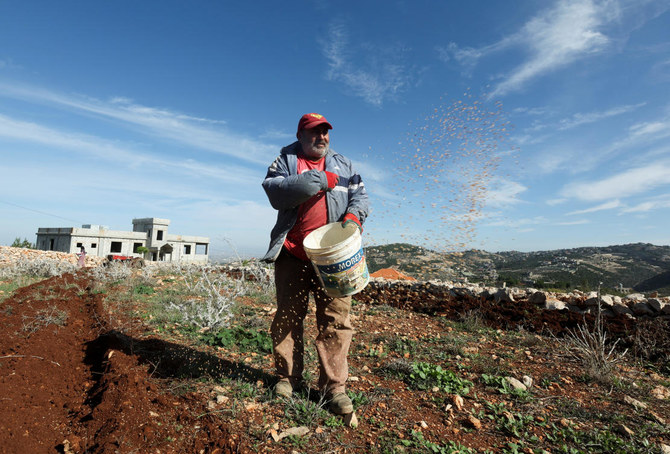
YATER, Lebanon: Villagers who live off the land in south Lebanon are rushing to sow their crops, making up for lost time after weeks of hostilities with Israel forced them to miss out on the start of the planting season.
“I work from this, I produce from this, I live from this,” Zaynab Suweidan said as she sowed wheat in the village of Yater, in an area hit by Israeli strikes during heavy exchanges of fire with Lebanon’s Hezbollah.
After enduring its worst violence since a 2006 war, the area has been largely calm since Friday, when Israel and the Palestinian group Hamas agreed a temporary truce to the conflict they have been waging some 200km (120 miles) away in and around Gaza.
That war, which erupted on Oct. 7, quickly spilled into Lebanon, with the Iran-backed Hezbollah rocketing Israeli positions at the border and Israel launching air and artillery strikes in response.
Israel and Hamas agreed to extend the truce by one day on Thursday, bringing a seventh day of respite.
As a drone buzzed in the sky above her, Suweidan said she had stayed in her home throughout the hostilities even after it sustained some damage.
“Shelling has happened around us and planes launched two strikes near us, and we stayed in our house and we didn’t leave. We want to stay steadfast,” she said.
The crops should have been planted at the start of November, but she hoped the delay would not affect the yield: “Through God’s power, everything will be fine.”
Farming their land has become even more important for many in Lebanon since the economy there collapsed in a devastating financial meltdown more than four years ago.
Mousa Kawrani, a 55-year-old father of four who was planting wheat, beans and peas, said people needed to farm because they could not afford to buy everything they needed.
“We must farm. We cannot remain without farming.”


![]()
![]()
![]()

Lebanese rush to plant crops as calm prevails in south

Short Url
https://arab.news/ruc9f
Lebanese rush to plant crops as calm prevails in south
- “I work from this, I produce from this, I live from this,” Zaynab Suweidan said as she sowed wheat in the village of Yater
- The crops should have been planted at the start of November


Latest updates


© 2026 SAUDI RESEARCH & PUBLISHING COMPANY, All Rights Reserved And subject to Terms of Use Agreement.