Pakistan’s central bank announces extension of $3 billion Saudi deposit for another year

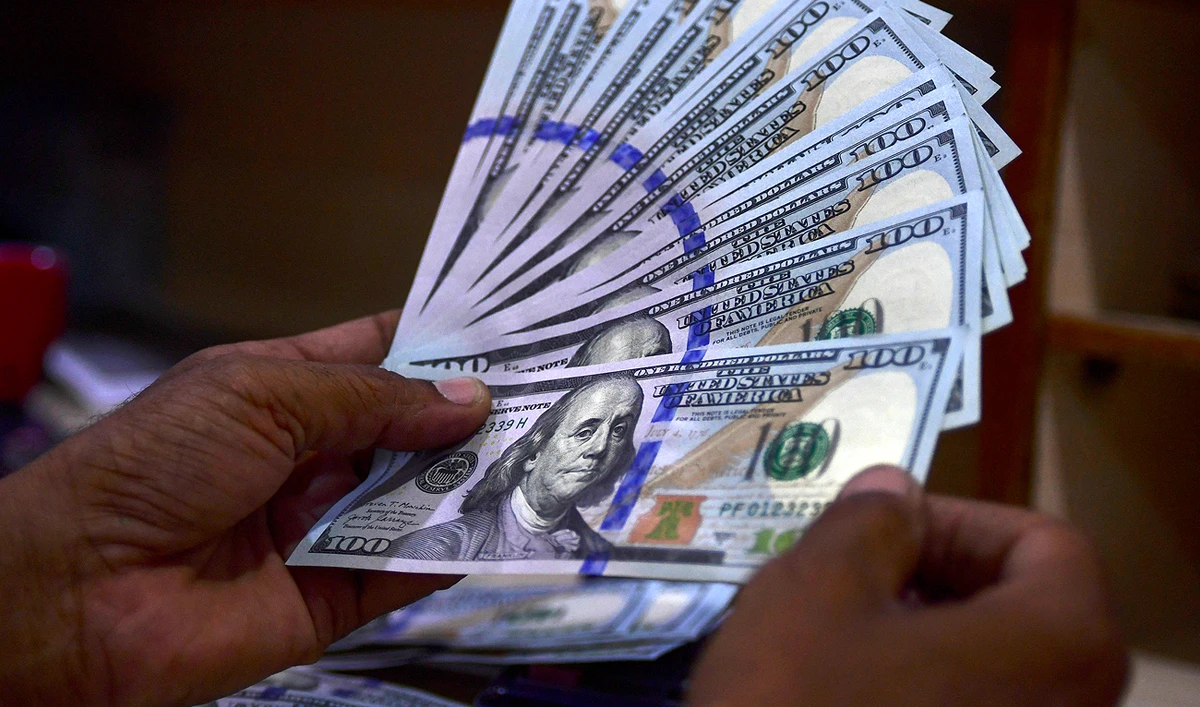
A foreign currency dealer counts US dollar notes at a currency market in Karachi on July 19, 2022. (AFP/File)
Short Url
Updated 30 November 2023
Follow

Pakistan’s central bank announces extension of $3 billion Saudi deposit for another year

  • Saudis extended the financial support in November 2021 under an agreement with State Bank of Pakistan
  • The deposit’s rollover is expected to help Pakistan with its gross financing needs in the current fiscal year

ISLAMABAD: Pakistan’s central bank on Wednesday announced the Saudi decision to extend the term of a $3 billion deposit for yet another year to help the economy of the South Asian state which has been striving for increased foreign investment.

The Saudi authorities extended the financial support in November 2021 under an agreement signed between the State Bank of Pakistan (SBP) and the Saudi Fund for Development (SFD) to support Pakistan’s dwindling foreign exchange reserves.

The SBP also announced the deposit’s extension last year, saying that Saudi Arabia had agreed to continue its financial assistance to Pakistan.

“The Saudi Fund for Development (SFD) on behalf of the Kingdom of Saudi Arabia has extended the term for the deposit of USD 3 billion maturing on 05 December 2023 for another one year,” the central bank said in a brief statement.

“The extension of the term of the deposit is a continuation of the support provided by the Kingdom of Saudi Arabia to the Islamic Republic of Pakistan, which will help to maintain the foreign currency reserves of Pakistan and contribute to the economic growth of the country,” it added.

The announcement comes at a time when Pakistan’s interim Prime Minister Anwaar-ul-Haq Kakar is on a week-long visit to the Gulf region where the country has signed multibillion-dollar deals with the United Arab Emirates and Kuwait.

Earlier this year, Pakistan managed to secure a short-term loan from the International Monetary Fund (IMF) amounting to $3 billion in a move that was widely viewed as an attempt to stave off sovereign debt default.

The international lender recently conducted the country’s economic review under the same facility and is likely to release the next tranche of $700 million in December.

The IMF has also raised concerns about Pakistan’s external financing.

The Saudi decision to extend the term of its deposit with the SBP is likely to help Pakistan’s economy in the same context.

“The $3 billion rollover is an important move in securing $25 billion in gross financing needs estimated by Pakistan for FY-24,” former adviser to the finance ministry, Khaqan Najeeb, explained the significance of the development while speaking to Geo News.

Pakistan’s Mahnoor Omer named among TIME’s ‘Women of the Year’ for 2026

Updated 01 March 2026
Follow

Pakistan’s Mahnoor Omer named among TIME’s ‘Women of the Year’ for 2026

  • Omer moved a Pakistani court against the so-called ‘period tax’ in Sept. 2025 which has since sparked a national debate
  • Taxes on sanitary pads in Pakistan can add up to 40 percent to retail price, UNICEF says only around 12 percent women use such products

ISLAMABAD: Pakistani women’s rights activist Mahnoor Omer, who fought against taxes on menstrual products, has been named among the TIME magazine’s ‘Women of the Year’ for 2026.

Omer’s efforts have been recognized alongside 16 activists, artists, athletes and businesswomen in the TIME’s Women of the Year 2026 list, including Olympic gold medalist Sydney McLaughlin-Levrone and Oscar-nominated filmmaker Chloe Zhao.

Dissatisfied with the efforts to educate Pakistani girls about sexual violence, Omer founded the Noor Foundation at the age of 14 and held her own workshops with village girls about everything from climate change to menstruation, according to the TIME magazine.

Two years later, a conversation with a domestic worker about the price of pads made her realize that not everyone could afford these essentials. She moved a court against the so-called “period tax” in Sept. 2025 and the case has sparked a national debate on the subject, considered a taboo by many in Pakistan, since its first hearing late last year.

“A decade and one law degree after her interest in activism was sparked, Omer, now 25, is putting her passion and expertise to work in the name of gender equity,” TIME wrote about Omer on its website.

Taxes imposed on sanitary products in Pakistan can add up to 40 percent to the retail price. UNICEF estimates just 12 percent of women in the country use commercially produced pads or tampons. The alternative, using cloth, risks health impacts including rashes and infections, and can make it impossible for girls to attend school while menstruating.

Omer’s suit, which awaits the government response, has sparked a national discussion. She says she spoke about menstruation to her father and male cousins, who thanked her for standing up for their daughters.
The 25-year-old, who is currently enrolled in a master’s degree in gender, peace, and security at the London School of Economics, sees this case as just the first of many.

“I’m not free until every woman is free,” she was quoted as saying by TIME. “I want to leave no stones unturned in terms of what I can do with the next few decades, as a lawyer for the women in my country and gender minorities in general.”