

Corporate, business tourism bolsters Saudi hospitality sector

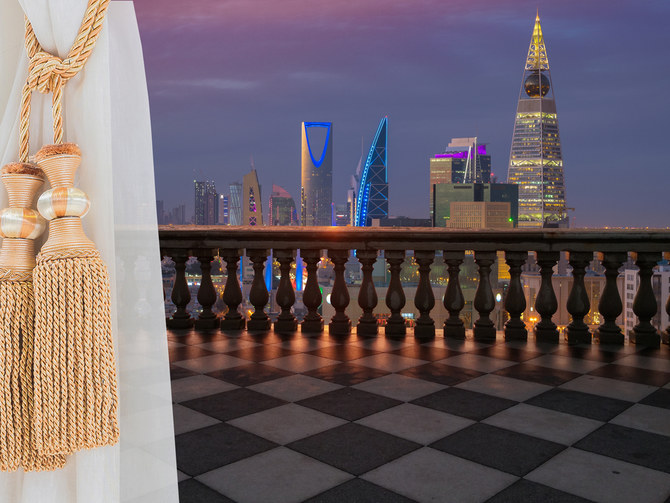
Consultancy firm CBRE has conducted the analysis of tourism in Saudi Arabia. Shutterstock
Short Url
Updated 29 November 2023
Follow

Corporate, business tourism bolsters Saudi hospitality sector

RIYADH:  Corporate and business tourism helped drive a 5.9 percent year-on-year rise in average hotel room occupancy rates in Saudi Arabia by the end of the third quarter of 2023, according to consultancy firm CBRE.  

This led to an 18.4 percent increase in the average daily rate and a 31.2 percent surge in revenue per available room year-on-year to September, positioning these indicators above their 2019 levels.  

In the year to date to September 2023, compared to the same period in 2019, Saudi Arabia recorded a 1.2 percentage points increase in average occupancy levels, a 9.6 percent increase in its alternative dispute resolution, and an 11.8 percent increase in its revenue per available room.   

Taimur Khan, head of research in the Middle East at CBRE, said that corporate and religious tourism has significantly underpinned growth in Saudi Arabia’s hospitality key performance indicators in the year to September 2023, in contrast to the previous year.   

“Over this period, across the Kingdom, average occupancy rates are 5.9 percent higher, average daily rates sit 18.4 percent higher and the average revenue per available room sits a staggering 31.2 percent higher,” he said.  

Khan anticipates that this robust performance will continue for the remainder of the year, especially with events like Riyadh and Jeddah Seasons yet to kick off. 

The report highlighted that at a city level, year-on-year in the year to date to September 2023, in Jeddah, the average occupancy grew by 7.3 percent, while its average daily rate softened by 0.1 percent, resulting in a 12.7 percent expansion of Jeddah’s RevPAR. 

Khan pointed out that the average occupancy rate in Al-Khobar increased by 7.7 percent, while the average daily rate dropped by 4.9 percent, resulting in a 9.0 percent improvement in RevPAR. 

In Riyadh, the report showed that the average occupancy saw a rise of 3.1 percentage points as average daily rates improved by 13.1 percent, culminating in a RevPAR growth of 19.1 percent in the capital. 

CBRE’s report revealed that the two holy cities of Makkah and Madinah performed consistently as they concluded the religious high seasons. 

Madinah’s average occupancy rate expanded by 10.1 percentage points, with average daily revenue marking a 38.1 percent upsurge, resulting in a RevPAR improvement of 60.8 percent. 

As for Makkah, the report noted that the average occupancy rate stood 5.9 percentage points higher, and its average daily revenue rose by 27.2 percent year-on-year in the year to September 2023, leading to RevPAR recording a strong growth rate of 40.6 percent.  


Saudi minister at Davos urges collaboration on minerals

Global collaboration on minerals essential to ease geopolitical tensions and secure supply, WEF hears. (Supplied)
Updated 20 January 2026
Follow

Saudi minister at Davos urges collaboration on minerals

  • The reason of the tension of geopolitics is actually the criticality of the minerals

LONDON: Countries need to collaborate on mining and resources to help avoid geopolitical tensions, Saudi Arabia’s minister of industry and mineral resources told the World Economic Forum on Tuesday.

“The reason of the tension of geopolitics is actually the criticality of the minerals, the concentration in different areas of the world,” Bandar Alkhorayef told a panel discussion on the geopolitics of materials.

“The rational thing to do is to collaborate, and that’s what we are doing,” he added. “We are creating a platform of collaboration in Saudi Arabia.”

Bandar Alkhorayef, Saudi Minister of Industry and Mineral Resources 

The Kingdom last week hosted the Future Minerals Forum in Riyadh. Alkhorayef said the platform was launched by the government in 2022 as a contribution to the global community. “It’s very important to have a global movement, and that’s why we launched the Future Minerals Forum,” he said. “It is the most important platform of global mining leaders.”

The Kingdom has made mining one of the key pillars of its economy, rapidly expanding the sector under the Vision 2030 reform program with an eye on diversification. Saudi Arabia has an estimated $2.5 trillion in mineral wealth and the ramping up of extraction comes at a time of intense global competition for resources to drive technological development in areas like AI and renewables.

“We realized that unlocking the value that we have in our natural resources, of the different minerals that we have, will definitely help our economy to grow to diversify,” Alkhorayef said. The Kingdom has worked to reduce the timelines required to set up mines while also protecting local communities, he added. Obtaining mining permits in Saudi Arabia has been reduced to just 30 to 90 days compared to the many years required in other countries, Alkhorayef said.

“We learned very, very early that permitting is a bottleneck in the system,” he added. “We all know, and we have to be very, very frank about this, that mining doesn’t have a good reputation globally.

“We are trying to change this and cutting down the licensing process doesn’t only solve it. You need also to show the communities the impact of the mining on their lives.”

Saudi Arabia’s new mining investment laws have placed great emphasis on the development of society and local communities, along with protecting the environment and incorporating new technologies, Alkhorayef said. “We want to build the future mines; we don’t want to build old mines.”