

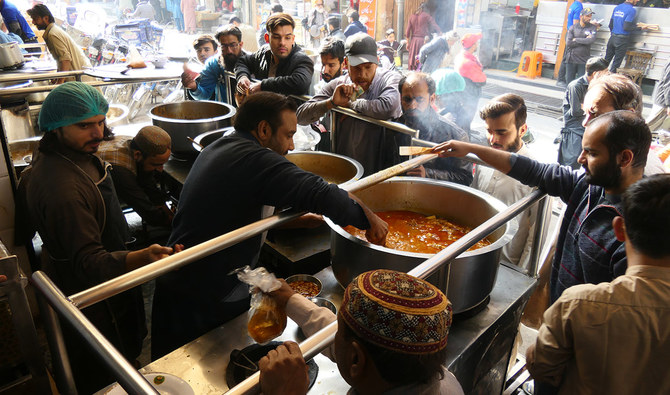

QUETTA: Ejaz Ahmed, 42, cracked jokes and laughed as he poured the thick, aromatic gravy into bowl after bowl for a long line of customers at his Bismillah Paye shop on Quetta’s Prince Road food street.
The tiny restaurant’s speciality is goat, cow and buffalo trotters, or paye, slow cooked for hours, often overnight, in a base of onions and garlic, with several curry-based spices added to the meat and bones as they are stewed. The dish has a soup-like consistency, is served with a garnish of fresh diced ginger, long coriander leaves and sliced lemon and often eaten as a breakfast food in the winter months in Pakistan.
Though paye is most popular among ethnic Punjabi families in central and eastern Pakistan, it has over the decades made a place for itself on dining tables across the country, including the southwestern Balochistan province, where trotters, loaded with protein and fat, have come to be considered the perfect winter food.
Ahmed, whose family are Punjabi migrants from India, said his late father introduced paye to local Pashtun and Baloch tribesmen in the province in 1981.
“We have been serving local tribesmen in Balochistan for the last four decades with ‘chotay paaye’ (goat trotters) and ‘bare paaye’ (cow or buffalo trotters), which are our [most] famous dishes,” the 42-year-old told Arab News, stirring paye in a large pot with layers of fat floating on the top.
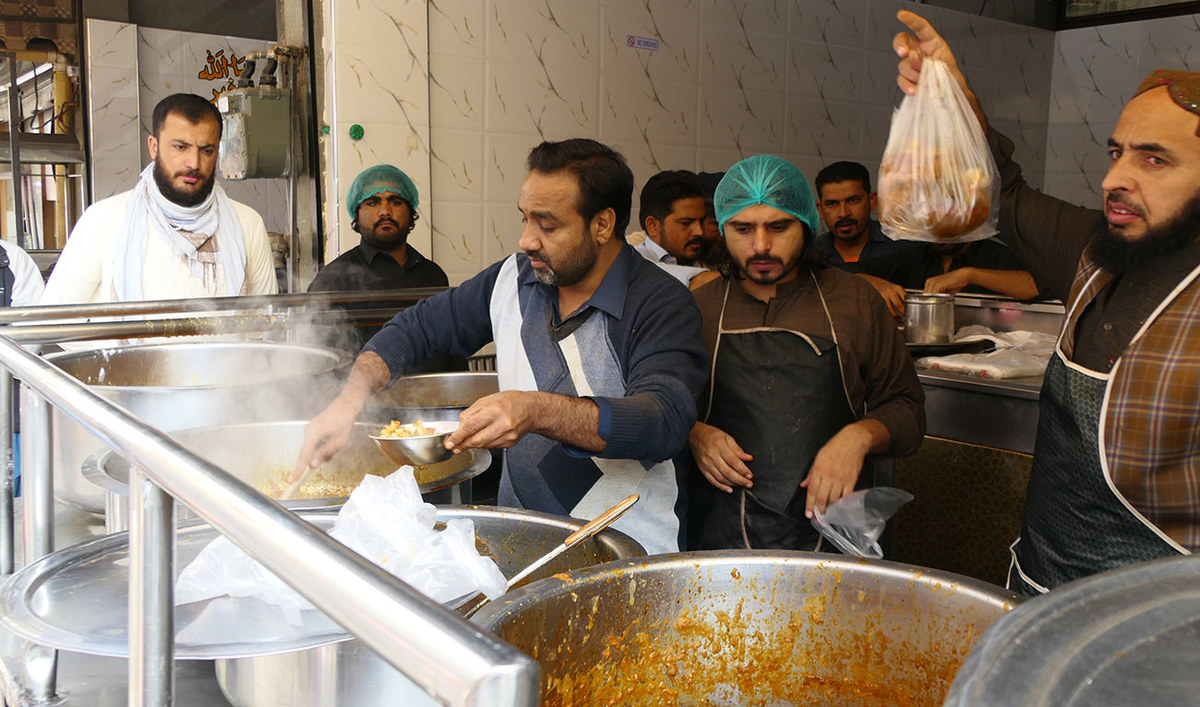
People gather at Bismillah Paye shop at Prince Road food street in Quetta, Pakistan on November 27, 2023. (AN Photo)
In the winter season, the shop owner said, he sold 30 dozen chotay paaye and 200 baray paaye in a day as people thronged to the restaurant in the biting cold of the provincial capital of Quetta, where even running water freezes in December and January.
The shop is open from 6am until midnight, offering goat trotter curry for Rs450 ($1.60) a plate and cow or buffalo trotter curry for Rs400 ($1.42).
Dr. Farrukh Ahmad, 60, who said he had been eating paye at the famous shop since he was a student, said its taste had improved with time.
“No one in Quetta was familiar with paye 40 years ago. I remember when I was a science student in college, we came to know that this small paye shop has been opened newly and we used to come here to eat paye during student life,” Ahmad told Arab News.
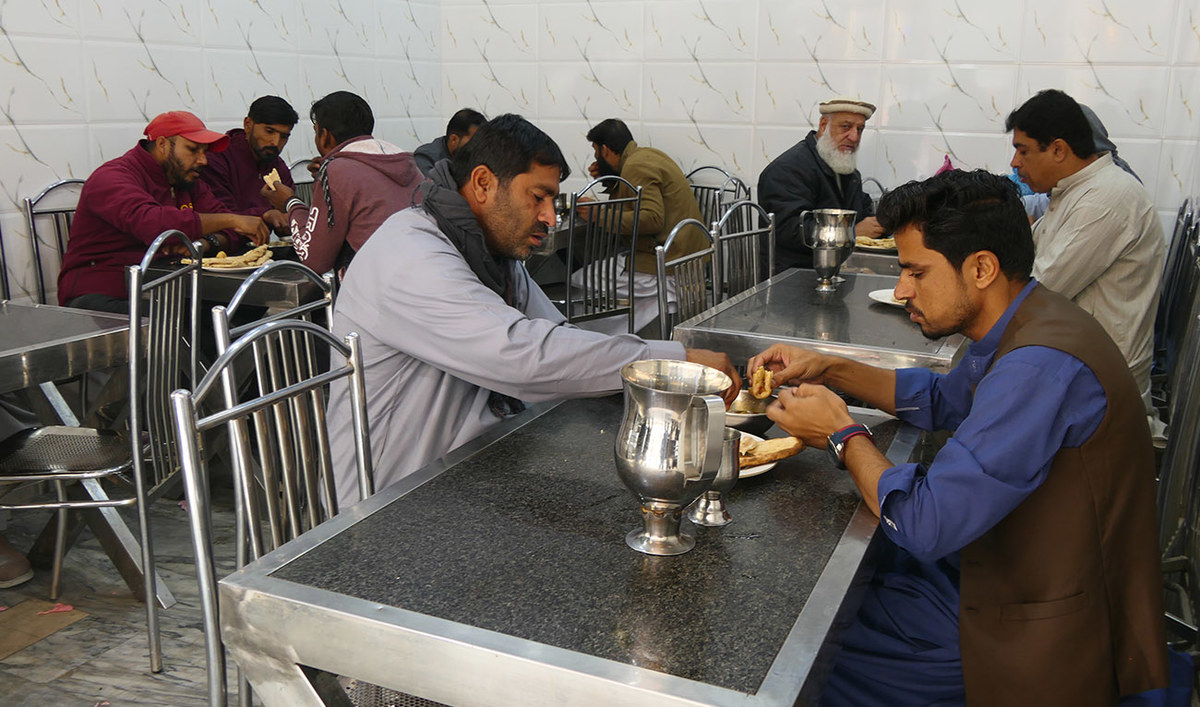
People are seen eating paye, a local dish made from goat, cow, and buffalo trotters at Bismillah Paye shop on Prince Road food street in Quetta, Pakistan, on November 27, 2023. (AN Photo)
“These paye are cheap so people can afford to eat them and they have so many benefits. It protects you from flu and chest infection, it keeps your chest warm. And later people take it away in parcel bags for children.”
Mian Saeed Nawab, 55, a resident of the northwestern Swat valley who was visiting Quetta, said he had not “eaten such paye anywhere in my life.”
“People used to say Lahori and Peshwari paye were famous but like sajji [slow-cooked lamb] and other traditional foods from Balochistan, now the paye of Balochistan are also very much popular these days and people eat them more in the cold,” Nawaz said.
Indeed, while paye originated as an amalgamation of South and Central Asian cuisine and were adapted by cooks in Lahore in present-day Pakistan, and India’s Lucknow, Ahmed said his version was loved province-wide, with clients showing up from far off villages in Kalat, Mastung, Khuzdar, Chaman, Ziarat and Killa Abdullah districts during winters.
“Now we call them ‘Quetta ke paye’,” Ahmed said with a smile, “just like they say ‘Lahori paye’.”


