ISLAMABAD: Pakistan plans to set up a pavilion at the UN climate change conference in the United Arab Emirates (UAE), a senior government official in Islamabad announced on Tuesday, to focus on critical issues to help countries worldwide build climate resilience together.
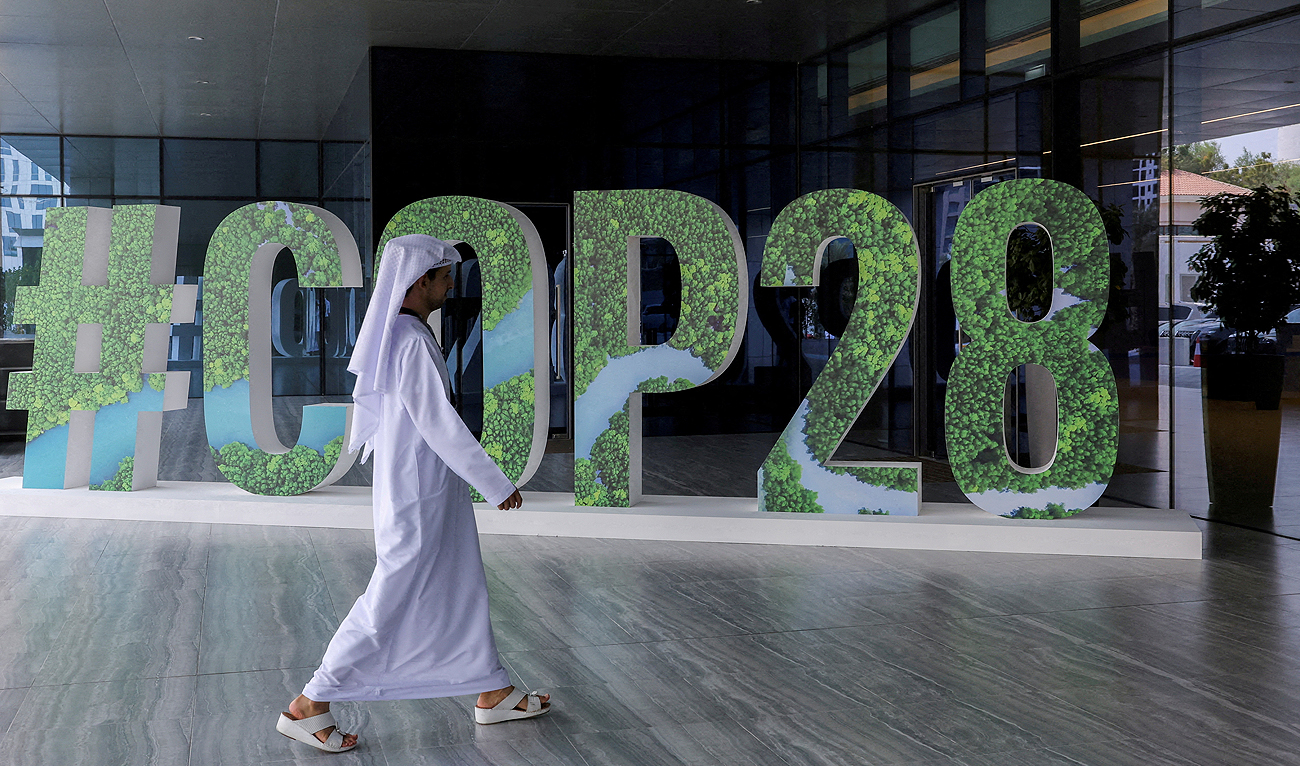
The 28th session of the UN Conference of the Parties (COP 28) is scheduled to be held in Dubai between November 30 and December 12, with around 70,000 attendees expected, including global leaders, academics and youth representatives.
“Our priorities at COP28 include loss and damage fund architecture and operationalization,” Ministry of Climate Change Secretary Syed Asif Hyder Shah told reporters during a media briefing in Islamabad.
He added that Pakistan was looking forward to the “first global stocktake” to assess the world’s progress on climate action and advance the mitigation work program, which required countries to reduce greenhouse gas emissions.
The country also planned to emphasize climate finance, urging other nations to hold developed countries accountable for their commitment to mobilizing $100 billion annually to aid developing states in climate change response.
Shah recalled that last year, following unprecedented monsoon rains and floods that caused massive infrastructure and agricultural losses in Pakistan, his country’s theme at COP27 in Egypt was, “What happened in Pakistan will not stay in Pakistan.”
This year, the slogan is “building resilience together.”
“Pakistan will set up a pavilion at COP28, hosting panel discussions on critical issues,” Shah continued, noting that projects on building climate resilience would be showcased to visitors, with the pavilion’s agenda evolving daily.
He highlighted that COP27 saw an agreement on the loss and damage fund, where Pakistan played a key role.
In Egypt, Pakistan joined other developing nations in advocating for a global fund to address climate-induced disasters.
“Pakistan’s greenhouse gas emissions account for only one percent globally, in contrast to the 64 percent emitted by the five major polluters with greater wealth and global GDP,” Shah said, emphasizing the need for an interim fund that becomes standalone after three years, focusing on developing countries.
He also mentioned that Pakistan intended to argue for the inclusion of developing countries in the loss and damage fund, diverging from developed nations’ focus on the least developed states.
He stressed the importance of adapting measures to respond to and manage climate change impacts, crucial for countries like Pakistan for disaster preparedness and capacity building.
“Climate finance should not only concentrate on mitigation but also emphasize adaptation,” he concluded.
Pakistan to highlight climate resilience initiatives, push for global action at COP28 in Dubai
https://arab.news/9tpmq
Pakistan to highlight climate resilience initiatives, push for global action at COP28 in Dubai

- UAE will host the UN climate conference from Nov. 30 to Dec. 12 which will be attended by 70,000 people
- Pakistan wants inclusion of developing nations, instead of just the least developed states, in loss and damage fund
Pakistan high court pauses tree-cutting in Islamabad until Feb. 2
- Islamabad High Court asks CDA to ‘explain and justify’ tree-cutting at next hearing
- CDA officials say 29,000 trees were cut due to allergies, deny felling in green belts
ISLAMABAD: The Islamabad High Court has ordered an immediate halt to tree-cutting in the federal capital until Feb. 2, seeking justification from civic authorities over the legality of a large-scale felling drive that has seen thousands of trees removed in recent months.
The interim order, issued by a single-judge bench led by Justice Khadim Hussain Soomro, came during proceedings on a petition challenging the Capital Development Authority’s (CDA) tree-cutting operations in Islamabad’s Shakarparian area and H-8 sector.
At the outset of the hearing, the petitioner’s counsel argued that trees were being felled in violation of the Pakistan Environmental Protection Act 1997, the Islamabad Wildlife Ordinance 1979 and the city’s master plan.
“Respondents shall not cut trees till the next date of hearing,” Justice Soomro said in the court order released on Friday while referring to CDA officials.
“Respondents are directed to come fully prepared and to file paragraph-wise comments before the next date of hearing, along with a comprehensive report explaining the justification and legal basis for the cutting of trees,” he added.
According to the court order, the petitioner maintained that the CDA had not made any public disclosure regarding the legal basis for the operation and that the felling was causing environmental harm.
The petition sought access to the official record of tree-cutting activities and called for the penalization of CDA officials responsible for the act under relevant criminal and environmental laws.
It also urged the court to impose a moratorium on infrastructure projects in Islamabad, order large-scale replanting as compensation and constitute a judicial commission headed by a retired Supreme Court judge to probe the alleged violations.
CDA officials acknowledge around 29,000 paper mulberry trees have been cut in the capital in recent months, arguing that the species triggers seasonal allergies such as sneezing, itchy eyes and nasal congestion.
They also maintain that no trees have been removed from designated green belts and that the number of replacement trees planted exceeds those felled.
Designed in the 1960s by Greek architect Constantinos Doxiadis, Islamabad was conceived as a low-density city with green belts and protected natural zones at its core.
Critics, however, say the recent felling has extended beyond paper mulberry trees and question whether authorities are adhering to the city’s master plan and the legal protections governing forested and green areas.
The court has adjourned its hearing until Feb. 2, 2026.