

Saudi Arabia’s SMEs grow 3.5% in Q3, hitting 1.27m

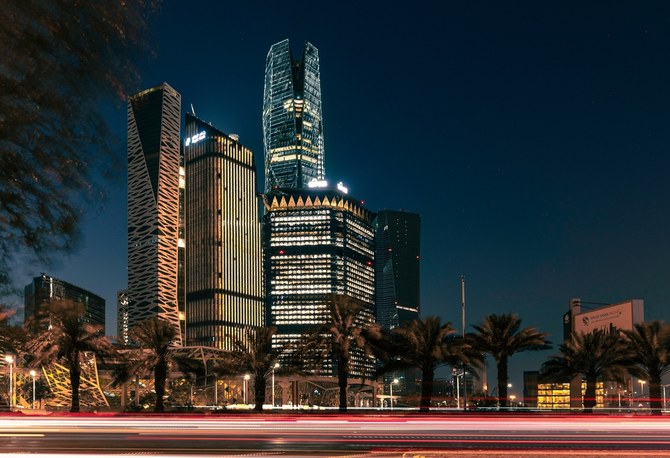
More than 40,000 new businesses were launched in Saudi Arabia during the third quarter, with 43.3 percent of SMEs located in Riyadh. Shutterstock
Short Url
Updated 26 November 2023
Follow

Saudi Arabia’s SMEs grow 3.5% in Q3, hitting 1.27m

RIYADH: The number of small and medium enterprises in Saudi Arabia reached 1.27 million by the end of the third quarter, propelled by the Kingdom’s economic diversification efforts. 

According to the report released by the Small and Medium Enterprises General Authority, also known as Monsha’at, this figure represents a 3.5 percent rise compared to the second quarter of this year.  

More than 40,000 new businesses were launched in Saudi Arabia during the third quarter, with 43.3 percent of SMEs located in Riyadh.  

The report highlighted the notable progress in new business creation in Al-Qassim province, particularly in the mining and agriculture sectors, making it home to nearly 60,000 SMEs and 105 active mining licenses. 

“While its mining industry produces 4 million tons of bauxite each year, the only such source in the Middle East, the region’s farmers produce 1.22 million tons of dates, lemons, oranges, grapes, and other agricultural products each year, giving credence to its nickname as the breadbasket of the Kingdom,” stated Monsha’at.  

The report highlighted the ongoing role of the private sector in propelling Saudi Arabia’s economy in the third quarter of this year. 

Monsha’at reported an 18.8 percent year-on-year increase in private sector investments in SMEs during the third quarter, reaching SR262.7 billion ($70 billion).
“The Kingdom’s robust non-oil growth is a symptom of a rapidly maturing ecosystem whose entrepreneurs are now driving Saudi Arabia’s ambitious diversification targets,” Monsha’at highlighted in the report.  

It added that the National Industrial Development and Logistics Program played a significant role in facilitating the entry of more SMEs into the industrial and manufacturing sectors during the third quarter. 

In the Kingdom, where over 11,000 factories are now operational, the Ministry of Industry and Mineral Sources issued 136 new industrial licenses in August 2023 alone. 

Furthermore, Monsha’at organized Entrepreneurship Week earlier this month at its enterprise support centers in Riyadh, Jeddah, Madinah, and Alkhobar, aiming to bolster the SME ecosystem in the Kingdom.  

The specialized forum, as reported by the Saudi Press Agency, highlighted key initiatives and programs supporting the expansion of startups in the market.



Up to $600m in additional tariffs on Saudi exports to the US

Updated 23 February 2026
Follow

Up to $600m in additional tariffs on Saudi exports to the US

RIYADH: Gulf exports have become targets of US President Donald Trump’s tariffs, which he raised from 10 percent to 15 percent on all countries.

The increase comes after the US Supreme Court ruled that the legal basis Trump had used to impose earlier tariffs was unlawful.

Previously, Gulf countries were among the few that had not raised their tariffs above 10 percent, while many other countries, most notably China, had already been subject to higher tariffs. However, with this latest increase, the Gulf states will be among those affected.

According to the financial analysis unit of Al-Eqtisadiah newspaper, Gulf exports to the US in 2024 amounted to about $26.2 billion, with Saudi Arabia accounting for roughly half of that, at $12.7 billion. These exports are subject to potential additional tariffs of SR637 million ($169 million).

It is likely that tariffs on Saudi exports will grow from $1.3 billion annually to $1.9 billion, a rise of 50 percent, following Trump’s recent increase.

Customs duties on Gulf exports will also increase, from $2.6 billion annually to $3.9 billion.

In 2024, Gulf exports are distributed as follows: $7.5 billion from the UAE, $1.8 billion from Qatar, and $1.6 billion from Kuwait, as well as $1.3 billion from Oman, and finally, $1.2 billion from Bahrain.

Gulf trade with the US in 2024 reached approximately $86 billion, comprised of $26.2 billion in exports and approximately $60 billion in imports, resulting in a Gulf trade deficit of $33.5 billion.

Trump responds to Supreme Court ruling

US President Donald Trump raised the global tariffs from 10 percent to 15 percent in response to the US Supreme Court ruling that his previous tariff implementation mechanism was unlawful.

Trump said in a post on his Truth Social account today: “As President of the US, I will, effective immediately, raise the global tariffs imposed on countries that have been taking advantage of the US for decades with impunity (until I took over!) to the legally permitted and tested level of 15 percent.”

Hours after the Supreme Court ruling on Feb. 20, Trump imposed a 10 percent global tariff on foreign goods, a move aimed at maintaining his trade agenda.

Trump had expressed his displeasure with the Supreme Court’s decision to overturn the tariffs imposed by his administration, asserting that the ruling would not restrict him. He vowed to impose tariffs far exceeding those struck down by the court, indicating that he had stronger alternatives to tariffs, raising questions about his future trade strategy.

The US Supreme Court struck down Trump’s sweeping global tariffs, undermining his signature economic policy and inflicting his biggest legal defeat since returning to the White House.

By a six-three vote, the court ruled that Trump exceeded his authority by invoking the federal emergency powers law to impose his reciprocal tariffs worldwide, in addition to targeted import duties that the administration claims are intended to combat fentanyl smuggling.