KARACHI: Raast, an instant payment system of Pakistan, will be integrated within next 8 months with Buna, a cross-border payment system of the Arab Monetary Fund (AMF), to facilitate remittances in real-time between Pakistan and the Gulf region, Pakistani central bank chief told Arab News on Friday.
Earlier this month, the AMF and the State Bank of Pakistan (SBP) had signed a memorandum of understanding (MoU) in Abu Dhabi to establish a framework of cooperation between Buna, which is operated by Arab Regional Payments Clearing and Settlement Organization (ARPCSO) and supported by all central banks in the region, and Pakistan’s Raast.
“We have targeted to complete the integration (of Raast and Buna) in six to eight months,” Jameel Ahmad, the SBP governor, told Arab News on the sidelines of the 8th Pakistan Banking Awards in Karachi.
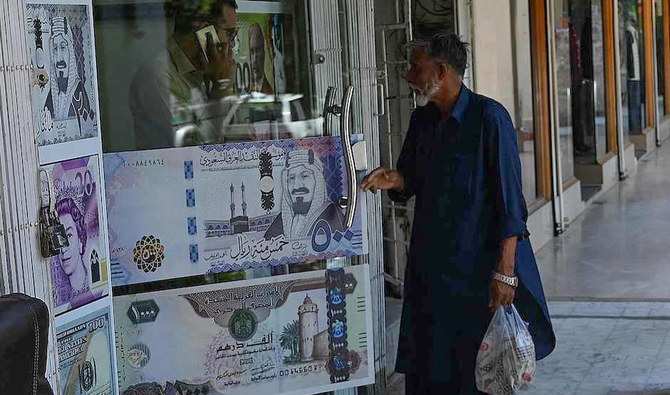
The integration of Raast with Buna is aimed at facilitating cross-border remittances between the Gulf region and Pakistan through formal channels. This initiative will benefit individuals as well as businesses not only through instant, safe and cost-effective cross border payments, but also by strengthening economic, financial, and investment ties between the Arab countries and Pakistan.
“The biggest benefit of this integration will be instant transfer of funds from any member country of the Arab Monetary Fund, and secondly at a low cost,” Ahmad said. “These are the two key benefits but there are also other benefits, including security of the funds.”
The integration of payment systems will facilitate Pakistani workers living in the Gulf region, including Saudi Arabia and the United Arab Emirates (UAE) that are one of the major contributors to the remittance inflows to Pakistan. Saudi Arabia and the UAE provided employment to 77 percent of the Pakistani expatriate workers in 2022.
Speaking at the event earlier, the SBP governor said the central bank had made a strategic plan for the next five years, called ‘Vision 2028,’ a commitment to foster price and financial stability. The financial sector is particularly vulnerable to climate change risks through its lending, investment and insurance activities, he noted.
“Similarly, cybersecurity is another emerging challenge that poses a significant threat to financial stability and our effort to achieve sustainable financial inclusion,” Ahmad said.
In recent years, he noted, there had been a sharp increase in the number and sophistication of cyberattacks on financial institutions, and these attacks could result in significant financial losses as well as cause reputational damage and operational distress.
“To address these challenges, we need to work together to strengthen our regulatory framework, enhance our supervisory oversight, and build a culture of financial resilience,” the SBP governor said, adding this would require a concerted effort from the central, the banking sector, and other stakeholders.
About the state of economy, the SBP chief said the current account deficit had come down from 4.8 percent to 0.8 percent of the GDP.
“So again, we are on track to achieve a very manageable current account deficit. Hopefully it will not exceed 1.5 percent of GDP for the current fiscal year as well,” he said.


![]()

Raast, Buna systems to be integrated within 8 months to facilitate real-time remittances from Gulf — Pakistani official
Short Url
https://arab.news/c2jcn
Raast, Buna systems to be integrated within 8 months to facilitate real-time remittances from Gulf — Pakistani official
- Arab Monetary Fund, State Bank of Pakistan this month agreed to establish a framework of cooperation to facilitate fund transfer in real time
- Central bank governor says the financial sector is vulnerable to climate change risks, cybersecurity poses a significant threat to financial stability
Latest updates




© 2026 SAUDI RESEARCH & PUBLISHING COMPANY, All Rights Reserved And subject to Terms of Use Agreement.