SHANGHAI:China called for vigilance on Friday as a surge of respiratory illness hit schools and hospitals and the World Health Organization, which has asked the government for disease data, said no unusual or novel pathogens had been detected.
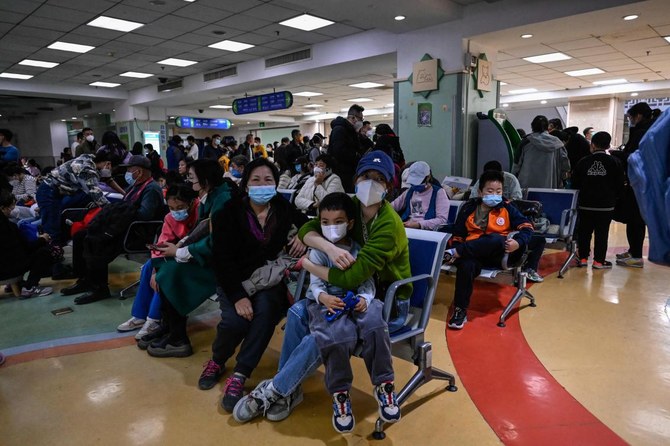
China is grappling with a spike in respiratory illnesses as it enters its first full winter season since it lifted strict COVID-19 restrictions in December, with cases among children appearing especially high in northern areas like Beijing and Liaoning province where hospitals are warning of long waits.
The State Council said influenza would peak this winter and spring and mycoplasma pneumoniae infection would continue to be high in some areas in future. It also warned of the risk of a rebound in COVID infections.
“All localities should strengthen information reporting on infectious diseases to ensure information is reported in a timely and accurate manner,” the State Council said in a statement.
The situation came into the spotlight this week when the WHO asked China for more information, citing a report by the Program for Monitoring Emerging Diseases (ProMED) on clusters of undiagnosed pneumonia in children.
Both China and the WHO have faced questions about the transparency of reporting on the earliest COVID-19 cases that emerged in the central city of Wuhan in late 2019.
On Thursday, the WHO said China had responded to its request and the data it provided suggested the cases were linked to the lifting of COVID curbs along with the circulation of known pathogens like mycoplasma pneumoniae, a common bacterial infection that typically affects children, which has circulated since May.
This month, authorities began issuing health adviseries and warning the public of long waits at crowded hospitals but they have not imposed measures like the ones during the COVID pandemic, such as masks or closing schools.
There has been no indication of any undue public alarm.
Bruce Thompson, head of the Melbourne School of Health Sciences at the University of Melbourne, said very preliminary data suggested there was nothing out of the ordinary.
“At this stage, there is nothing to suggest that it may be a new variant of COVID,” he said.
“One thing to note is that we can be reassured that the surveillance processes are working, which is a very good thing.”
Parents in Shanghai on Friday said they were not overly concerned about the wave of sickness, saying while it appeared to be more severe, they expected it to blow over soon.
“Colds happen all over the world,” said Emily Wu outside a children’s hospital. “I hope that people will not be biased because of the pandemic ... but look at this from a scientific perspective.”
Another mother, Feng Zixun, said she was making her eight-year-old son wear a mask and wash his hands more often but nothing much more.
“It’s not that bad, there are more children falling sick now but it’s mainly an issue of protection,” she said.


![]()

China grapples with respiratory illness spike; WHO says no unusual pathogen found
Short Url
https://arab.news/rqsn2
China grapples with respiratory illness spike; WHO says no unusual pathogen found


Latest updates


© 2026 SAUDI RESEARCH & PUBLISHING COMPANY, All Rights Reserved And subject to Terms of Use Agreement.