Protests halt Pak-Afghan trade at Chaman border for third day amid visa policy dispute

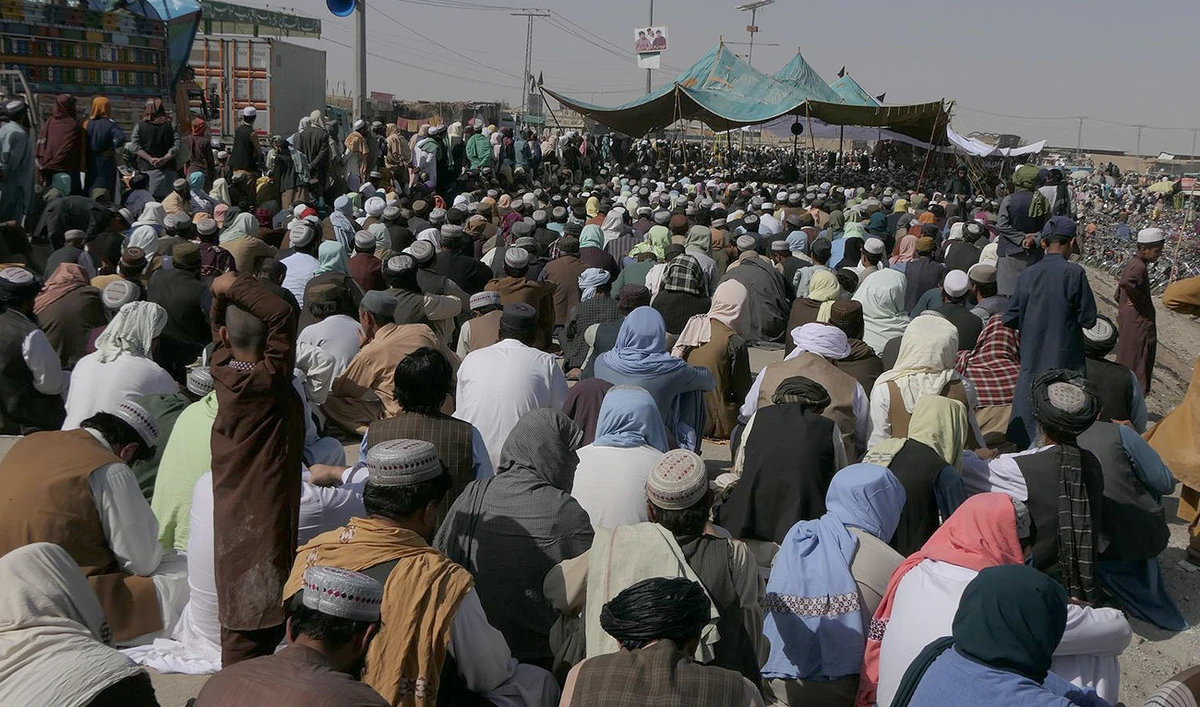
Local tribesmen and traders set up a protest camp against the new visa and passport policy at Pakistan Afghan border in Chaman, Balochistan on November 22, 2023. (AN Photo)
Short Url
Updated 22 November 2023
Follow

Protests halt Pak-Afghan trade at Chaman border for third day amid visa policy dispute

  • Thousands have camped near the border since the announcement of the new visa policy to monitor cross-border movement
  • Protesters decided to block the transit trade route, trying to put the government under pressure to reverse the visa policy

QUETTA: Trade between Pakistan and Afghanistan from the key Chaman border crossing continued to remain at a standstill for a third consecutive day after thousands of protesters blocked the transit route in Pakistan’s southwestern Balochistan province, confirmed an organizer of the protest while speaking to Arab News on Wednesday.

Pakistan’s interim administration decided to introduce a strict visa and passport policy along its frontier with Afghanistan since Nov. 1 to monitor unauthorized cross-border movement between the two neighboring countries.

The development followed a deportation drive against unregistered foreigners, mostly Afghans, which was announced last month amid security concerns caused by a string of militant attacks and suicide bombings.

Thousands of local tribesmen and traders decided to set up a protest camp in Chaman after Balochistan’s provincial administration started implementing the new visa and passport policy.

Previously, these people used national identity cards to move to the other side of the frontier and vowed to continue their protest until the government reversed its policy for the residents of the border areas.

“We have set up our sit-in camp at the Pak-Afghan border highway for over a month, but now we have blocked the Pak-Afghan transit trade route for three days,” Haji Sadiq Achakzai, one of the organizers of the Chaman protest, told Arab News over the phone.
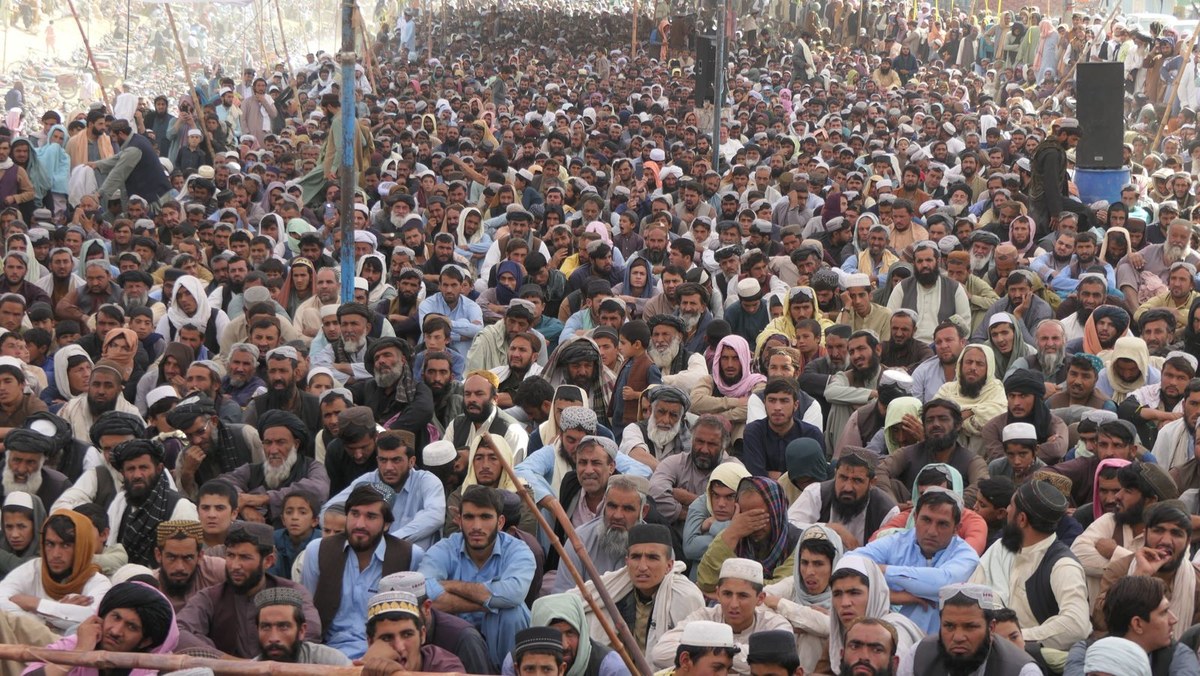


Local tribesmen and traders set up a protest camp against the new visa and passport policy at Pakistan Afghan border in Chaman, Balochistan on November 22, 2023. (AN Photo)

“If the government does not reverse the visa policy at the Chaman border, we will continue to block the route,” he added.

“Thousands of people in Chaman are jobless due to the new visa policy between Chaman-Spin Boldak border,” he contended while hinting at the economic interdependency among border towns on both sides of the international frontier. “The government cannot appease us by offering small economic packages.”

District officials in Chaman and the provincial information minister Jan Achakzai did not respond to the calls and questions shared by Arab News.

Hundreds of trucks loaded with fruits and vegetables regularly cross through the Pak-Afghan friendship gate at Chaman.

Since the closure of the transit route, a large number of trucks can now be seen parked near the Customs House in Chaman.
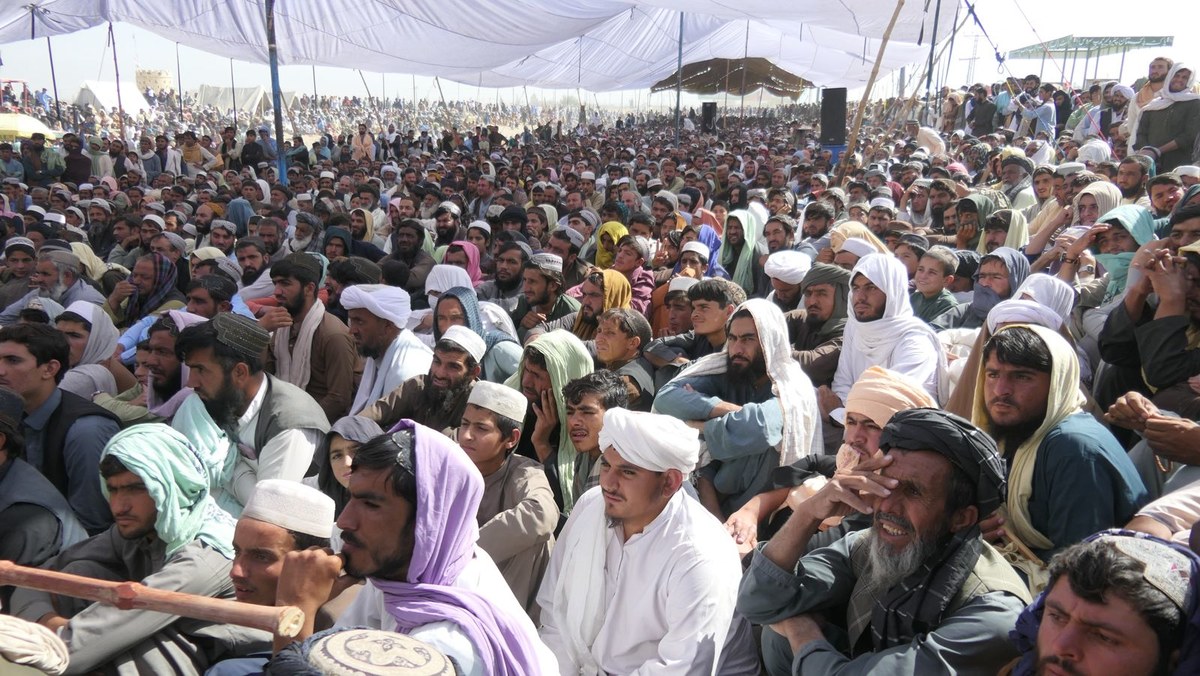


Local tribesmen and traders set up a protest camp against the new visa and passport policy at Pakistan Afghan border in Chaman, Balochistan on November 22, 2023. (AN Photo)

“For the last three days, the trade activities are completely halted at the Pak-Afghan border town of Chaman due to the closure of the trade route,” a customs official in Quetta told Arab News on condition of anonymity.

Another senior official in Quetta also confirmed to Arab News that the government was negotiating with the protesters to restore the Pak-Afghan transit route.
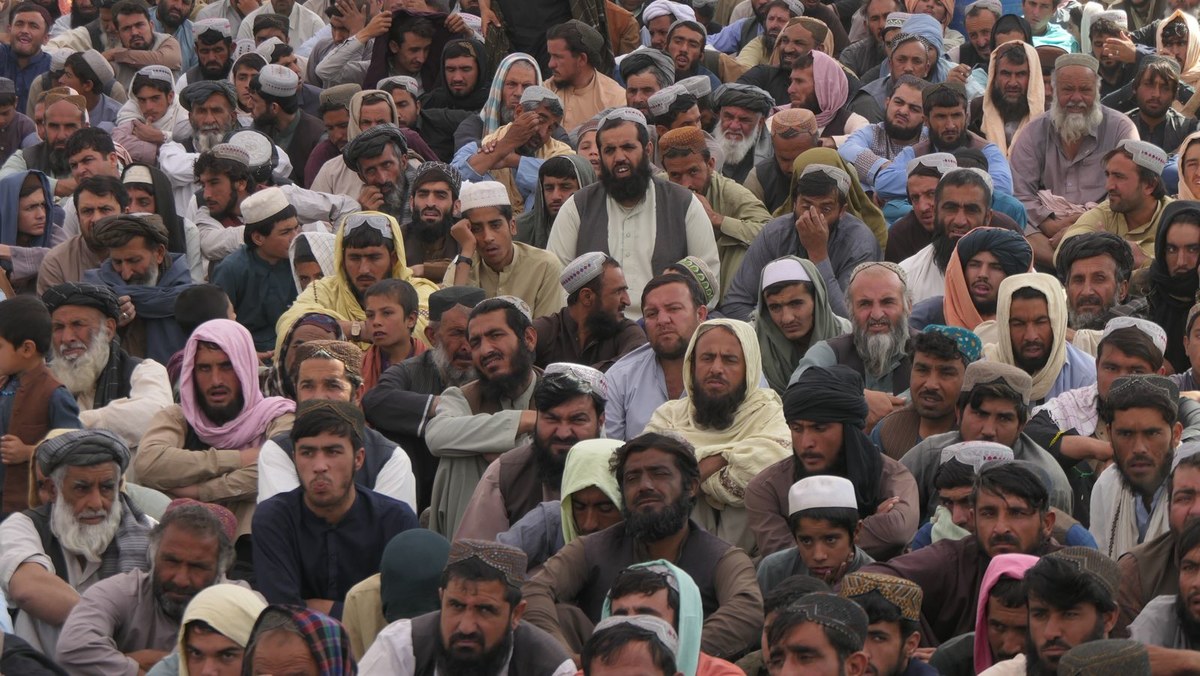



Local tribesmen and traders set up a protest camp against the new visa and passport policy at Pakistan Afghan border in Chaman, Balochistan on November 22, 2023. (AN Photo)


Pakistan begins talks with Saudi delegation on local vaccine manufacturing

Updated 7 sec ago
Follow

Pakistan begins talks with Saudi delegation on local vaccine manufacturing

  • Health ministry has warned vaccine import costs could rise from $400 million to $1.2 billion by 2031
  • Local vaccine manufacturing would strengthen health security and help conserve foreign exchange 

ISLAMABAD: Pakistan on Tuesday formally began discussions with a high-level Saudi delegation on establishing local vaccine manufacturing, as Islamabad seeks to reduce import dependence and prepare for the eventual end of international funding support for its national immunization program.

The talks come amid Pakistan’s broader push to strengthen health security and industrial capacity. The country of more than 240 million people currently imports all vaccines used in its national immunization campaigns, relying heavily on international partners to help cover costs.

Officials say local vaccine manufacturing would not only strengthen health security but also help conserve foreign exchange and support Pakistan’s longer-term economic stability as the country looks to cut costly imports and build export-oriented industrial capacity.

According to the Ministry of National Health Services, the eleven-member Saudi delegation is led by Nizar Al-Hariri, senior adviser to Saudi Arabia’s minister of industry, and is visiting Pakistan as part of efforts to deepen bilateral cooperation in health, pharmaceutical manufacturing and industrial collaboration.

“Practical progress is being made toward the local production of vaccines for 13 diseases in Pakistan,” the health ministry said in a statement, quoting Federal Health Minister Syed Mustafa Kamal who met the delegation in Islamabad.

Pakistani officials presented detailed briefings on current vaccine demand, existing infrastructure and production capacity.

“Collaboration between Pakistan and Saudi Arabia in the health sector will set an example for the entire region,” the ministry said.

Kamal told the visiting delegation Pakistan is the world’s fifth most populous country, with around 6.2 million children born each year, adding that the country’s annual population growth is roughly equivalent to the population of New Zealand. 

He said the government currently provides vaccines for 13 diseases free of cost but does not manufacture any of them domestically, forcing Pakistan to import vaccines at an annual cost of about $400 million.

According to the ministry, international partners currently cover 49 percent of those costs, with the remainder borne by the Pakistani government. However, Kamal warned that this external support is expected to end after 2031.

“If vaccines are not manufactured locally, the annual cost could rise to $1.2 billion by 2031, which would place a heavy burden on the national economy,” the ministry quoted him as saying.

Pakistan regularly conducts nationwide immunization campaigns against diseases including polio, measles, rubella and hepatitis. This week, it launched a seven-day polio vaccination drive aimed at inoculating more than 45 million children.