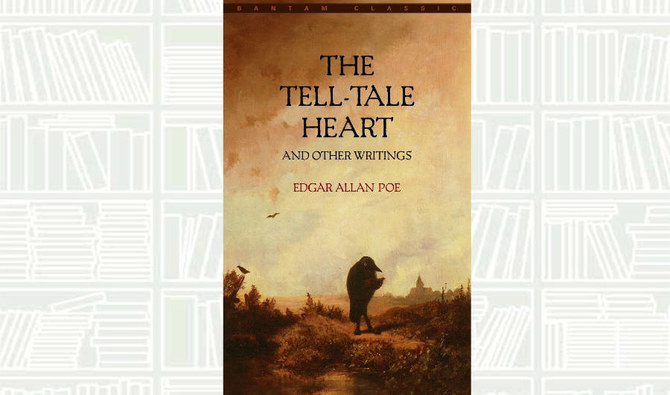

Author: Edgar Allan Poe
“The Tell-Tale Heart” is a famous short story by Edgar Allan Poe, the American writer known for his macabre and gothic storytelling.
It was first published in 1843 and is one of Poe’s best-known and most widely-studied works.
The short story is narrated by an unnamed character driven to madness by his obsession with an old man’s “vulture eye.” The eye is repeatedly also described as “pale blue,” emphasizing its unsettling nature.
After he commits a heinous act of murder against the old man, the narrator becomes tormented by guilt and becomes haunted by the sound of the old man’s beating heart.
His increasing fixation on the sound symbolizes his guilt and is a manifestation of his disturbed state of mind. The sound grows louder and more intense as the story progresses, heightening the suspense.
The narrator is unreliable and tries to convince the reader of his sanity while simultaneously revealing his increasing madness through his actions and erratic behavior.
The story explores themes of guilt, madness, and the psychological effects of crime. It showcases Poe’s mastery at creating a suspenseful and chilling atmosphere and his ability to delve into the inner workings of the human mind.
“The Tell-Tale Heart” is considered a prime example of gothic fiction, characterized by its exploration of the dark and mysterious aspects of the human psyche. It showcases Poe's signature style with its vivid descriptions, immersive atmosphere, and exploration of psychological torment.
Poe’s other stories that remain famous to this day include “The Masque of the Red Death,” “The Pit and The Pendulum,” “The Cask of Amontillado,” and “The Raven.”