GCC countries to bolster global energy security, vows secretary-general

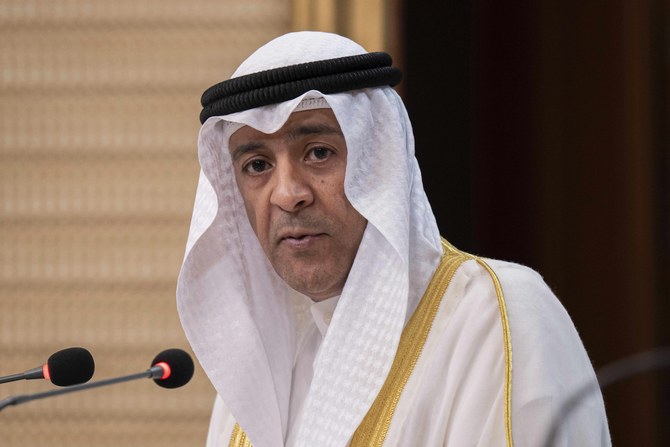
GCC Secretary-General Jassim Al-Budaiwi. AP/File
Short Url
Updated 19 November 2023
Follow

GCC countries to bolster global energy security, vows secretary-general

RIYADH: The Gulf Cooperation Council countries are gaining recognition as key players in reinforcing global energy security, the organization’s secretary-general has said.

Speaking at the 19th Manama Dialogue Conference titled “Regional Security Summit,” Jassim Al-Budaiwi emphasized the GCC’s role as a trusted global partner in the energy sector, the Saudi Press Agency reported on Sunday.

“Energy security occupies a prominent place in the policies of the GCC countries,” he said.

Organized by Bahrain’s Ministry of Foreign Affairs, in collaboration with the International Institute for Strategic Studies, the summit convened from Nov. 17-19 in Manama.

The event saw participation from various foreign ministers, defense and national security officials, experts and prominent thinkers from numerous countries.

Al-Budaiwi underscored the broader ambition of the GCC countries to shape energy policies that balance traditional resources and the shift toward sustainable alternatives.

The secretary-general also pointed to the need for a comprehensive understanding of energy security in modern times, influenced by factors such as traditional conflict, absence of alternative plans and years of insufficient investment.

He criticized misleading narratives that suggest alternative energy sources can completely replace fossil fuels and further highlighted the decades-long reliability of the GCC as an energy partner. Al-Budaiwi also emphasized the region’s commitment to stabilizing global energy markets.

“The GCC countries recognize the importance of traditional energy supplies in the long term to ensure energy security and affordability, where the council’s members have also adopted renewable energy sources, as evident from their national development plans,” he said.

The summit also focused on the necessity of international cooperation to protect energy infrastructure and routes, confront potential military and cyberthreats and ensure long-term energy security despite short-term challenges.


Dubai’s luxury residential market sees record $9bn sales in 2025: Knight Frank 

Updated 4 sec ago
Follow

Dubai’s luxury residential market sees record $9bn sales in 2025: Knight Frank 

RIYADH: Dubai’s luxury residential market hit a record in 2025, with sales of homes priced above $10 million rising 27.7 percent from a year earlier to $9.05 billion, according to Knight Frank. 

A total of 500 homes worth more than $10 million changed hands during the year, up from just 30 such deals recorded in 2020. Within that segment, 68 properties were sold for more than $25 million, marking a 45 percent year-on-year increase, the property consultancy said. 

The findings underscore Dubai’s growing status as a global hub for high-net-worth individuals, who are increasingly viewing the emirate not just as a part-time business base but as a full-time home. 

In November, a separate analysis by Savills found that Dubai topped the rankings as the leading destination for HNWIs globally, surpassing New York and Singapore. 

Commenting on the latest report, Faisal Durrani, partner and head of research for the Middle East and North Africa at Knight Frank, said: “Dubai’s meteoric rise as the world’s busiest market for $10 million+ homes, having increased from just 30 sales in 2020 to 500 by the end of 2025, is best reflected in the emirate’s growing reputation as a magnet for the global elite.” 

The final quarter of 2025 recorded 143 sales transactions for properties valued at more than $10 million, representing a 39 percent increase compared to the previous quarter. 

The report added that demand for luxury residential properties remains highly concentrated in destination communities that combine waterfront living, security and amenities into self-contained ecosystems. 

Palm Jumeirah led fourth-quarter sales in the $10 million-plus segment with 28 transactions, followed by Palm Jebel Ali with 22. La Mer, Jumeirah 2 and Tilal Al Ghaf also ranked among the most active neighborhoods at the top end of the market. 

“Dubai’s residential market has differentiated itself from regional cities and many other global gateway locations through the creation of destination communities that integrate leisure, safety and convenience into self-contained ecosystems,” said Will Mckintosh, regional partner, Knight Frank’s head of Residential at MENA. 

Mckintosh added: “At 50 percent larger than its established neighbor Palm Jumeirah, Palm Jebel Ali remains a destination to watch. While it will obviously take time to reach the maturity of other established communities, the 2025 sales figures are a welcome indication of its high potential and the growing demand from the wealthiest buyers for prime waterfront property and the luxury Dubai lifestyle.” 

The most expensive individual purchase in the fourth quarter was in the Business Bay community, where a six-bedroom apartment in Bugatti Residences by Binghatti sold for $149.7 million. 

Knight Frank said Dubai’s real estate market is moving beyond its “emerging” phase to become an “emerged” market, marked by greater stability. 

“Historical patterns of sharp market cycles, largely fueled by speculative investment, have receded and, while natural market cycles will persist, we believe the volatility associated with previous speculative booms is less likely in this new era of established residency,” said Durrani. 

He added: “As the market extends past its five-year property price rally, the rate of price rises across the mainstream market is starting to slow, albeit they continue to rise. After growing by 194 percent since the fourth quarter of 2020, we believe prime values will expand by a further 3 percent during 2026.”