

Qatar Financial Markets Authority unveils new controls for dividend distribution

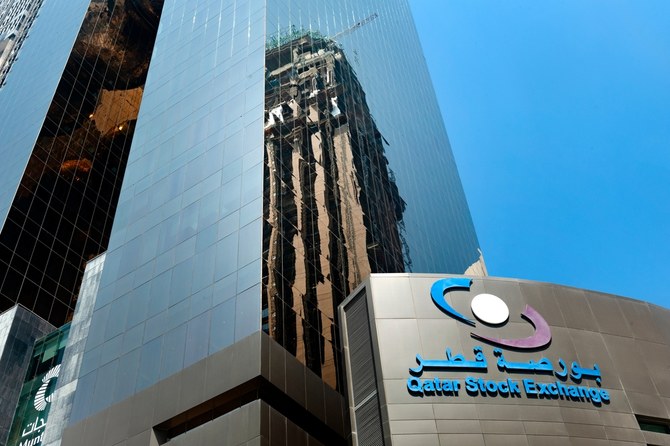
Introduced by the Qatar Financial Markets Authority, the regulations will include substantial changes in the mechanisms of annual dividends distribution to shareholders in public shareholding companies listed on the Qatar Stock Exchange. Shutterstock
Short Url
Updated 19 November 2023
Follow

Qatar Financial Markets Authority unveils new controls for dividend distribution

RIYADH: Controls to regulate dividend distributions in the Qatari capital market were issued to boost activity in the financial sector and increase liquidity volume.

Introduced by the Qatar Financial Markets Authority, the regulations will include substantial changes in the mechanisms of annual dividends distribution to shareholders in public shareholding companies listed on the Qatar Stock Exchange. These decrees will also control the interim dividend distribution quarterly and semi-annually for companies intending to do so.

CEO of QFMA Tamy bin Ahmad Al-Binali announced that the rules will be implemented in 2024.

He said: “QFMA is making great efforts to work continuously to develop its legislation and regulations with the aim of providing an attractive legislative environment for investment in line with the best international and regional standards and practices.”

The CEO explained that under the rules, QSE-listed public shareholding would be permitted to engage in dividend distribution on an interim basis every three or six months or annually as is currently in effect. The companies will also be required to distribute dividends within a certain period, which shall not be exceeded.

He added that public shareholding companies will no longer be authorized to distribute dividends and bonus shares to shareholders, highlighting that “this responsibility will be assumed from now by Edaa, which will make dividend distribution to shareholders on behalf of the public shareholding companies.”

Edaa, or Securities Depository Center Co., is the licensed service provider under the QFMA that provides various essential services related to securities and financial instruments. The company’s core services include safekeeping, clearing, and settlement of securities and other financial instruments listed on the Qatar Exchange.

He said: “Dividends distribution through Edaa aims to facilitate and ease the distribution procedures, preserving shareholders’ dividends with a reliable party, unifying the procedures and party of distribution, and accelerating the process of distribution and delivery to such beneficiaries.”

Al-Binali added that the rules will help attract a new category of investors to the stock market and enhance investor confidence in the operational performance of listed companies, the strength of their financial position and their ability to generate real interim revenues and cash flows.

He further stated: “The interim dividend distribution enhances the expectations of investors in the markets regarding achieving good financial results at the end of the financial year.”



Saudi Arabia’s foreign reserves rise to a 6-year high of $475bn

Updated 22 February 2026
Follow

Saudi Arabia’s foreign reserves rise to a 6-year high of $475bn

RIYADH: Saudi Arabia’s foreign reserves climbed 3 percent month on month in January to SR1.78 trillion, up SR58.7 billion ($15.6 billion) from December and marking a six-year high.

On an annual basis, the Saudi Central Bank’s net foreign assets rose by 10 percent, equivalent to SR155.8 billion, according to data from the Saudi Central Bank, Argaam reported.

The reserve assets, a crucial indicator of economic stability and external financial strength, comprise several key components.

According to the central bank, also known as SAMA, the Kingdom’s reserves include foreign securities, foreign currency, and bank deposits, as well as its reserve position at the International Monetary Fund, Special Drawing Rights, and monetary gold.

The rise in reserves underscores the strength and liquidity of the Kingdom’s financial position and aligns with Saudi Arabia’s goal of strengthening its financial safety net as it advances economic diversification under Vision 2030.

The value of foreign currency reserves, which represent approximately 95 percent of the total holdings, increased by about 10 percent during January 2026 compared to the same month in 2025, reaching SR1.68 trillion.

The value of the reserve at the IMF increased by 9 percent to reach SR13.1 billion.

Meanwhile, SDRs rose by 5 percent during the period to reach SR80.5 billion.

The Kingdom’s gold reserves remained stable at SR1.62 billion, the same level it has maintained since January 2008.

Saudi Arabia’s foreign reserve assets saw a monthly rise of 5 percent in November, climbing to SR1.74 trillion, according to the Kingdom’s central bank.

Overall, the continued advancement in reserve assets highlights the strength of Saudi Arabia’s fiscal and monetary buffers. These resources support the national currency, help maintain financial system stability, and enhance the country’s ability to navigate global economic volatility.

The sustained accumulation of foreign reserves is a critical pillar of the Kingdom’s economic stability. It directly reinforces investor confidence in the riyal’s peg to the US dollar, a foundational monetary policy, by providing SAMA with ample resources to defend the currency if needed.

Furthermore, this financial buffer enhances the nation’s sovereign credit profile, lowers national borrowing costs, and provides essential fiscal space to navigate global economic volatility while continuing to fund its ambitious Vision 2030 transformation agenda.