BAGHDAD: Iraq’s powerful pro-Iranian armed group Kataeb Hezbollah has denounced as “ridiculous” sanctions unveiled this week by the United States over recent attacks on US troops in Iraq and Syria.
American forces deployed in those two countries have been attacked more than 55 times since mid-October, according to the Pentagon, coinciding with US ally Israel’s war on Hamas militants in Gaza.
In a statement released late Saturday on Telegram, Kataeb Hezbollah spokesman Abu Ali Al-Askari said attacks by “the Islamic resistance in Iraq” were part of a “strategy of attrition,” dismissing sanctions as ineffectual.
“The inclusion of certain brothers in the so-called ‘American sanctions list’ is ridiculous,” Askari argued, saying “such actions will not dissuade our courageous fighters.”
The US Treasury said on Friday it had sanctioned six individuals affiliated with Kataeb Hezbollah as well as the leader of another pro-Iranian group in Iraq which Washington said was also involved in attacks against US troops.
In its statement, the Treasury said Kataeb Hezbollah was trained, funded and supported by Iran’s Islamic Revolutionary Guard Corps and “is behind a spate of recent attacks against the United States and partners in Iraq and Syria following the horrific attacks by Hamas against Israel.”
Attacks on southern Israel launched on October 7 by the Iran-backed Palestinian group killed 1,200 people, mostly civilians, according to Israeli officials.
A relentless air, land and naval assault Israel launched in response has killed upwards of 12,000 people in the Gaza Strip, according to the Hamas government.
Attacks on US forces in the region since the start of the Israel-Hamas war have caused minor injuries to dozens of troops, according to the Pentagon.
Most were rocket or drone attacks claimed by a group called “the Islamic resistance in Iraq.”
“The calculated strikes of the Islamic resistance in Iraq... are part of a strategy of attrition of the enemy, deciding the level of escalation of operations, trajectory and timing,” said the Kataeb Hezbollah spokesman.
The group was designated a “terrorist organization” by the US State Department in 2009.
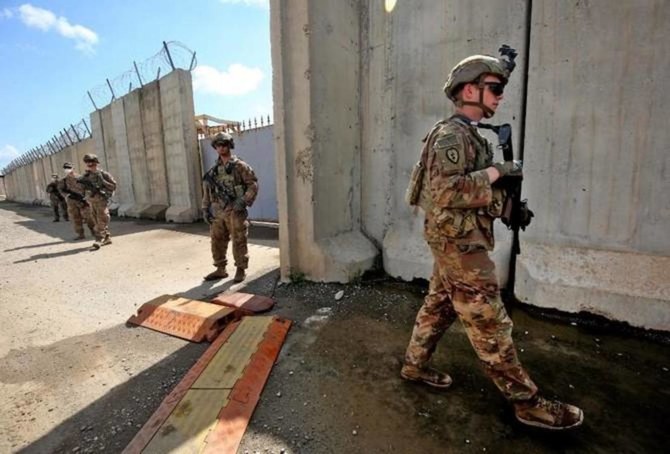
The United States has about 2,500 soldiers in Iraq and another 900 in Syria, deployed as part of efforts to prevent a resurgence of the Daesh group.


![]()

Pro-Iranian Iraq militia labels US sanctions ‘ridiculous’
Short Url
https://arab.news/8pfht
Pro-Iranian Iraq militia labels US sanctions ‘ridiculous’
- Kataeb Hezbollah spokesman Abu Ali Al-Askari said attacks by “the Islamic resistance in Iraq” were part of a “strategy of attrition,” dismissing sanctions as ineffectual
Latest updates


© 2026 SAUDI RESEARCH & PUBLISHING COMPANY, All Rights Reserved And subject to Terms of Use Agreement.