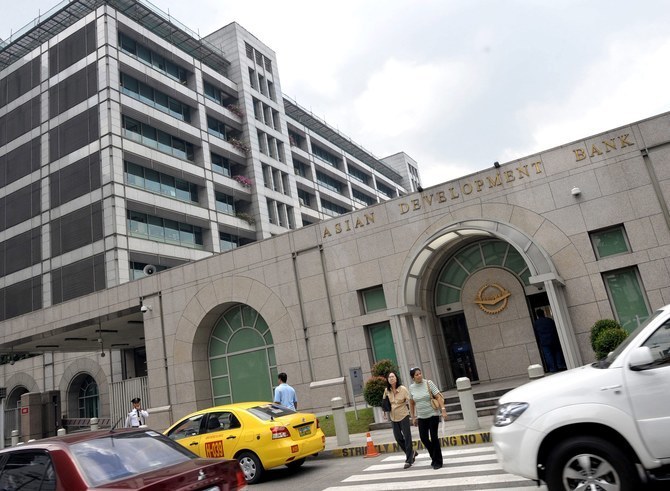
ISLAMABAD: The Asian Development Bank (ADB) has approved $250 million loan for Pakistan that will help the South Asian country deliver reliable electricity by expanding and improving its power transmission network in the Punjab and Khyber Pakhtunkhwa provinces, the Bank said on Friday.
Pakistan has enough installed capacity to meet its demand for electricity, but the South Asian country lacks adequate resources and cannot afford to invest in new infrastructure and power lines, which often result in transmission losses.
In January this year, the country suffered a nationwide blackout due to a frequency failure in the national grid, which happened because of a major mismatch between demand and supply. It was the second nationwide shutdown in three months.
The ADB said the $250 million loan was part of its Power Transmission Strengthening Project to increase transmission capacity of Pakistan’s national grid by expanding high-voltage transmission network to close 500 kilovolt (kV) and 220 kV transmission line loops, and reduce transmission losses by replacing old transmission lines.
“Reliable power supply is essential to inclusive, sustainable economic growth, and it will also provide economic opportunities to rural communities,” said Yevgeniy Zhukov, ADB director-general for Central and West Asia.
“We are pleased to continue supporting Pakistan in its efforts to achieve energy security while improving energy efficiency.”
The project will complement ADB’s ongoing support to Pakistan’s National Transmission & Despatch Company Limited (NTDC) aimed at ensuring energy security, climate resilience, and increased transmission capacity to deploy sufficient, reliable, clean, and cost-effective energy, according to ADB.
Aside from strengthening power transmission, it will also enhance the project and financial management of NTDC as well as its capacity to incorporate climate resilience in planning and operations.
“To promote gender equality and women’s involvement in the energy sector, ADB will develop guidelines for mentorships, conduct awareness campaigns, establish childcare centers, and provide technical training to female staff in the NTDC,” ADB Senior Energy Specialist Takhmina Mukhamedova said.
“This project also includes livelihood skills development for women in the project areas to improve their economic opportunities, and training for local communities to enable them to respond to climate-induced natural hazards.”
Pakistan was a founding member of ADB. Since 1966, the bank has committed over $52 billion in public and private sector loans, grants, and other forms of financing to promote inclusive economic growth in Pakistan and improve the country’s infrastructure, energy and food security, transport networks, and social services.
ADB said it was committed to achieving a prosperous, inclusive, resilient, and sustainable Asia and the Pacific, while sustaining its efforts to eradicate extreme poverty. The bank, which was established in 1966, is owned by 68 members — 49 from the region.


![]()

ADB approves $250 million loan to help Pakistan improve power transmission
Short Url
https://arab.news/8my7f
ADB approves $250 million loan to help Pakistan improve power transmission
- Pakistan has faced transmission losses due to its inability to invest in new infrastructure and power lines
- The ADB loan will help the South Asian country reduce these losses by replacing old transmission lines
Latest updates


Recommended


© 2026 SAUDI RESEARCH & PUBLISHING COMPANY, All Rights Reserved And subject to Terms of Use Agreement.