NEW YORK: UN Secretary-General Antonio Guterres said Wednesday he is “deeply concerned” about the widening conflict in Myanmar, sparked by an offensive launched by ethnic minority armed groups last month.
Guterres is “deeply concerned by the expansion of conflict” across a vast swathe of the country that the UN says has displaced more than 200,000 people, spokesman Stephane Dujarric said in a statement.
Fighting has raged since October 27 after the Myanmar National Democratic Alliance Army (MNDAA), Ta’ang National Liberation Army (TNLA) and Arakan Army (AA) launched attacks on the military near the northern border with China.
This week, the AA launched fresh attacks on the military in western Rakhine state, while anti-junta fighters in Kayah state on the Thai border were battling the military near state capital Loikaw.
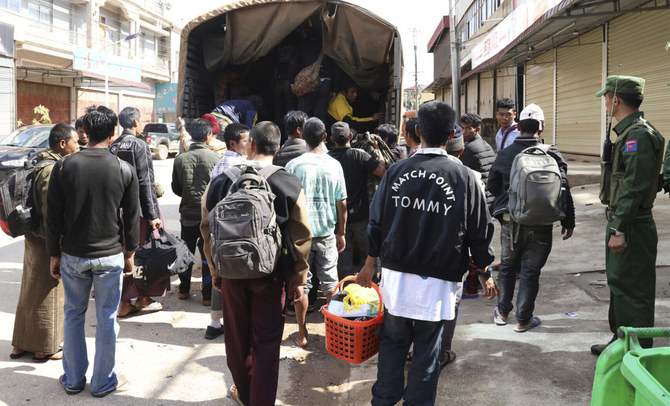
At least 75 civilians including children have been killed and 94 people wounded in the fighting, according to the United Nations Office for the Coordination of Humanitarian Affairs, citing initial reports from the field.

UN chief ‘deeply concerned’ by widening Myanmar conflict
https://arab.news/93u6d
UN chief ‘deeply concerned’ by widening Myanmar conflict
- Antonio Guterres ‘deeply concerned by the expansion of conflict’ across a vast swathe of the country
Sequestered Suu Kyi overshadows military-run Myanmar election
- Suu Kyi’s reputation abroad has been heavily tarnished over her government’s handling of the Rohingya crisis
YANGON: Ousted Myanmar leader Aung San Suu Kyi has been siloed in military detention since a 2021 coup, but her absence looms large over junta-run polls the generals are touting as a return to democracy.
The Nobel Peace Prize laureate was once the darling of foreign diplomats, with legions of supporters at home and a reputation for redeeming Myanmar from a history of iron-fisted martial rule.
Her followers swept a landslide victory in Myanmar’s last elections in 2020 but the military voided the vote, dissolved her National League for Democracy party and has jailed her in total seclusion.
As she disappeared and a decade-long democratic experiment was halted, activists rose up — first as street protesters and then as guerrilla rebels battling the military in an all-consuming civil war.
Suu Kyi’s reputation abroad has been heavily tarnished over her government’s handling of the Rohingya crisis.
But for her many followers in Myanmar, her name is still a byword for democracy, and her absence on the ballot, an indictment it will be neither free nor fair.
The octogenarian — known in Myanmar as “The Lady” and famed for wearing flowers in her hair — remains under lock and key as her junta jailers hold polls overwriting her 2020 victory. The second of the three-phase election began Sunday, with Suu Kyi’s constituency of Kawhmu outside Yangon being contested by parties cleared to run in the heavily restricted poll.
Suu Kyi has spent around two decades of her life in military detention — but in a striking contradiction, she is the daughter of the founder of Myanmar’s armed forces.
She was born on June 19, 1945, in Japanese-occupied Yangon during the final weeks of WWII.
Her father, Aung San, fought for and against both the British and the Japanese colonizers as he sought to secure independence for his country.


