



LONDON: Israeli airstrikes on the largest and most densely populated of Gaza’s eight refugee camps, Jabalia, in recent days have killed at least 210 Palestinians, injured hundreds more, and left scores of people buried beneath the rubble of their homes.
Few of the families who live in the overcrowded camp, established by the UN northeast of Gaza City in 1948, have known anything but violence and privations of war. Now, under relentless Israeli bombardment, they have nowhere to run.
On Oct. 31 and Nov. 1, heavy bombardment by the Israel Defense Forces leveled entire housing blocks in the Jabalia camp, killing at least 195 Palestinians and injuring more than 777.
Israel said it was targeting Ibrahim Biari, a key Hamas commander, as part of the IDF’s mission to destroy the Palestinian militant group responsible for the Oct. 7 attacks on southern Israel, which resulted in the deaths of 1,400 people and the abduction of 240 others.
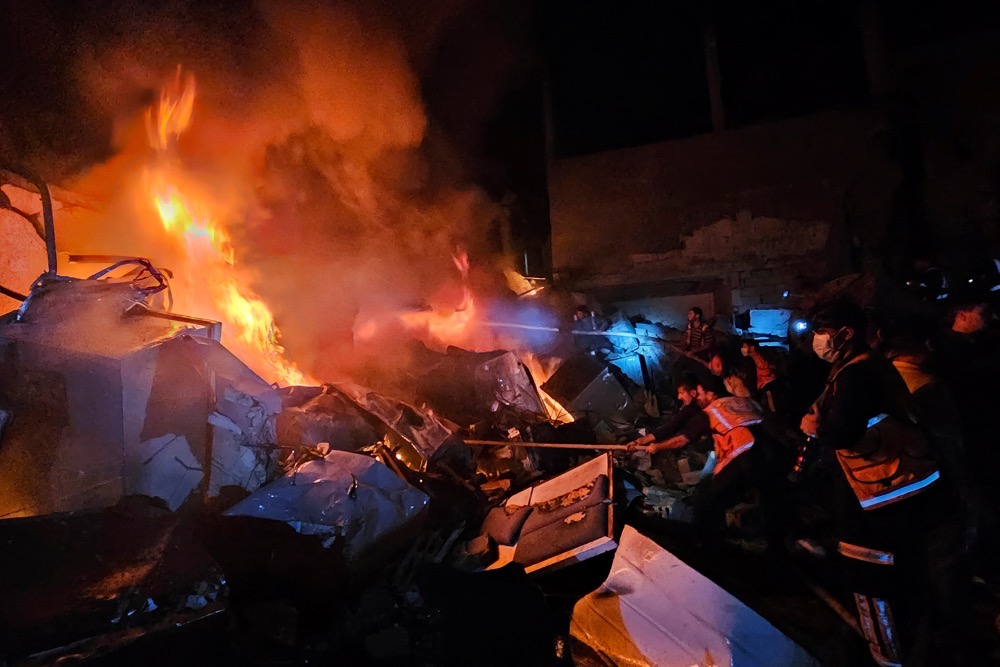
Israel said it had attacked the Jabalia refugee camp in Gaza. (Reuters)
In a briefing after the bombing, IDF spokesperson Daniel Hagari claimed Biari had played a key role in planning the Oct. 7 attacks using a network of tunnels burrowed beneath the refugee camp, which Israeli officials have dubbed the “metro.”
The two Israeli attacks on Jabalia were followed by a third major bombardment on Saturday, which killed at least 15 people. According to the health ministry of Gaza, which is governed by Hamas, the death toll in the beleaguered enclave since Oct. 7 has now surpassed 10,000. The actual figure, including both civilians and combatants, is believed to be much higher.
The attacks on Jabalia have sparked widespread condemnation, with Bahrain and Jordan expelling Israeli ambassadors and recalling their own.
Saudi Arabia denounced “in the strongest terms possible” the “inhumane targeting” of the refugee camp, while the UAE said the persistence of the “senseless bombing” will have difficult-to-remedy repercussions for the region.
Antonio Guterres, the UN secretary-general, said he was “appalled over the escalating violence in Gaza” and the “Israeli airstrikes in residential areas of the densely populated Jabalia refugee camp.”
US Senator Bernie Sanders described the situation as “one of the more horrific moments in modern history,” calling for the cessation of Israel’s “indiscriminate” killing of civilians in Gaza.
Othman Moqbel, head of the UK-based humanitarian aid agency Action for Humanity, told Arab News his NGO was “horrified and devastated by the news of the Jabalia massacre” in Gaza.
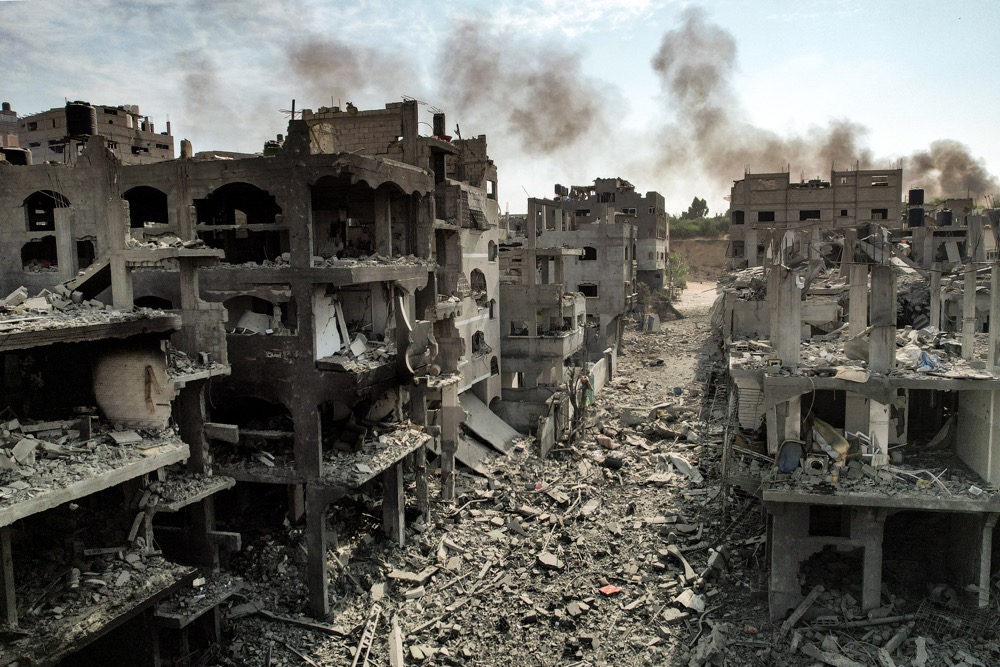
The attacks on Jabalia have sparked widespread condemnation. (AFP)
He said the death toll was expected to rise as rescue teams continued to search through the rubble for survivors and to retrieve bodies.
The 1.4 square-kilometer Jabalia refugee camp is home to 116,000 residents, according to the UN Relief and Works Agency, most of whom are descendants of the Palestinian families who fled their homes in the wake of the 1948 Arab-Israeli war.
Nadia Naser-Najjab, a senior lecturer in Palestine studies at the UK’s University of Exeter, told Arab News that amid the ongoing Gaza carnage, the residents of Jabalia were “in a state of helplessness, knowing that even if they attempt to flee to southern Gaza, they would be targeted and killed either on the way there or wherever they take shelter.”
Early in the conflict, Israel had urged Gazan civilians to leave their homes and seek sanctuary in the south of the Gaza Strip while the IDF conducted bombing raids and ground operations against Hamas in the north.
However, a recent analysis by BBC Verify found that Israel had bombed areas in Gaza where it had previously directed Palestinian civilians to evacuate for their safety.
Opinion
This section contains relevant reference points, placed in (Opinion field)
Of course, displacement is not a new experience for Gazans, particularly those in Jabalia and other camps.
“These refugees were expelled from other parts of southern Palestine, such as the cities known today as Ashkelon and Sderot, during the Nakba,” Naser-Najjab said, referring to the mass displacement that followed the 1948 war.
“UNRWA built them eight camps in Gaza to home them and look after them.”
Naser-Najjab pointed out that the refugee issue should have been resolved through a political solution long ago, but the Oslo Accords of 1993 never addressed the matter. “Israel never agreed to solve the refugee problem in a just way,” she added.
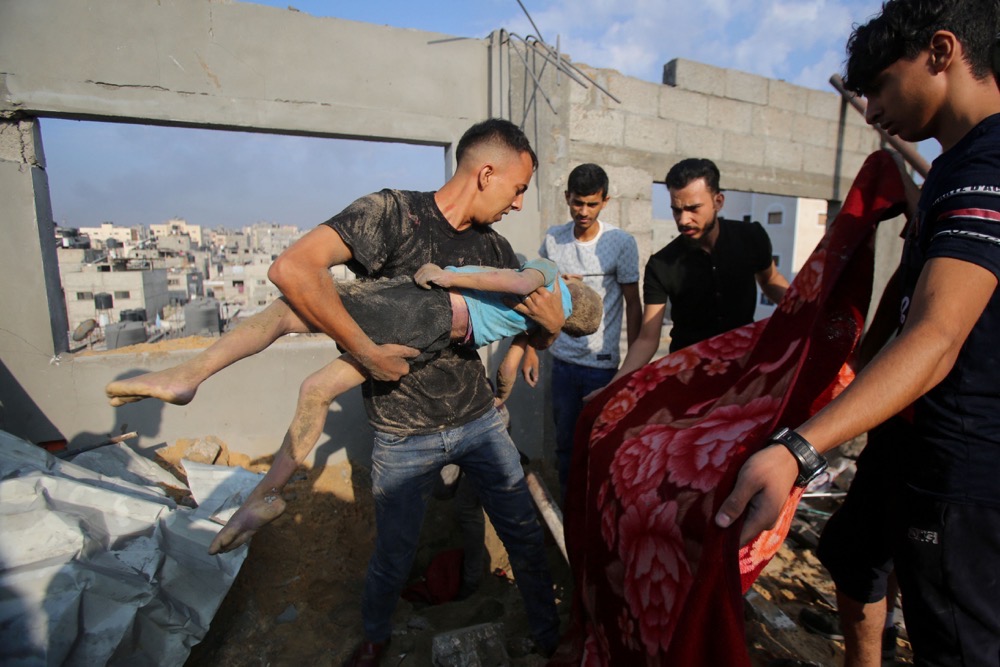
At least 210 Palestinians were killed in the attack on the camp. (AFP)
“Instead, Israel suggested relocating a number of refugees to the territories under the Palestinian Authority’s administration.”
The 17-year blockade of the Gaza Strip only compounded the misery of the Jabalia camp population. Issues identified by UNRWA include high rates of unemployment, prolonged power cuts, contaminated water, extreme overcrowding, and a lack of construction materials to expand living spaces or repair the damage caused by previous Israeli attacks.
Jabalia has suffered repeated blows over the 75 years since its establishment, earning it the moniker “the camp of resilience,” Mohammed Solieman, a former history professor at the University of Leeds, in England, told Arab News.
The first Palestinian intifada, or uprising, against Israel began in the Jabalia camp in December 1987. It concluded with the signing of the Oslo Accords in 1993, which initiated direct talks between the Israeli and Palestinian leaderships.
FASTFACTS
• The Jabalia refugee camp was established by UNRWA in 1948.
• 116,000 people are crammed into the 1.4 sq-km camp.
• Israeli attacks on Jabalia have sparked strong Arab condemnation.
The camp also bore the brunt of an Israeli military offensive in March 2003, when tanks, armored vehicles, fighter jets, and helicopter gunships were deployed, according to media reports at the time. At least 11 Palestinians were reportedly killed and 140 wounded in that offensive.
Another large-scale IDF operation, which took place in September and October 2004, targeted the Jabalia camp as well as the town of Beit Hanoun. Fifteen homes were flattened, according to UNRWA, and international humanitarian staff were prevented from entering Gaza.
During the 2014 Gaza war, Israeli fighter jets bombed a school managed by UNRWA that had been sheltering displaced Palestinians, killing at least 20 and injuring more than 150, according to media reports citing Gaza health officials.
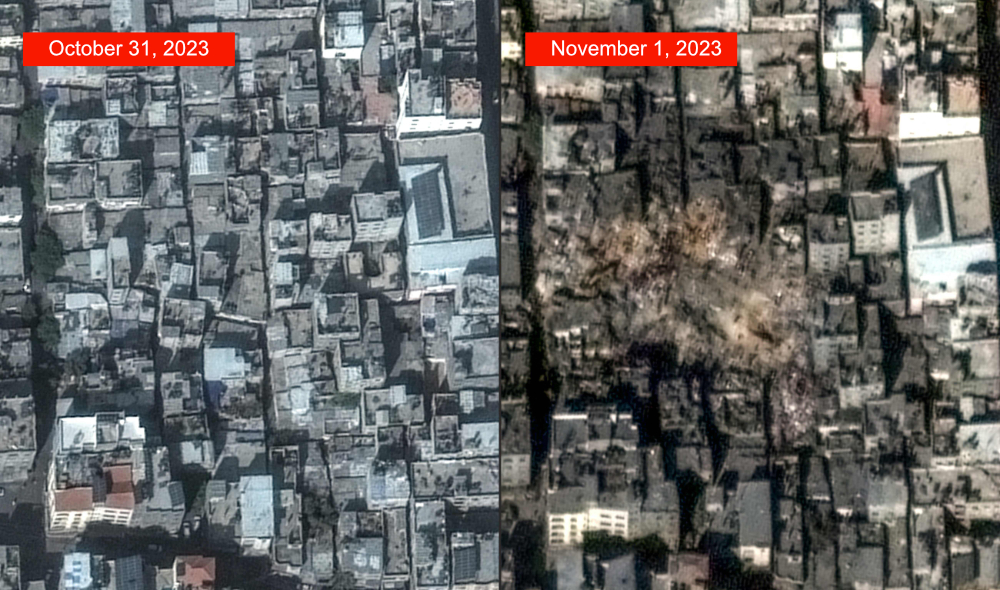
An overview of the Jabalia refugee camp and the destruction in the same camp after it was hit by an Israeli strike. (AFP/Maxar)
Jabalia had been “one of the most prominent educational areas in the Gaza Strip as it is home to UNRWA schools,” Solieman said. According to UNRWA’s figures, the camp has 26 schools, two health centers, and a public library.
Residents have again taken refuge in UNRWA schools, which have not been spared Israeli bombardment. On Saturday, the IDF struck the UNRWA-run Al-Fakhoura School, killing at least 15 people and injuring 54, according to local media.
Naser-Najjab said: “After every war on Gaza, the international community holds conferences and decides to rebuild the Strip.
“What is often offered is humanitarian aid, which is necessary and important, but no political solution.”
She urged the international community to “examine what is happening today within the historical context to find a right and just solution for Gaza’s population.”
Citing events in the early 1970s, when Israel demolished homes in Rafah under the pretext of widening roads, displacing 16,000 Palestinians, Naser-Najjab said she believed the Israelis intended to push the Palestinians of Gaza into Egypt’s Sinai.
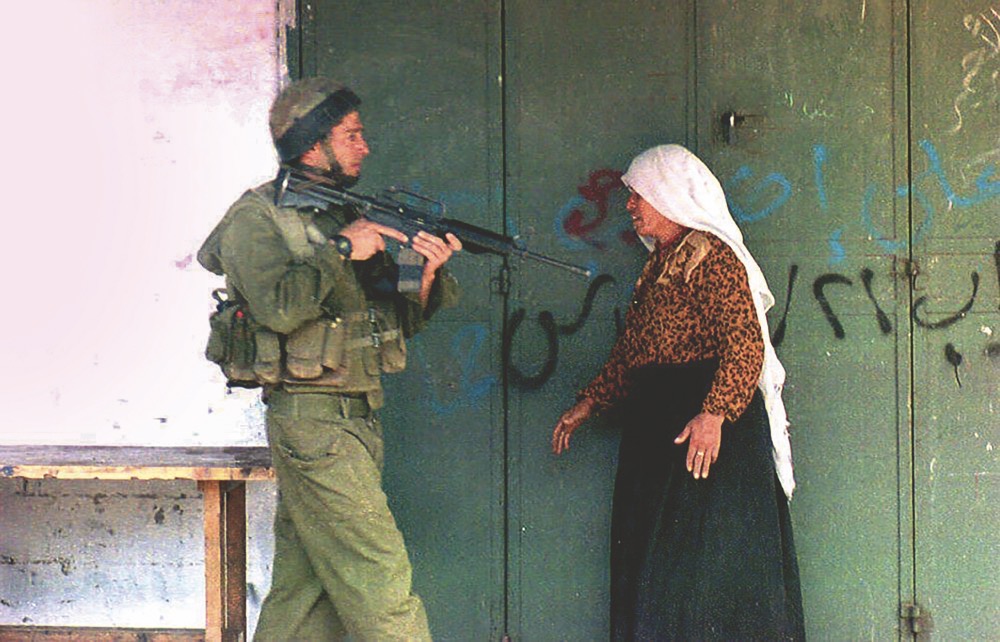
Jabalia has suffered repeated blows over the 75 years since its establishment, earning it the moniker “the camp of resilience.” (AFP/Getty Images)
In 1971, many people from the Gaza Strip “were forced into Sinai, where Canada Camp was established,” she added.
After the signing of the Israel-Egypt peace treaty, known as the 1978 Camp David Accords, a number of families returned to Gaza from Sinai.
“This is the context of what is happening today. Israel is attempting to drive the people of Gaza into Egypt’s Sinai Peninsula, offering it as the sole solution to the humanitarian crisis.”
Israeli airstrikes since the launch of the IDF’s military campaign in Gaza have targeted several of the northern enclave’s eight refugee camps, including Al-Shati, Nuseirat, and Al-Maghazi, as well as Jabalia.
An overnight attack on Al-Maghazi camp on Saturday killed at least 47 people and injured more than 100, while many others remain trapped under rubble, according to local media.
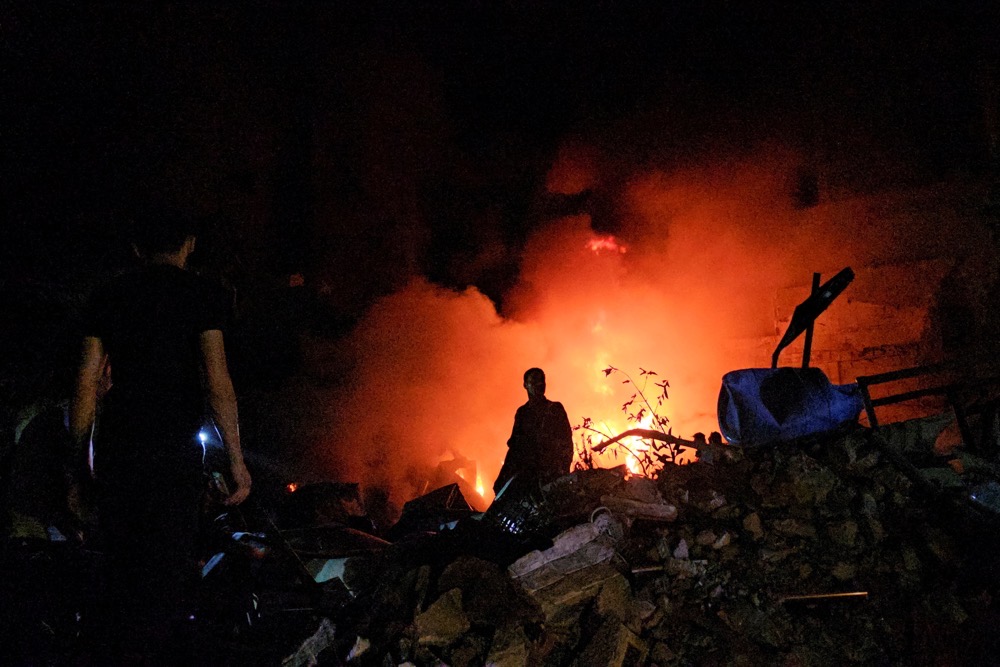
Israel attacked the Jabalia refugee camp in Gaza on Oct. 31, 2023. (Reuters)
Humanitarian aid agencies have repeatedly called for an immediate ceasefire in Gaza to assist the civilian population, including those trapped in Jabalia.
Action for Humanity’s Moqbel said: “Nearly every day (for weeks now), we have called for a ceasefire, for increased humanitarian access, and for the recognition of international humanitarian law to protect the lives of innocents in this catastrophic conflict.
“We are advocating for the same actions now, and will continue to do so, until all lives are protected.”


