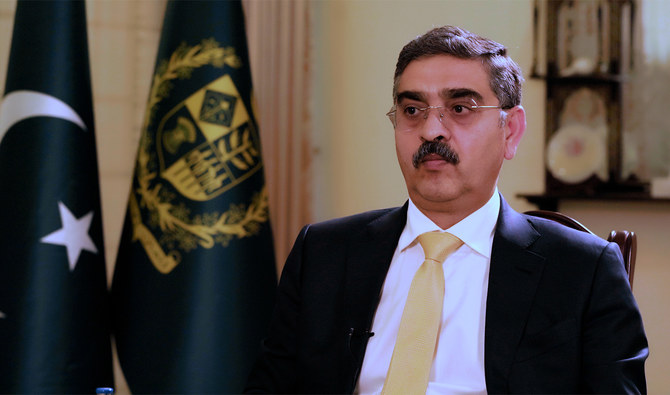

ISLAMABAD: Pakistani Caretaker Prime Minister Anwaar-ul-Haq Kakar has said his government hopes to conclude a deal by December for Saudi Arabia to buy stakes in Reko Diq, one of the world’s biggest gold and copper mining projects, in the first time Islamabad has officially confirmed it is considering selling shares.
Barrick Gold owns a 50 percent stake in the Reko Diq mine, with Pakistan’s federal government holding a 25 percent share and the regional government in Balochistan, where the reserves are located, owning the rest. Barrick considers the mine one of the world’s largest underdeveloped copper-gold areas, with the over $7 billion project capable of producing 200,000 tons of copper and 250,000 ounces of gold a year for more than half a century.
Barrick CEO Mark Bristow has repeatedly said the company’s stake wasn’t up for sale but it had no objection if Saudi Arabia wanted to buy out the equity of the Pakistan government, which would mean the South Asian country would no longer be able to maintain equal shares as the Canadian mining company.
In a wide-ranging interview with Arab News on Monday, PM Kakar confirmed negotiations with Saudi Arabia to buy stakes in Reko Diq and said he was “hopeful” of a deal by December. Riyadh has not yet commented on its interest in the mining project.
“We are quite excited at the Saudi offer, and we would be very much encouraging their participation, not just in this project but otherwise also,” Kakar said when asked if it was acceptable to the Pakistan government to sell its equity to Saudi Arabia and lose out on holding equal stake in the mines.
“It is the negotiation part, which is happening between the three parties, and let’s see what sort of outcome comes of that ... We are just a government that would encourage the Saudis to be part of this deal and the rest of the nitty gritty details, when they reach a certain decision, we’ll share the news.”
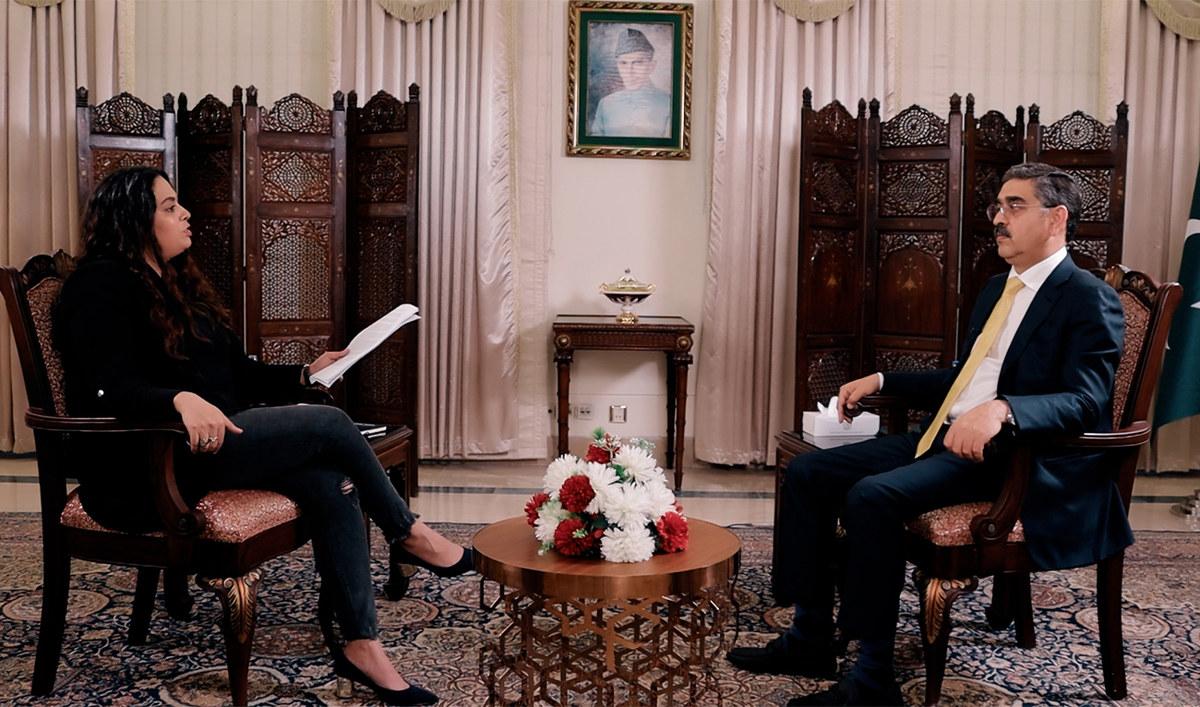
Pakistani Caretaker Prime Minister Anwaar-ul-Haq Kakar (right) speaks during an interview to Arab News Pakistan in Islamabad, Pakistan, on November 6, 2023. (AN photo)
Last month, the federal cabinet granted exemptions to the Petroleum Division from Public Procurement Regulatory Authority rules to propose a negotiating committee and hire an additional adviser to finalize binding agreements with Saudi Arabia by December 25. The UAE-based RB&A Partners consulting firm has reportedly been hired as a specialist adviser to help meet the deadline.
“We are still approaching that day,” Kakar said when asked if his government would succeed in meeting the December 25 deadline. “Hopefully [we can expect a deal by December].”
In August, Pakistan hosted officials from Saudi Arabia in its inaugural mining conference in Islamabad where Barrick officials were also present. Barrick and Saudi’s state-owned mining company Ma’aden jointly operate a copper project in Jeddah.
Saudi Arabia’s Public Investment Fund (PIF) has been looking to invest in copper projects across the world as part of its drive toward funding energy transition projects. Earlier this year, PIF agreed to acquire a 10 percent stake in Brazilian mining company Vale base metals business.
“ONE WINDOW OPERATION”
A joint venture by Barrick and Chile’s Antofagasta discovered the vast mineral deposits of Reko Diq more than a decade ago at the foot of an extinct volcano in the Balochistan region which borders Iran and Afghanistan. But Barrick’s license to mine the untapped deposits was canceled after the Pakistani Supreme Court in 2011 ruled illegal the award granted to the Canadian firm and Antofagasta.
In an out of court agreement last year, Barrick ended the long-running dispute with Pakistan and agreed to restart development. Under the deal, the company withdrew its case in an international arbitration court, which had slapped a penalty of $11 billion on Pakistan for suspending the contracts of the company and its partners in 2011. Antofagasta, however, left the project, saying its growth strategy was focused on production of copper and by-products in the Americas.
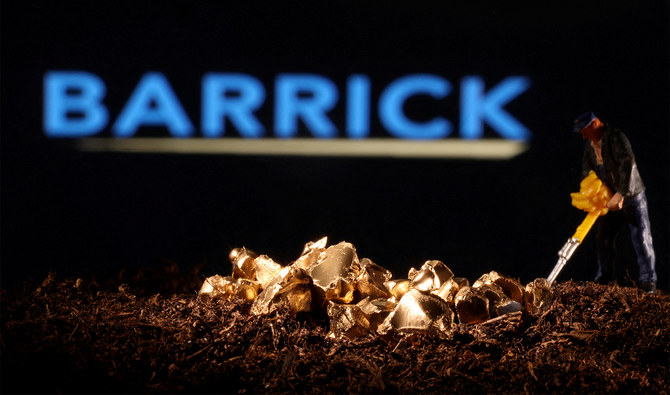
A small toy figure and gold imitation are seen in front of the Barrick logo in this illustration taken November 19, 2021. (REUTERS/File)
Kakar said in the future, a new Special Investment Facilitation Council (SIFC) set up in July would serve as a “one window operation” to address any concerns of foreign investors.
“Two or three areas have already been addressed, like repatriation of dollars, which is the demand of any FDI [foreign direct investment] entity, [that] it’s insured, it’s legally protected,” the PM said.
“Secondly, the bureaucratic red tapism has been also addressed, the one-window opportunity on the platform of SIFC is primarily being designed for this purpose, that we need to cut off all these bureaucratic hurdles and rationalize the entire process of allowing and giving permission to any investment from outside within 15 days.”
He said a dispute resolution mechanism had been agreed under the SIFC platform.
“It’s quite encouraging and favorable, which is acceptable to all the outside parties … The dispute resolution mechanism has been addressed.”
When asked if reports that SIFC would bring in up to $60 billion in investments in Pakistan in the next five years were realistic, the PM said:
“It is indeed. It could be probably more than that.”