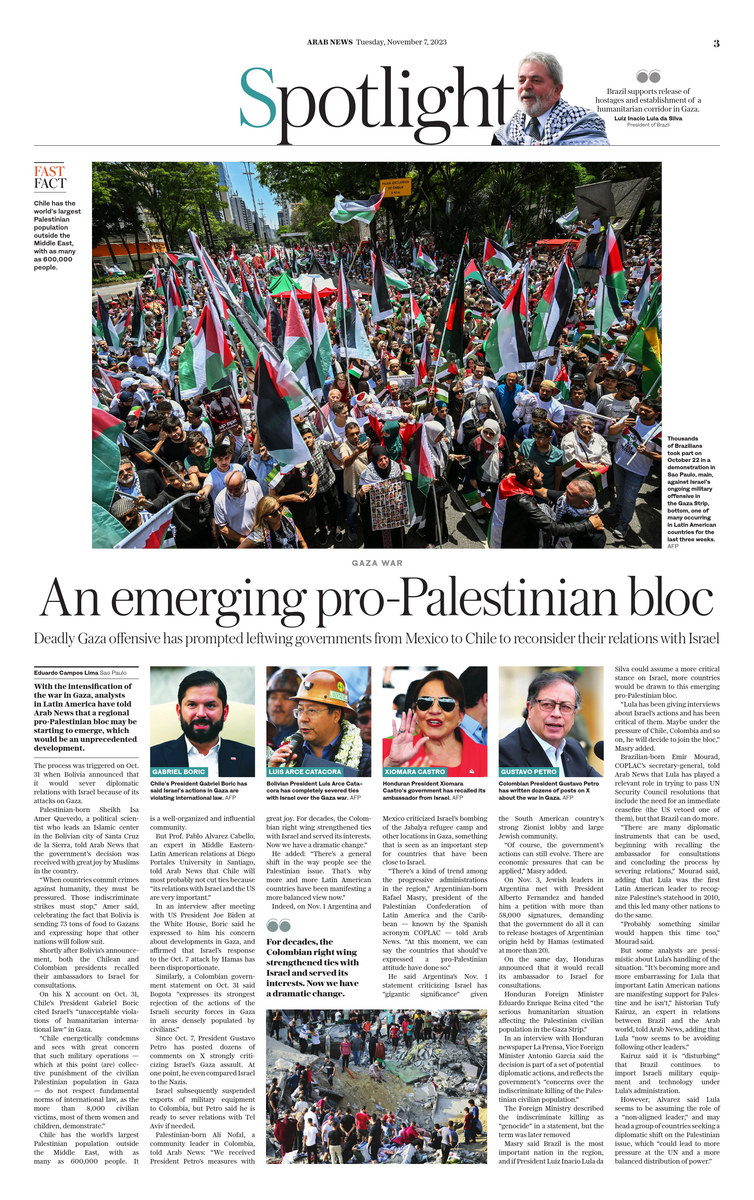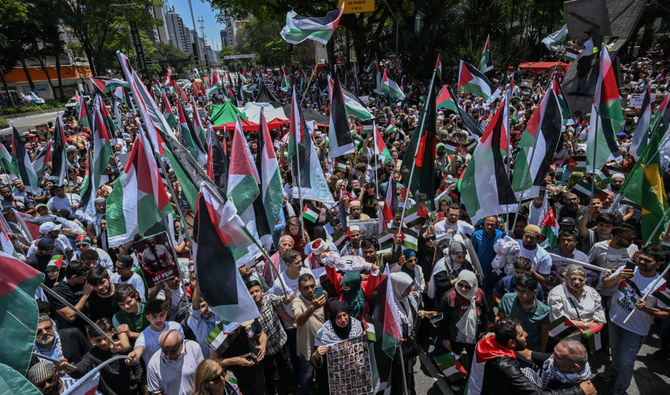

SAO PAULO, Brazil: With the intensification of the war in Gaza, analysts in Latin America have told Arab News that a regional pro-Palestinian bloc may be starting to emerge, which would be an unprecedented development.
The process was triggered on Oct. 31 when Bolivia announced that it would sever diplomatic relations with Israel because of its attacks on Gaza.
Palestinian-born Sheikh Isa Amer Quevedo, a political scientist who leads an Islamic center in the Bolivian city of Santa Cruz de la Sierra, told Arab News that the government’s decision was received with great joy by Muslims in the country.
“When countries commit crimes against humanity, they must be pressured. Those indiscriminate strikes must stop,” Amer said, celebrating the fact that Bolivia is sending 73 tons of food to Gazans and expressing hope that other nations will follow suit.
Shortly after Bolivia’s announcement, both the Chilean and Colombian presidents recalled their ambassadors to Israel for consultations.

On his X account on Oct. 31, Chile’s President Gabriel Boric cited Israel’s “unacceptable violations of humanitarian international law” in Gaza.
“Chile energetically condemns and sees with great concern that such military operations — which at this point (are) collective punishment of the civilian Palestinian population in Gaza — do not respect fundamental norms of international law, as the more than 8,000 civilian victims, most of them women and children, demonstrate.”
Chile has the world’s largest Palestinian population outside the Middle East, with as many as 600,000 people. It is a well-organized and influential community.
But Prof. Pablo Alvarez Cabello, an expert in Middle Eastern-Latin American relations at Diego Portales University in Santiago, told Arab News that Chile will most probably not cut ties because “its relations with Israel and the US are very important.”
In an interview after meeting with US President Joe Biden at the White House, Boric said he expressed to him his concern about developments in Gaza, and affirmed that Israel’s response to the Oct. 7 attack by Hamas has been disproportionate.
FASTFACT
- Chile has the world’s largest Palestinian population outside the Middle East, with as many as 600,000 people.
Similarly, a Colombian government statement on Oct. 31 said Bogota “expresses its strongest rejection of the actions of the Israeli security forces in Gaza in areas densely populated by civilians.”
Since Oct. 7, President Gustavo Petro has posted dozens of comments on X strongly criticizing Israel’s Gaza assault. At one point, he even compared Israel to the Nazis.
Israel subsequently suspended exports of military equipment to Colombia, but Petro said he is ready to sever relations with Tel Aviv if needed.
Palestinian-born Ali Nofal, a community leader in Colombia, told Arab News: “We received President Petro’s measures with great joy. For decades, the Colombian right wing strengthened ties with Israel and served its interests. Now we have a dramatic change.”
He added: “There’s a general shift in the way people see the Palestinian issue. That’s why more and more Latin American countries have been manifesting a more balanced view now.”
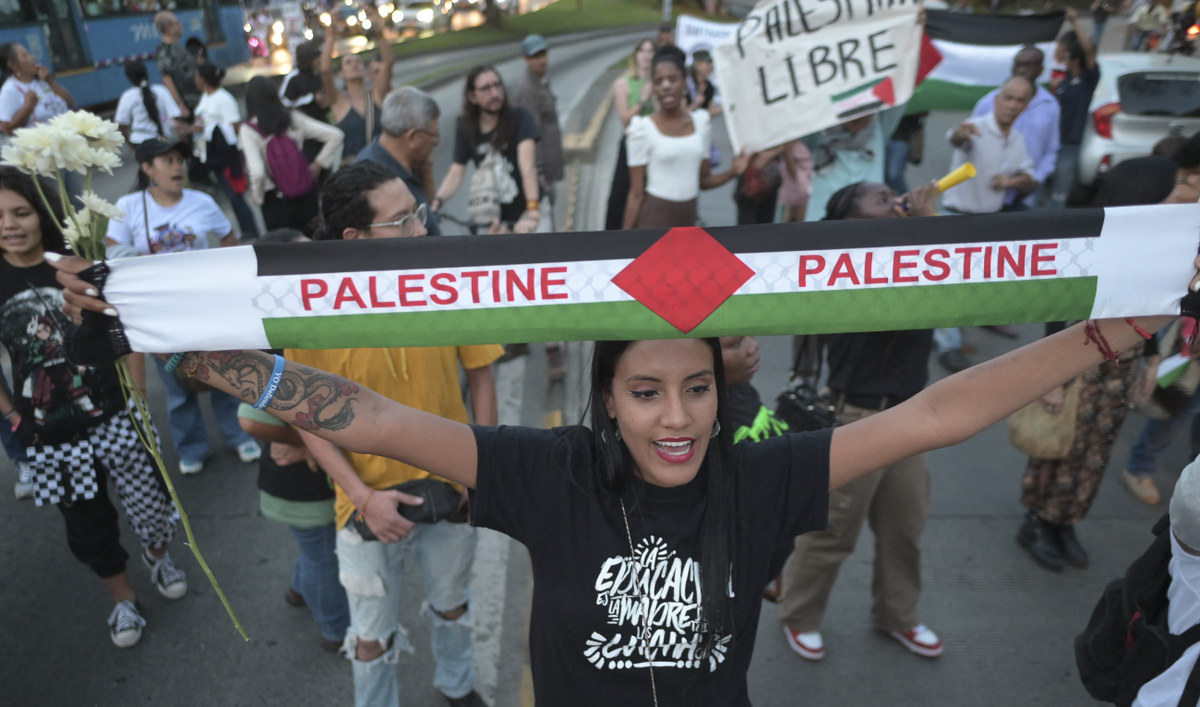
People demonstrate in support of Palestinians in Cali, Colombia, on October 19, 2023. (AFP)
Indeed, on Nov. 1 Argentina and Mexico criticized Israel’s bombing of the Jabalya refugee camp and other locations in Gaza, something that is seen as an important step for countries that have been close to Israel.
“There’s a kind of trend among the progressive administrations in the region,” Argentinian-born Rafael Masry, president of the Palestinian Confederation of Latin America and the Caribbean — known by the Spanish acronym COPLAC — told Arab News. “At this moment, we can say the countries that should’ve expressed a pro-Palestinian attitude have done so.”
He said Argentina’s Nov. 1 statement criticizing Israel has “gigantic significance” given the South American country’s strong Zionist lobby and large Jewish community.
“Of course, the government’s actions can still evolve. There are economic pressures that can be applied,” Masry added.
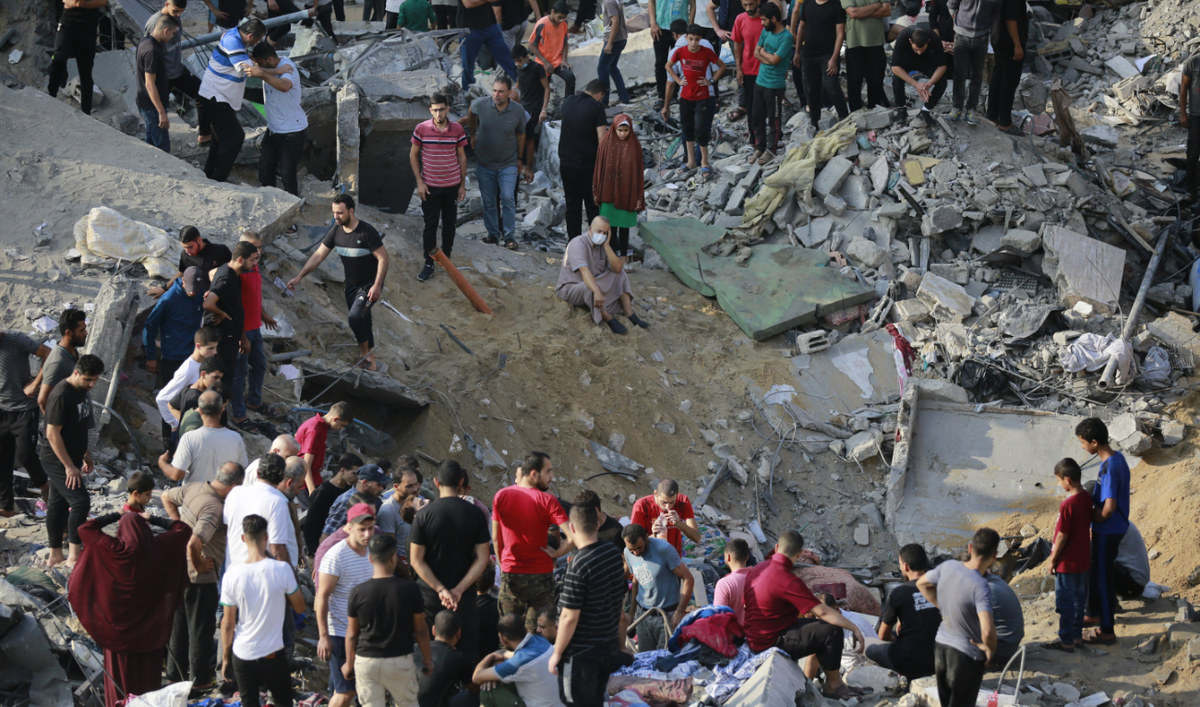
Palestinians check the destruction in the aftermath of an Israeli strike the previous night in the Jabalya camp for Palestinian refugees in the Gaza Strip, on November 1, 2023. (AFP)
On Nov. 3, Jewish leaders in Argentina met with President Alberto Fernandez and handed him a petition with more than 58,000 signatures, demanding that the government do all it can to release hostages of Argentinian origin held by Hamas (estimated at more than 20).
On the same day, Honduras announced that it would recall its ambassador to Israel for consultations.
Honduran Foreign Minister Eduardo Enrique Reina cited “the serious humanitarian situation affecting the Palestinian civilian population in the Gaza Strip.”
In an interview with Honduran newspaper La Prensa, Vice Foreign Minister Antonio Garcia said the decision is part of a set of potential diplomatic actions, and reflects the government’s “concerns over the indiscriminate killing of the Palestinian civilian population.”
The Foreign Ministry described the indiscriminate killing as “genocide” in a statement, but the term was later removed.

Members of the Honduran Committee in Solidarity with the Palestinian People hold a vigil in front of the US embassy in Tegucigalpa on August 7, 2014. (AFP)
Masry said Brazil is the most important nation in the region, and if President Luiz Inacio Lula da Silva could assume a more critical stance on Israel, more countries would be drawn to this emerging pro-Palestinian bloc.
“Lula has been giving interviews about Israel’s actions and has been critical of them. Maybe under the pressure of Chile, Colombia and so on, he will decide to join the bloc,” Masry added.
Brazilian-born Emir Mourad, COPLAC’s secretary-general, told Arab News that Lula has played a relevant role in trying to pass UN Security Council resolutions that include the need for an immediate ceasefire (the US vetoed one of them), but that Brazil can do more.
“There are many diplomatic instruments that can be used, beginning with recalling the ambassador for consultations and concluding the process by severing relations,” Mourad said, adding that Lula was the first Latin American leader to recognize Palestine’s statehood in 2010, and this led many other nations to do the same.
“Probably something similar would happen this time too,” Mourad said.
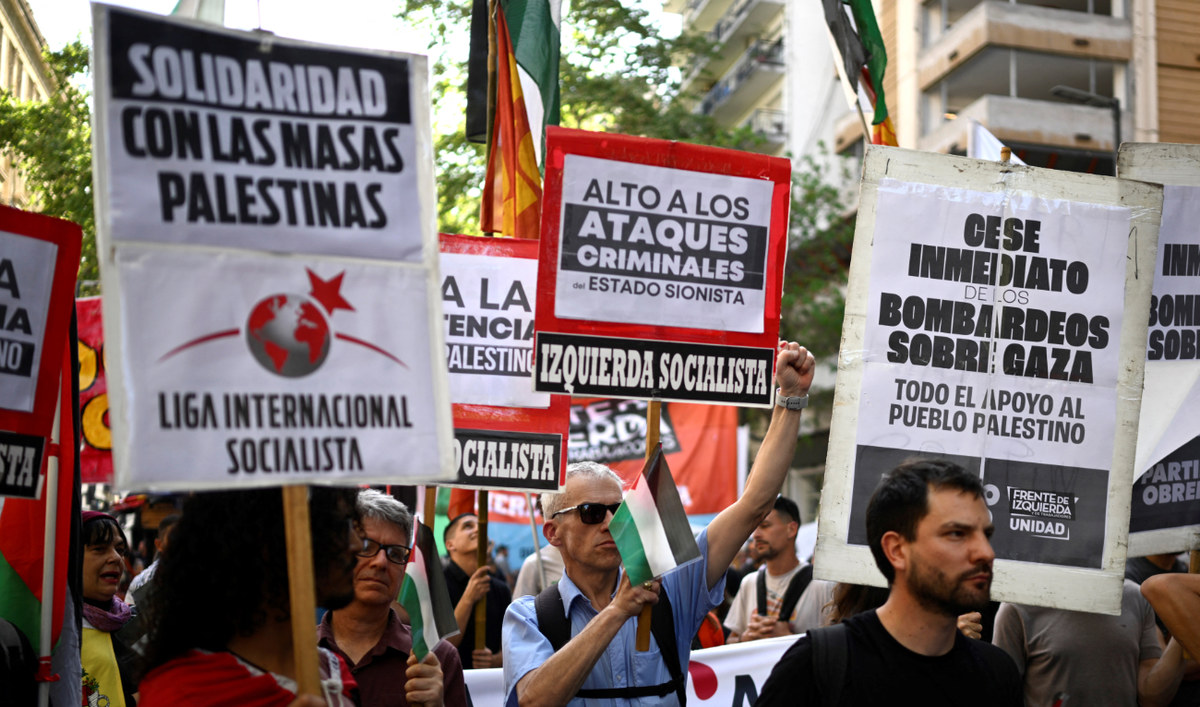
Demonstrators take part in a rally in support for the Palestinian people in front of the Israeli embassy in Buenos Aires, on October 9, 2023. (AFP)
But some analysts are pessimistic about Lula’s handling of the situation. “It’s becoming more and more embarrassing for Lula that important Latin American nations are manifesting support for Palestine and he isn’t,” historian Tufy Kairuz, an expert in relations between Brazil and the Arab world, told Arab News, adding that Lula “now seems to be avoiding following other leaders.”
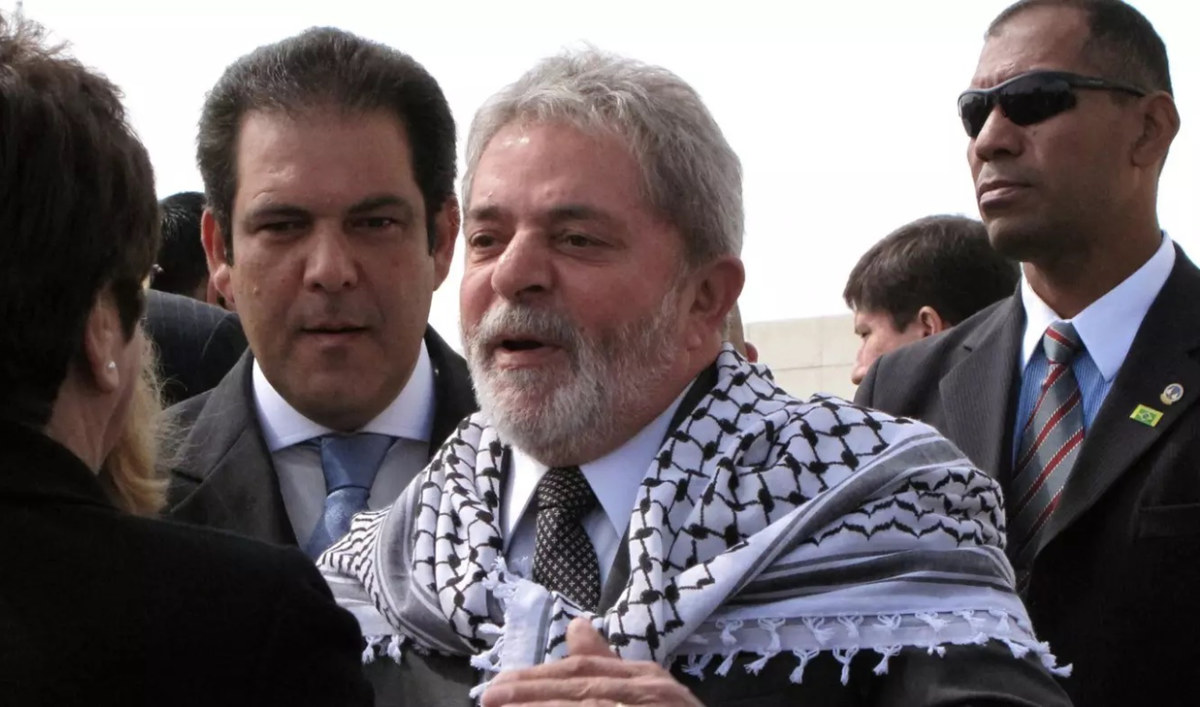
Brazil’s President Luiz Inacio Lula da Silva in Ramallah in 2010. (AFP)
Kairuz said it is “disturbing” that Brazil continues to import Israeli military equipment and technology under Lula’s administration.
However, Alvarez said Lula seems to be assuming the role of a “non-aligned leader,” and may head a group of countries seeking a diplomatic shift on the Palestinian issue, which “could lead to more pressure at the UN and a more balanced distribution of power.”