JOHANNESBURG: South Africa’s government has recalled Monday its ambassador and diplomatic mission to Israel in condemnation of the bombardment of the Gaza Strip, calling it a “genocide.”
The government also threatened action against the Israeli ambassador to South Africa over his recent remarks on the African country’s stance on the Israel-Hamas war. No further details were given about the remarks.
The war broke out after the Palestinian militant group Hamas attacked Israel on Oct.7, leaving over 1,400 people dead. More than 10,000 Palestinians have been killed in Israel’s military offensive in Gaza, according to the Hamas-run health ministry.
“The South African government has decided to withdraw all its diplomats in Tel Aviv for consultation,” said minister in the presidency Khumbudzo Ntshavheni. She added the cabinet noted the “disparaging remarks of the Israeli ambassador to South Africa about those who are opposing the atrocities and genocide of the Israeli government” and that the department of international relations has been instructed to “take the necessary measures within the diplomatic channels and protocols to deal with (his) conduct.”
Ntshavheni also said the position of the Israeli ambassador in the country was “untenable.”
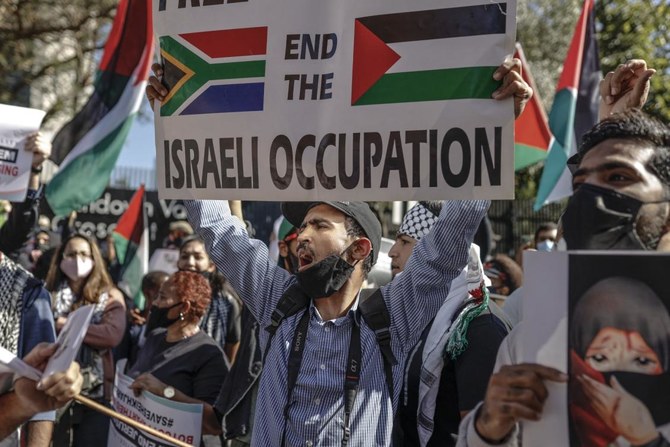
Pro-Palestinian protesters — who have been staging demonstrations by the US Consulate in Johannesburg and Israeli embassies in Pretoria and Cape Town — have called on the South African government to expel the Israeli ambassador.
International relations minister Naledi Pandor, who on Monday hosted her Ukraine counterpart Dmytro Kuleba, said the South African officials would be recalled from Tel Aviv to give the government a detailed briefing about the situation in the region.
“We need to have this engagement with our officials because we are extremely concerned at the continued killing of children and innocent civilians in the Palestinian territory and we believe the nature of response by Israel has become one of collective punishment,” said Pandor.
Pandor said she had discussed the strengthening of bilateral ties with her Ukraine counterpart, including meetings held by at least seven African leaders who visited Moscow and Kyiv earlier this year to propose a peace plan.
“We are one of the few countries around the regions of the world that are able to speak to both Ukraine, as well as Russia.”
The South African government, led by the ruling African National Congress party which has close ties to Palestine, has called for an immediate cease-fire in Gaza and for aid to be allowed into the bombarded enclave.
South Africa is among other countries to recall their ambassadors to Israel to protest the military operations in Gaza, including Chile, Colombia Honduras. Bolivia severed diplomatic ties with the country.
Israel criticized the Latin American countries last week and called on Colombia and Chile to “explicitly condemn the Hamas terrorist organization.


![]()

South Africa recalls ambassador, diplomatic mission to Israel
Short Url
https://arab.news/m4am5
South Africa recalls ambassador, diplomatic mission to Israel
- The cabinet said it noted the remarks of the Israeli ambassador to South Africa about those opposing the atrocities and genocide of the Israeli government
Latest updates


Recommended


© 2026 SAUDI RESEARCH & PUBLISHING COMPANY, All Rights Reserved And subject to Terms of Use Agreement.