NEW YORK CITY: The UN’s high commissioner for refugees, Filipo Grandi, on Tuesday pleaded with members of the Security Council to demand a cease-fire in Gaza, telling them the world is waiting for the UN’s most powerful body to act.
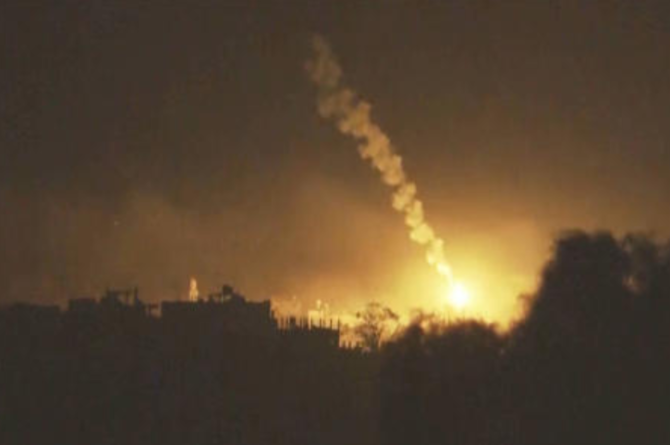
Lamenting the fact that disregard for the basic rules of war is becoming “the norm and not the exception,” he said innocent civilians are being killed in unprecedented numbers “in the Hamas attacks on Israeli civilians, and in the killing of Palestinian civilians and massive destruction of infrastructure caused by the ongoing Israeli military operation.”
Two million Gazans, half of them children, are going though “hell on earth,” said Grandi. “A humanitarian cease-fire can at least stop this spiral of death and I hope that you will overcome your divisions and exercise your authority in demanding one — the world is waiting for you to do so.”
He was speaking during a Security Council meeting about the situation in Ukraine. The war there has entered its 21st month, with hostilities remaining concentrated in the eastern Donbas region and the southern Kherson and Zaporizhzhia areas.
The total number of refugees and displaced people worldwide now stands at 114 million, Grandi told council members, attributing this large number to the “current extreme disorder” around the world, of which the war between Israel and Hamas is the latest symptom.
Calling for a cease-fire in Gaza, he expressed hope that such a move would be just the initial stage in restoring the path toward a resolution of the long-running conflict between Israelis and Palestinians.
“Over many years, (I) have observed how solving the Israeli-Palestinian conflict was always described as ‘elusive,’” he said. “But it has not been elusive; it has been repeatedly and deliberately neglected, cast aside as something no longer necessary, almost ridiculed.
“Dealing with the chronic resurgence of violence, followed by temporary cease-fires, was deemed more expedient than focusing on a real peace, one able to provide Israelis and Palestinians with the rights, recognition, security and statehood that they deserve.
“I hope that now, amid the horrors of war, we can at least see how grave a miscalculation that has been. There will be no peace in the region, and in the world, without a just solution to the Israeli-Palestinian conflict, including the end of the Israeli occupation.”
Grandi repeated the UN’s warning that this current, “deadliest round of violent conflict risks infecting the wider region and beyond with catastrophic consequences.”
The conflict in Gaza is, however, just the latest piece of a “most dangerous jigsaw of war that is rapidly closing in around us,” he said.
He urged council members to also reflect on the situation in Sudan, where the violence is spreading in both “scope and brutality,” solely affecting the Sudanese population while the world remains “scandalously silent” despite the ongoing violations of international humanitarian law.
It is “shameful,” he said, that the same kind of atrocities witnessed in Darfur 20 years ago are recurring now with minimal attention from the world, leading to the displacement of nearly 6 million people from their homes, more than a million of whom have sought refuge in neighboring, often fragile nations. Some have even made their way to Libya and Tunisia before embarking on perilous journeys across the Mediterranean on precarious vessels in an attempt to reach Italy or elsewhere in Europe.
Grandi applauded the resumption of the Jeddah talks between the warring generals in Sudan and expressed hope that they will lead “at least” to an imminent cease-fire.
He urged council members to consider the plight of the millions of people displaced as a result of political instability, economic collapse, and the conflicts and “brutal violence” plaguing places such as Lebanon, the Central Sahel, the Democratic Republic of Congo, Syria, Ukraine, Armenia, Central and Latin America, Myanmar and Afghanistan.
“Each new crisis seems to push the previous ones into dangerous oblivion — but they stay with us,” Grandi said.
“Look at all these crises, and let this lifelong humanitarian worker say that we need your voice to address each one of them. Not your voices — your voice. Your strong, united voice, carrying the authority which the (UN) Charter vests in this council but which the world does not hear any more, drowned as it is in rivalries and divisions.”
With major state donors cutting levels of humanitarian funding, Grandi also spoke of his concern about the prospects for all UN agencies next year.
“UNRWA (the UN Relief and Works Agency for Palestine Refugees in the Near East), whose crucial role is now clear to all, has been chronically underfunded,” he said. “The World Food Program, UNICEF (the UN Children’s Fund), and the International Committee of the Red Cross all face the same financial crunch in their humanitarian activities.
“So, we prioritize and reprioritize. We cut rations, shelter, staff, hoping to maintain a lifeline to those in need. But in many places that lifeline is becoming thinner by the day.
“Being alone, being exposed, being short of resources make me wonder for how much longer we can continue. Humanitarians are tough. But humanitarians (are) near breaking point. And
what will you be left with when they have to go?”
He continued: “The gravity of this moment cannot be overstated. The choices that the 15 of you make — or fail to make — will mark us all, and for generations to come.
“Will you continue to allow this jigsaw of war to be completed by aggressive acts, by your disunity, or by sheer neglect? Or will you take the courageous and necessary steps back from the abyss?”


![]()

World is waiting for you to demand Gaza cease-fire, UN refugee chief tells Security Council
Short Url
https://arab.news/9pg3p
World is waiting for you to demand Gaza cease-fire, UN refugee chief tells Security Council
- Will you allow the ‘jigsaw of war’ to be completed ‘by your disunity or by sheer neglect,’ or ‘will you take the courageous and necessary steps back from the abyss?’ asks Filipo Grandi
- ‘Humanitarians are tough,’ he says, but growing shortfalls in aid funding mean they are ‘near breaking point — and what will you be left with when they have to go?’


Latest updates


© 2026 SAUDI RESEARCH & PUBLISHING COMPANY, All Rights Reserved And subject to Terms of Use Agreement.