JERUSALEM: Israel’s army said Monday it carried out air strikes on military infrastructure inside Syria as fears grow that its war against Hamas could spur a broader regional conflict.
“A short time ago, an IDF fighter jet attacked the launchers” from where overnight attacks originated toward Israeli territory, the military said, indicating it hit “military infrastructure in Syrian territory.”
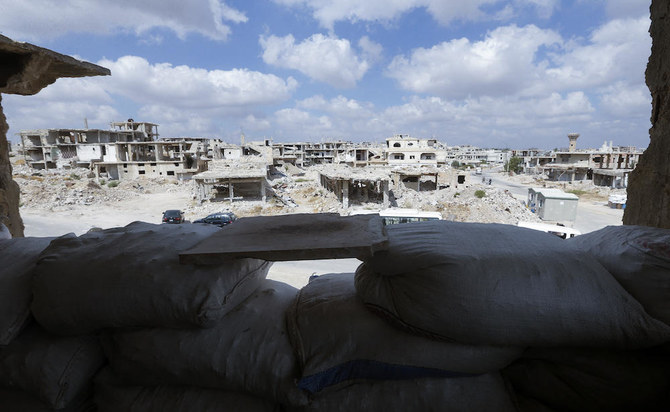
The army did not provide more details, but public broadcaster Kan News said the strikes hit near the southern city of Daraa.
Syria’s defense ministry said Monday Israel struck at around 1:35 am (2235 GMT) “from the direction of the occupied Syrian Golan, targeting two positions of our armed forces in the Daraa countryside, causing some material losses.”
The Syrian Observatory for Human Rights war monitor said Israel targeted “an artillery battalion” in Daraa province, in response to shelling on the nearby occupied Golan Heights.
The Britain-based Observatory, which has a vast network of sources in Syria, said Hezbollah-linked Syrian and Palestinian groups were behind rocket attacks from the Daraa area.
Concerns are growing about the regional fallout from Israel’s war on Gaza’s Hamas rulers.
Since the fighting began, there has been a string of attacks on US forces in Iraq and Syria as well as increasing exchanges of fire along the Israel-Lebanon border between the Iran-backed Hezbollah militia and Israeli forces.
Late Sunday, the Israeli military said it was striking “Hezbollah terrorist targets in Lebanon” in response to rocket fire.
Cross-border exchanges with Hezbollah have become an almost daily occurrence since October 7, when Hamas militants stormed over the Gaza border into southern Israel, killing some 1,400 people, mostly civilians, and seizing nearly 240 hostages, according to Israeli officials.
Since then, Israel has responded with an unrelenting bombardment of Gaza, which the Hamas-run health ministry says has killed more than 8,000 people, nearly half of them children.
Violence on the Israel-Lebanon border has killed at least 62 people in Lebanon according to an AFP tally — 47 of them Hezbollah fighters but also including four civilians, one a Reuters journalist.
Israeli officials have reported at least four deaths, including one civilian.
Nearly 29,000 people have been displaced in Lebanon due to the skirmishes, according to the International Organization for Migration.


![]()

Israel hits military infrastructure in Syria
Short Url
https://arab.news/y8ga4
Israel hits military infrastructure in Syria
- Army did not provide more details, but public broadcaster Kan News said the strikes hit near the southern city of Daraa


Latest updates


Recommended


© 2026 SAUDI RESEARCH & PUBLISHING COMPANY, All Rights Reserved And subject to Terms of Use Agreement.