


JERUSALEM: A depleted workforce. Constant rocket sirens. The lingering shock of an unexpected attack. The cost to Israel’s economy of its war with Hamas militants will be unlike anything it has experienced in decades.
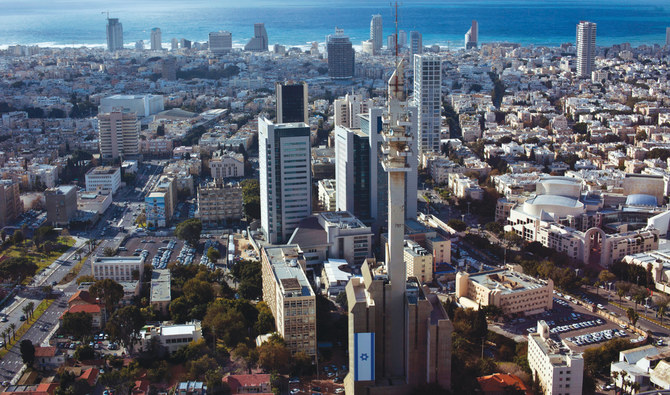
The cranes that dot Tel Aviv’s ever-growing skyline stood still for days after the city closed construction sites. They reopened this week under stricter safety guidelines but inactivity in this sector alone costs the economy an estimated 150 million shekels ($37 million) a day, an industry report said.
“This is not a hit for contractors or industrialists alone,” said Raul Sarugo, president of the Israel Builders’ Association. “This is a hit for every household in Israel.” Israel was blindsided on Oct. 7 by Hamas gunmen from Gaza who rampaged through border towns in the deadliest attack on civilians in its history. In the two weeks since, its military has carried out a devastating bombardment in Gaza.
Israel’s almost $500 billion economy, the most developed in the Middle East with strengths in technology and tourism, was healthy for most of 2023. Growth was on track to reach 3 percent this year with low unemployment.
But with a ground invasion of Gaza likely imminent and the war threatening to spiral into a regional conflict, Israelis are hunkering down and spending much less on everything except food.
Ratings agencies have already warned they could downgrade their assessment of the country’s creditworthiness. Hundreds of thousands of army reservists have been called up, leaving a gaping hole in manpower and disrupting supply chains from seaports to supermarkets, while retailers are furloughing employees. The shekel has slumped.
The conflict has also halted the movement of thousands of Palestinian laborers from Gaza to Israel and curtailed the flow from the occupied West Bank.
The escalators and walkways of Jerusalem’s main shopping mall were empty for the first two weeks of the war, though slowly patrons are venturing back.
“There has been a drastic decline in traffic,” said Netanel Shraga, manager of the Columbia sportswear shop.
Some of Shraga’s staff have been called up to army service, he said. Others are too afraid to come to work.
Hotels are half-filled with Israeli evacuees from border areas, the rest of the rooms are mostly empty. Factories continue to operate, even those near Gaza, but there are not always enough truck drivers to make regular deliveries.
Credit card purchases were down 12 percent in the last week from the same period a year ago, with sharp drops in nearly all categories except for a spike in shopping at supermarkets.
The high-tech industry, which flourished during the COVID-19 pandemic, is struggling. Usually it accounts for 18 percent of Israel’s GDP and half of all exports. “Productivity goes down significantly, because it’s hard to focus on day-to-day work when you have existential concerns,” said Barak Klein, chief financial officer at fintech firm ThetaRay.
Twelve of their 80 Israel-based employees were drafted into the reserves. Others have children home from school. And there is still the constant fear of rocket fire.
ThetaRay set up a day care center for employees who need to bring in children and has been relying on their offices abroad to take some of the workload.
Erel Margalit, whose JVP venture capital fund is one of the country’s most active, said he has been jumping between board meetings, hearing about different business continuity plans.
“Investors need to be assured,” he said.
An estimated 10-15 percent of the high-tech work force has been called up for reserve duty, said Dror Bin, CEO of the state-funded Israel Innovation Authority.


