GANGTOK, India: Rescuers found more bodies overnight as they dug through slushy debris and ice-cold water in a hunt for survivors after a glacial lake burst through a dam in India’s Himalayan northeast, washing away houses and bridges and forcing thousands to flee.
Officials said the hundreds of rescuers recovered six more bodies early Saturday, bringing the death toll to 47. At least 150 people are still missing.
The flood began shortly after midnight Wednesday, when the waters of a glacial lake overflowed, cracking open the biggest hydroelectric dam in Sikkim state. The icy waters then cascaded through towns in the valley below, where it killed scores of people and carried some bodies kilometers (miles) away downstream, where they were found in the neighboring state of West Bengal and Bangladesh, police said.
Disasters caused by landslides and floods are common in India’s Himalayan region during the June-September monsoon season. Scientists say they are becoming more frequent as global warming contributes to the melting of glaciers there.
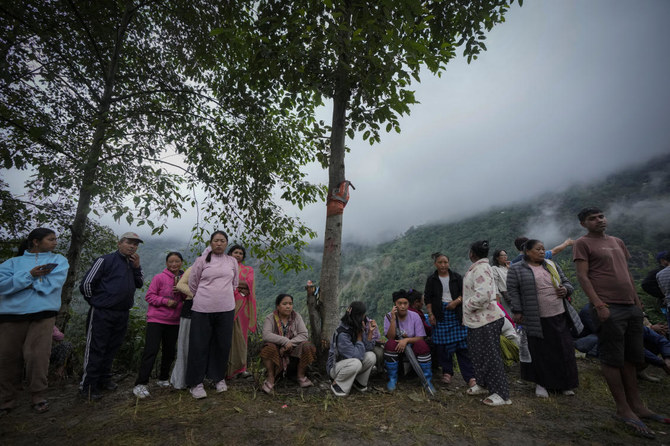
Police said nearly 4,000 tourists were stranded in two locations, Lachung and Lachen in the northern part of the state, where access was severely restricted as the floods had washed away roads. But the bad weather has made rescue efforts more challenging, with authorities unable to deploy helicopters to assist those stuck in vulnerable areas.
Some 3,900 people were currently in 26 relief camps set up by the state, Chief Minister Prem Singh Tamang said on Saturday. Out of the 23 Indian army soldiers who were earlier reported missing, one had been rescued and eight had died, Defense Minister Rajnath Singh said, adding that search operations were carrying on.
It wasn’t clear what triggered the deadly flood in the mountainous Sikkim state, the latest to hit northeast India in a year of unusually heavy monsoon rains. Nearly 50 people died in flash floods and landslides in August in nearby Himachal Pradesh state. In July, record rains killed more than 100 people over two weeks in northern India.
Experts pointed to intense rain and a 6.2 magnitude earthquake that struck nearby Nepal on Tuesday afternoon as possible contributors.
But the disaster also underscores a climate dilemma that pits local environmental activists who say dams in the Himalayas are too dangerous against authorities pursuing a national green energy agenda.
The design and placement of the 6-year-old Teesta 3 dam, the largest in Sikkim state, were controversial from the time it was built. A 2019 report compiled by the Sikkim State Disaster Management Authority identified Lhonak Lake as “highly vulnerable” to flooding that could breach dams and cause extensive damage to life and property.
Despite risks to dams due to the increasing frequency of extreme weather, the Indian federal government aims to increase India’s hydroelectric dam output by half, to 70,000 megawatts, by 2030.
Prakash Chetri, an employee of the Teesta 3 dam operator, was working at the site when he and others were told that water levels were increasing and they should evacuate. Nearly an hour later, “we saw a lot of water — the whole dam was filled with water,” he said, adding that while he was lucky to escape, 14 others who worked with him were still missing. “I was running to save my life ... in those moments, I thought this was the last day of my life,” Chetri said.
Eleven bridges in the Lachen Valley were washed away by the floodwaters, which also hit pipelines and damaged or destroyed more than 270 houses in four districts, officials said on Friday.
Several towns, including Dikchu and Rangpo in the Teesta basin, were flooded, and schools in four districts were ordered shut until Sunday, the state’s education department said. The floods also hit several army camps, burying vehicles in feet of mud, according to images released by the Indian military.
Himalayan glaciers could lose 80 percent of their volume if global warming isn’t controlled, according to a report from the International Center for Integrated Mountain Development.
Last month, dam breaches caused by Storm Daniel caused devastating damage to the city of Derna in Libya.
In February 2021, flash floods killed nearly 200 people and washed away houses in Uttarakhand state in northern India.


![]()

Deaths rise to 47 after an icy flood swept through India’s Himalayan northeast
Short Url
https://arab.news/5jjjh
Deaths rise to 47 after an icy flood swept through India’s Himalayan northeast
- Disasters caused by landslides and floods are common in India’s Himalayan region during the June-September monsoon season
- Scientists say they are becoming more frequent as global warming contributes to the melting of glaciers there


Latest updates



Recommended


© 2026 SAUDI RESEARCH & PUBLISHING COMPANY, All Rights Reserved And subject to Terms of Use Agreement.