KARACHI: The Pakistani government is scheduled to discuss a long-term program for the import of discounted crude oil from Russia with the administration in Moscow next week, officials confirmed on Friday, as the South Asian state seeks to diversify its energy supplies at cheaper rates.
A Pakistani delegation, headed by the interim energy minister, Muhammad Ali, will attend the Russian Energy Week 2023 on October 11-13 at the Manege Central Exhibition Hall in the Russian capital.
Pakistan has already started imported crude oil and liquefied natural gas (LNG) from Russia.
“The Pakistani delegation will be led by the energy minister along with the secretary petroleum to participate in energy week and exhibition,” Shahbaz Tahir Nadeem, the petroleum division spokesperson, told Arab News.
“Talks with Russia for a long-term deal [related to the oil import] are already going on and that may be discussed during the upcoming visit,” he added prudently without divulging further details.
Another petroleum division official, however, said the delegation would hold talks with Russian officials over the subject on the sidelines of the event.
The official, who declined to be named, informed the Pakistani delegation would also discuss LNG import options and the Pakistan Stream Gas Pipeline (PSGP), formerly known the North-South gas pipeline, during the meeting with the Russians.
The PSGP is a project jointly implemented by the two countries in Pakistan.
The petroleum division official informed the paperwork was being finalized by the participants with an option of asking Russians to fix the supply of discounted crude oil at $60 per barrel under the deal.
The official said both sides would also consider the progress on setting up Special Purpose Vehicle (SPV), a legal entity, agreed between them but which has not been formed yet. He added the SPV’s absence was also causing delay in the long-term deal materialization.
The collaboration between Islamabad and Moscow in the energy sector stems from a government-to-government (G2G) agreement signed earlier this year. This move by the South Asian nation is aimed at expanding its sources of energy imports while securing cost-effective options.
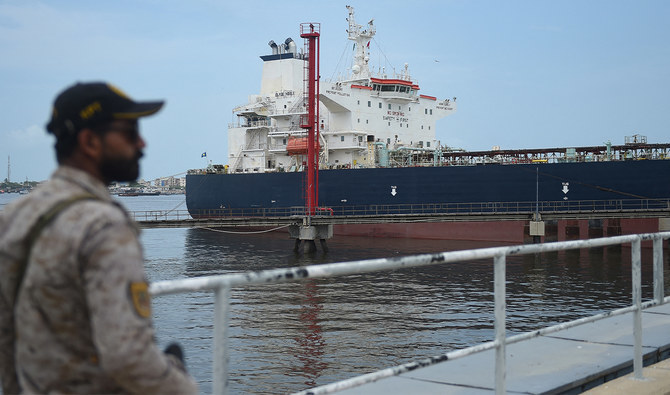
Under the G2G deal Pakistan has already imported 100,000 ton of crude oil in June this year which prompted then-prime minister Shehbaz Sharif to describe it as a “transformative day” for his economically struggling country.
The crude oil import was followed by a delivery of 100,000 metric tons of liquefied petroleum gas (LPG) to Pakistan by Moscow through Iran late last month.
This week Cnergyico oil refinery announced to have imported the first shipment of Russian crude oil consisting 100,000 metric ton, under private arrangement.
Pakistan plans to import 20 percent of its total oil requirement from Russia under discounted rates, according to the former energy minister, Musadik Malik, who made the announcement in May this year.


![]()

Pakistan to discuss long-term deal for discounted crude oil import from Russia next week
Short Url
https://arab.news/maxes
Pakistan to discuss long-term deal for discounted crude oil import from Russia next week
- A senior official says Pakistan wants to explore the option of securing Russian oil supply at the fixed price of $60
- The discussions over bilateral energy sector cooperation will be held on the sidelines of an energy event in Moscow
Latest updates


© 2026 SAUDI RESEARCH & PUBLISHING COMPANY, All Rights Reserved And subject to Terms of Use Agreement.