

Tree-mendous: Green Riyadh Project arrives in Al-Nakheel

1 / 3
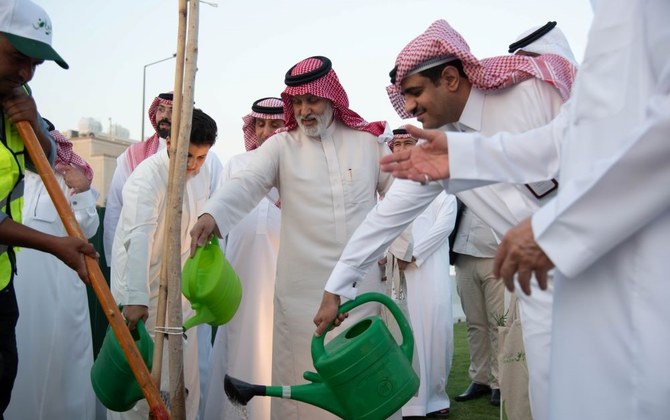
The work in the Al-Nakheel neighborhood includes planting 50,000 trees and shrubs and establishing parks and green areas. (Supplied)
2 / 3
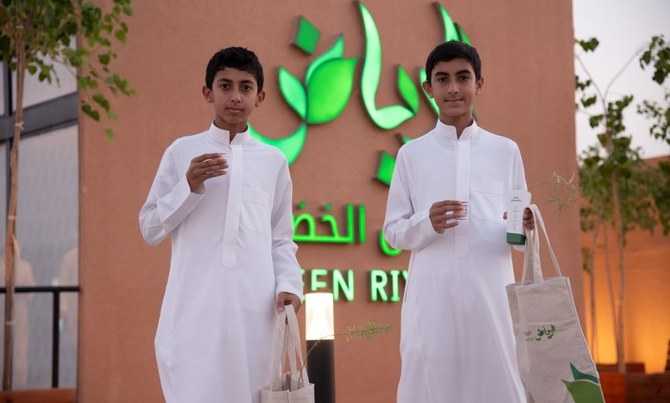
The exhibition showcasing details of the greening project in Al-Nakheel is open from Oct. 5 to Oct. 14. (Supplied)
3 / 3
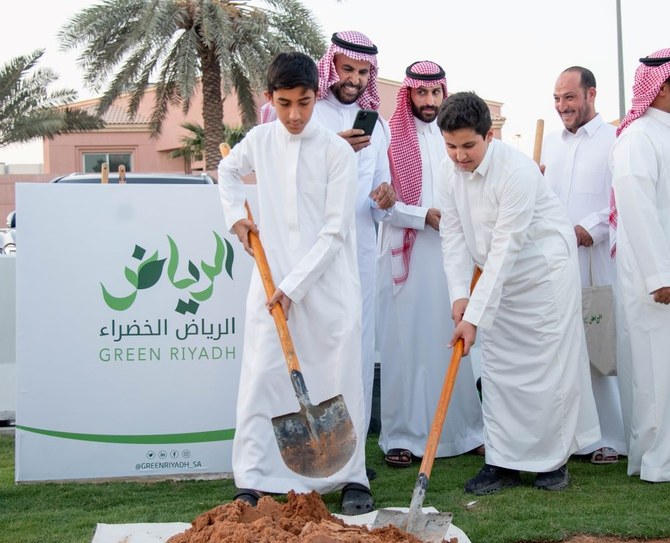
Details of the urban greening works were announced during an interactive event held in Al-Nakheel. (Supplied)
Short Url
Updated 05 October 2023
Follow

Tree-mendous: Green Riyadh Project arrives in Al-Nakheel

  • Work begins on planting 50,000 trees, building 17 parks
  • Citywide scheme aims to improve air quality, reduce summer heat

RIYADH: Work is underway to plant 50,000 trees and shrubs in Al-Nakheel neighborhood as part of the Green Riyadh Project.

The trees will be planted in areas close to four schools, 30 mosques and 14 parking lots, as well as along 52 km of roads. The scheme will also include the construction of 17 parks.

“The design of the urban greening project in the Al-Nakheel neighborhood took about a year and the implementation will take 30 months,” said Turki Bin Oudah, deputy executive director of the Green Riyadh Project.

The trees and shrubs being planted include several varieties of acacia, including the mulga, desert oak and salt wattle, and the Balanites aegyptiaca, or Egyptian balsam, all of which are well suited to the city’s high temperatures.

“The types of trees planted will depend on the area,” said Abdulaziz Al-Moqbel, another of the project's directors.

“For schools, trees that have spikes will be avoided and overall, the main focus is to plant trees that provide the most shade.”

An exhibition about the greening project, including the time scale for the planting operation, opened in Al-Nakheel on Thursday and will run until Oct. 14. It includes a space for children to learn about the importance of planting trees and the role they can play in planting events across the city.

The Green Riyadh Project is expected to have several benefits, including improving air quality, reducing temperatures by up to 2 degrees Celsius and promoting biological diversity.

It will also provide investment and job opportunities, while strengthening community bonds and encouraging people to engage in more outdoor activities and exercise.

Besides the planting of 7.5 million trees, once completed the project will result in a 17-fold increase in the amount of green space available per citizen.

The Green Riyadh Project is one of four megaprojects launched by the Kingdom in 2019 to help achieve the goals of the Saudi Green Initiative and Vision 2030.


Wellness culture makes its way into Saudi Arabia’s workplace

Haraakah provides corporations with workshops and activities including cycling, padel tournaments, and in-office yoga. Haraakah
Updated 12 sec ago
Follow

Wellness culture makes its way into Saudi Arabia’s workplace

  • Key to productivity and long-term sustainability
  • Prevents worker burnout, experts tell Arab News

RIYADH: Saudi Arabia’s fast-paced economic transformation has placed a new-age emphasis on wellness as foundational to productivity, long-term sustainability, and human capital development.

According to a recent report from Corporate Wellness Magazine: “Workplace wellness programs represent a holistic approach to employee well-being.

“These initiatives are designed to enhance the physical, mental, and emotional health of employees, thereby fostering a harmonious work environment and facilitating individual growth.”

The report adds that workplace wellness programs “play a pivotal role in boosting engagement levels by creating a sense of belonging, camaraderie, and shared goals among employees.

“Engaged employees are more likely to go the extra mile, demonstrate loyalty, and become staunch advocates for their organizations.”

Globally, wellness culture has been associated with individual self-care and development, yet its influence has increasingly made its way into community spaces.

In societies where family and community are essential components of culture like in the Kingdom, the rise in emphasis on wellness is making its way into future-building for all.

As the Kingdom’s Vision 2030 unfolds, transformative productivity has been intentionally paired with physical wellness.

Serene Ziadeh, a mental health coach focused on emotional intelligence, told Arab News the importance of physical wellness in workspaces has long been a relevant tool to help professionals deal with burnout.

Ziadeh elaborated on the importance of prioritizing resources and workshops, especially in the era of digitization within career spheres.

“Generation Z is currently facing the stress of speed in change, the fear (of) missing out, comparison of lifestyles, digitalized interactions … which definitely have a negative impact.”

While underscoring the importance of personal inner work to identify triggers for stress, Ziadeh emphasized that workplace wellness initiatives bring constructive results.

“We do not expect these activities to change our mentality or our mindset (overnight) but at least they make us look at work as an enjoyable place ... bonding between employees increases, there’s social engagement which breaks the ice between employees, and creates a lot of laughter.”

Ziadeh said physical activity plays a huge role in regulating the nervous system, ultimately improving one’s relationship with work and potentially increasing productivity.

The Saudi Sports Federation, for example, has outlined its wellness goals for the Kingdom.

“By designing innovative programs and initiatives, the federation aims to increase physical activity rates across Saudi Arabia, thereby contributing to the development of a healthier and more productive community,” it states on its website.

The federation underscored workspace initiatives for those aged 25 to 50. “Providing innovative sports solutions that facilitate engagement in physical activity at work or home, with a focus on activities that can be adapted to busy schedules.”

Talal Arnous, CEO of Haraakah, a Saudi sports and wellness agency, spoke to Arab News recently on the ways his company has helped facilitate that goal for workers.

“I think we’re 100 percent aligned with the (Kingdom’s) Quality of Life Program ... in making employees more productive through sports, making them more energetic.”

He added: “I think we’re building awareness that having corporate wellness is not just a part of entertainment programs, it’s 100 percent crucial.”

Haraakah provides corporations with workshops and activities including cycling, padel tournaments, and in-office yoga. Arnous said demand has come from workers in the construction, banking, insurance, and startup industries.

He pointed to Red Sea Global as an example of a company that has dedicated a department to corporate wellness. There has been “fantastic” feedback to Haraakah’s programs, he added.

According to a recent report from Bonafide Research, the wellness market is here to stay. “As workplace stress levels rise … companies are realizing the necessity of investing in corporate wellness programs to support their employees’ physical and mental health.

“This awareness is further amplified by the Saudi government’s Vision 2030, which emphasizes the development of a healthy and productive workforce as a key component of economic diversification and social progress.”