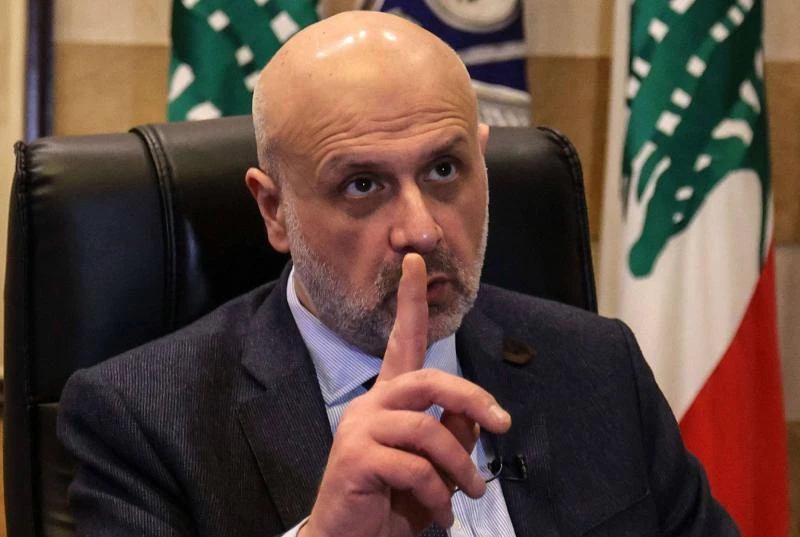
- Caretaker Interior Minister Bassam Mawlawi claimed more than 30% of crime in Lebanon is committed by Syrians, and the country’s identity is under threat
- 805,326 refugees are officially registered with the UN’s refugee agency but Lebanese authorities estimate the total number exceeds 2 million
BEIRUT: Bassam Mawlawi, Lebanon’s caretaker interior minister, said on Wednesday that his country “will not allow the random Syrian presence.”
He claimed that “a large percentage, exceeding 30 percent, of various and major crimes are committed by Syrians in Lebanon” and “cooperation” is required “to preserve our environment and our country’s identity.”
His comments came against the backdrop of growing concern in Lebanon about the increasing numbers of Syrian refugees crossing the border.
“Lebanon cannot carry on with the same leniency toward the Syrian presence,” Mawlawi said. “We must limit the number of Syrians present in each apartment and we will not allow more than one family to reside in it.”
The aim “is not to regulate the Syrian presence but rather to limit it,” he added.
The number of Syrian refugees officially registered with the UNHCR, the UN’s refugee agency, had fallen to 805,326 by the end of March, but officials believes the true figure is double that.
Lebanese authorities, who asked the UN agency to stop registering new refugees in 2015, estimate the total number of Syrians in the country now exceeds 2 million. They fear the presence of so many refugees will cause a shift in the demographic balance along sectarian lines.
During meetings with governors and mayors, Mawlawi asked authorities not to sign any contracts for Syrians who do not possess proper, legal documentation, and called for Lebanese laws to be applied in full to Syrians just as they are to Lebanese citizens.
“We will not accept the exploitation of our country and changing its demographics in exchange for money,” Mawlawi said.
“Lebanon is not for sale and we are working as a permanent beehive to address the crisis and stand against the immense harm inflicted on Lebanon, the Lebanese people, and Lebanese demographics as a result of the chaos and unacceptable behavior due to the Syrian displacement.”
Syrians are said to run about 4,000 businesses in central and western Bekaa. In the town of Bar Elias alone, about 1,700 out of a total of 2,000 are run by Syrians. In Taalabaya, there are 450, and in Qab Elias, 350.
As part of the tightening of controls on refugees, the Ministry of Industry on Wednesday renewed a warning to factory owners that they must not hire Syrians who do not possess the required legal documents and permits, otherwise they could lose their licenses to operate.
The crisis caused by the growing numbers of Syrians entering Lebanon via illegal crossings along the northern and eastern borders has escalated in the past two weeks. Concerns grew further when Lebanese security services seized weapons last week during raids on refugee camps in the Bekaa Valley.
The anti-refugee sentiment in Lebanon was further fueled by a statement on Tuesday from the official spokesperson for the EU in the Middle East and North Africa, Luis Miguel Bueno, who said. “There is no return for Syrian refugees at the present time and they must be assisted in Lebanon. The conditions for refugees to return to Syria with dignity and voluntarily are not available.”
Hezbollah chief Hassan Nasrallah earlier sparked controversy when he suggested Lebanon should adopt a policy of “not preventing Syrian refugees from sailing toward Europe.”
He said: “Let them board ships, not just rubber boats, and head toward Europe, and this will lead to an inevitable outcome, which is that European countries will come submissively to Beirut.”
On Wednesday, MP Ghayath Yazbeck said the Lebanese Forces Party’s parliamentary bloc is considering signing a parliamentary petition demanding the closure of the UNHCR office in Lebanon, “because the commission is now promoting the new Syrian occupation of Lebanon.”
He blamed the recent Syrian influx on the Lebanese government, “which does not mobilize its powers to control this situation and mitigate its impact,” and criticized the Free Patriotic Movement for its refusal to organize a Cabinet session to discuss possible solutions to this imminent threat.
A number of organizations have emerged with the aim of confronting or addressing the presence of so many Syrian refugees in Lebanon, one of which is the National Campaign to Repatriate Displaced Syrians.
One of its leaders, Maroun Al-Khauli, sent a letter to UNHCR’s regional office in which he accused it of working to “settle Syrian refugees by supporting them financially and morally, encouraging them not to return to their land, and urging them to integrate into Lebanese society.”
As the unrest grows, Lebanese security agencies have warned of “kidnapping operations targeting Syrian people by gangs that lure them outside Lebanese borders to avoid detection, through fake social media accounts, most notably on TikTok.”
These gangs “deceive lured Syrians into believing that they can secure their travel from Lebanon to European countries, either through illegal routes or by securing travel visas abroad, in exchange for a financial fee,” the General Directorate of Internal Security Forces said.
“The victims are kidnapped upon arrival at the border areas with Lebanon, then transported outside the Lebanese borders and detained inside rooms within Syrian territory near the borders. There, they are brutally tortured and the torture acts are filmed, and photos and videos are sent to the kidnapped person’s family to pressure them and expedite the payment of a ransom in exchange for their release.”
In the past two days, video clips of one of these victims being tortured spread on social media but news organizations have not broadcast them because of the graphic nature of the footage.