

Pakistan’s inflation rises to 31.4 percent y/y amid high energy prices

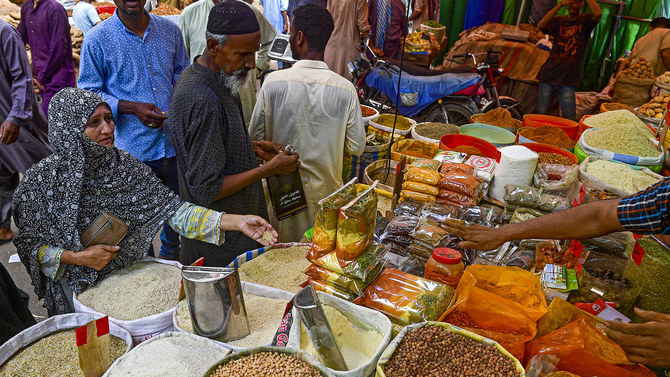
Customers bargain as they buy cereals and legumes at a shop in Karachi on June 8, 2023. (Photo courtesy: AFP/File)
Short Url
Updated 02 October 2023
Follow

Pakistan’s inflation rises to 31.4 percent y/y amid high energy prices

  • Inflation climbed 2 percent in September on month-on-month basis, official data shows
  • Statistics bureau report says Pakistan’s inflation expected to ease from Jan. 1

KARACHI: Pakistan’s inflation rate clocked in at 31.4 percent year-on-year in September, rising from 27.4 percent in August, statistics bureau data showed on Monday, as the nation reels from high fuel and energy prices.

The country is embarking on a tricky path to economic recovery under a caretaker government after a $3 billion loan program approved by the International Monetary Fund in July averted a sovereign debt default, but with conditions that complicated efforts to rein in inflation.

On a month-on-month basis, inflation climbed 2 percent in September, compared to an increase of 1.7 percent in August

Reforms required by the IMF bailout, including an easing of import restrictions and a demand that subsidies be removed, have already fueled annual inflation, which rose to a record 38.0 percent in May.

Interest rates have also risen to their highest at 22 percent, and the rupee hit all-time lows in August before recovering in September to become the best performing currency following a clampdown by authorities on unregulated FX trade.

On Friday, the ministry of finance said in its monthly report that it anticipated inflation remaining high in the coming month, hovering around 29-31 percent due to an upward adjustment in energy tariffs and a major increase in fuel prices.

The report added that inflation was, however, expected to ease, especially from the second half of the current fiscal year that starts on Jan. 1.

On Saturday Pakistan cut petrol and diesel prices from a record high, after two consecutive hikes. The finance ministry cited international prices of petroleum products and the improvement in the exchange rate, following the clampdown on unregulated FX trade.


Pakistan plans $80 million seafood zone at Karachi harbor to target Gulf markets

Updated 7 sec ago
Follow

Pakistan plans $80 million seafood zone at Karachi harbor to target Gulf markets

  • Plan aims to move exports away from raw seafood toward higher-value processed products
  • Project will be developed under public-private partnership or build-operate-transfer model

KARACHI: Pakistan plans to develop a seafood processing and export zone at Karachi’s Qur’angi Fisheries Harbor that could cost up to $80 million to boost value-added exports and position the country as a supplier to the Gulf and other regional markets, Maritime Affairs Minister Muhammad Junaid Anwar Chaudhry said on Saturday.

The proposed 100-acre project aims to shift Pakistan away from exporting raw seafood by building modern processing, cold-chain and packaging infrastructure linked to international buyers, as Islamabad looks to expand its blue economy and deepen maritime trade ties with the region.

In a statement, Chaudhry said the zone would be developed, financed and operated under a public-private partnership or build-operate-transfer (BOT) model, with private investors running the facilities and the Qur’angi Fisheries Harbor Authority retaining regulatory oversight.

“The estimated project cost ranges between $60 million and $80 million, based on regional benchmarks from countries such as Vietnam, China and Ecuador, which have developed similar seafood parks,” Chaudhry said.

He said the facility would include 20 to 25 medium- to large-scale seafood processing units for fish, shrimp and cephalopods, alongside large-scale cold storage, blast freezing, packaging facilities, logistics and export terminals, and a wastewater treatment plant to ensure environmentally compliant operations.

“Packaging and labeling units would operate under international food safety and quality standards, including HACCP and ISO certifications, offering vacuum packing, modified atmosphere packaging and retail-ready solutions,” he said, referring to Hazard Analysis and Critical Control Points, a preventive food safety system.

ISO certification verifies that a company’s management systems meet international standards.

The minister said the zone would be used exclusively for commercial seafood processing, packaging, cold storage and export-oriented activities, with multi-temperature storage ranging from minus 18 to minus 40 degrees Celsius and ice plants capable of producing 50 to 100 tons daily.

Chaudhry said the preferred investment structure is a BOT concession under which the private partner would finance, develop and operate the project for an expected 20-year tenure, with ownership reverting to the harbor authority at the end of the concession period.

He added that the estimated internal rate of return was projected between 13 percent and 17 percent, with revenue generated through lease rentals, processing fees, logistics services and export-linked earnings.

“The project will position Pakistan as a key maritime trade and seafood export hub serving Gulf, East African and Asian markets,” Chaudhry said.