


In the pink: Saudis’ love for seafood feeding Norwegian salmon sales

1 / 5
2 / 5
3 / 5
4 / 5
5 / 5
Short Url
Updated 01 October 2023
Follow

In the pink: Saudis’ love for seafood feeding Norwegian salmon sales

  • Value of fish exports to Kingdom rose to $66.4m in 2022.
  • Norway is world’s second-largest seafood exporter with annual sales of $14bn.

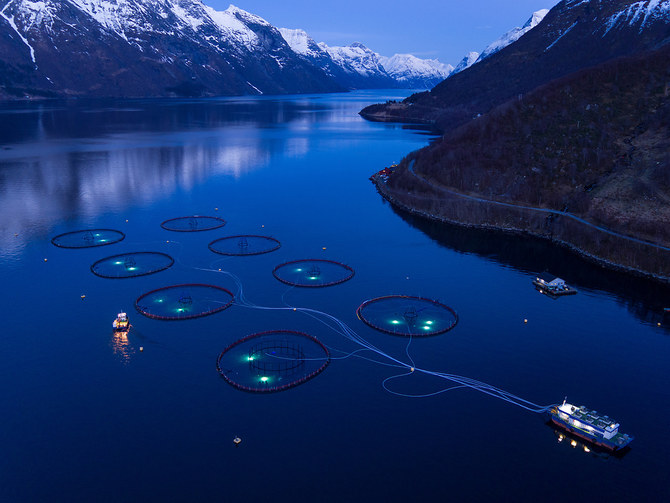
ALESUND: A growing passion for seafood in Saudi Arabia is helping to drive demand for Norwegian salmon, according to an industry official from the European nation.

Ingelill Jacobsen, project manager for emerging markets at the Norwegian Seafood Council, said exports of the fish to the Kingdom rose to $66.4 million last year.

With sales in the first eight months of this year exceeding $44.4 million, Jacobsen said she expected the full-year total to be even higher than in 2022.

Based in Tromso, the NSC is a public company owned by the Norwegian Ministry of Trade, Industry and Fisheries. It has played a significant role in driving sales of salmon in the Middle East.

In 2019, before the COVID-19 pandemic, sales of Norwegian salmon to Saudi Arabia totaled just $27 million, though that was itself a 50 percent rise from the previous year.

Norway is the world’s second-largest exporter of seafood. Its sales in 2022 topped $14.1 billion, with Poland, France and the US among the biggest buyers.

In November, representatives from the NSC will take part in the Saudi Food Expo in Riyadh in a bid to promote greater cooperation in the fields of aquaculture and aquaculture technology, according to Jacobsen.

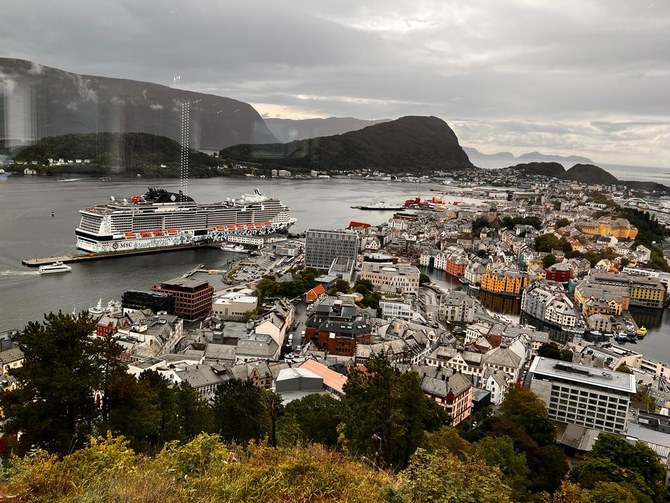
“At the moment, we are managing the Middle East from Norway, but in the future we will appoint a representative to be on the ground in the region,” she told journalists at a media event in Alesund, a port town on the west coast of Norway.

The Middle East is a growing market, with exports of Norwegian seafood to the region hitting SR1.4 billion ($373.3 million) in 2022.

“The Saudi food and health authorities are doing great work with increasing the consumption of seafood to improve the health of the people, reduce obesity and cardiac diseases. For the NSC it would be great to assist in this work,” she said.

“Many Norwegian aquaculture technology companies are now cooperating with the industry in the Kingdom, and there have been several visits both from Norway to the Kingdom and from the Kingdom to Norway.”

She added: “Seafood production (in Norway) is strongly regulated by licenses, biology, animal welfare and sustainability, and we don’t want demand to be a factor that in any way undermines any of these concerns.

“Norway was the first country to successfully farm and then commercialize Atlantic salmon back in the seventies, so we have 50 years of experience in this field.”

After oil and gas, the seafood industry is the second-largest contributor to Norway’s economy.

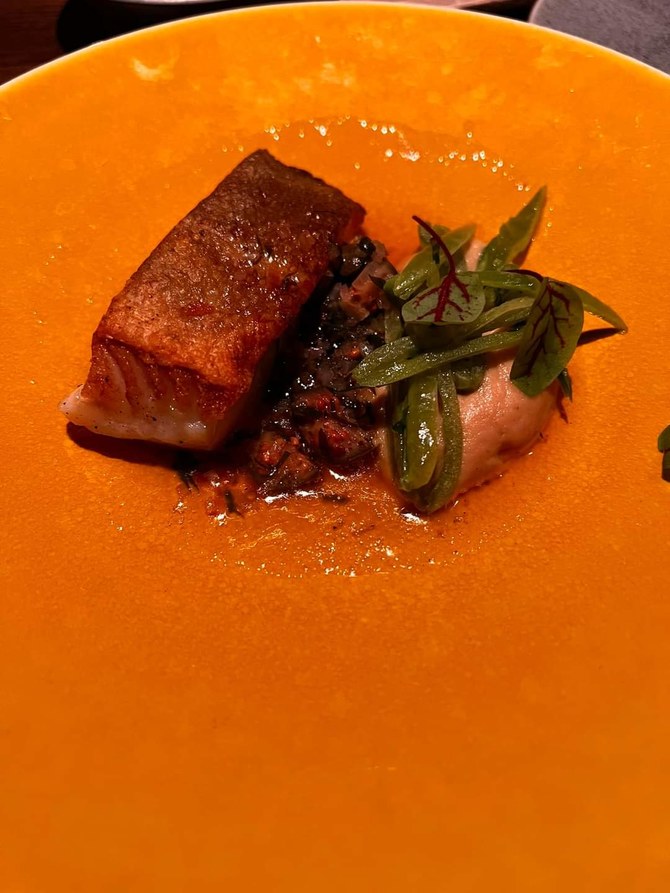
As well as salmon harvesting, cod farming has been gaining momentum in the country.

During a visit to a cod farm owned by Ode, founder and CEO Ola Kvalheim told reporters about the challenges and opportunities faced by the aquaculture industry.

“As the world needs more healthy and sustainable protein, farming cod is an excellent opportunity to solve both the need for more protein and the need for more sustainable food production,” he said.

“I grew up in a small rural community along the Norwegian coastline, with a long heritage of exporting cod. Before the tremendous success of the salmon, cod was the most important seafood option from Norway. Now we are finally able to successfully farm the iconic Atlantic cod.”

Kvalheim’s farm is located close to Alesund, where the sea conditions are ideal for nurturing the fish.

“These conditions and the cold and nutritious waters are perfect for Atlantic cod,” he said.

“We produce the cod here in a natural habitat with the right temperature and in the right environment. We are focusing on zero emissions using solar panels that produce green energy for use on our farms.

“Boats and equipment run on that green energy, making it eco-friendly production. We are currently producing about 20 million meals of cod per year, next year we will be at 70 million meals,” he said.

Kvalheim said his company’s long-term plan was to become a leading seafood company.

“Initially we had a clear focus on building our organization, our value chain, establishing best in class operations and positioning our product in the market. Based on very strong operations and biology coupled with solid demand for our products, we are now scaling significantly up.”


Al-Saedan launches $400m investment platform for real estate, digital infrastructure

Updated 27 January 2026
Follow

Al-Saedan launches $400m investment platform for real estate, digital infrastructure

Al-Saedan Real Estate Company of Saudi Arabia, in collaboration with Serpentine Lake Capital of the UK and SGI Real Estate of Canada, have announced the establishment of a joint development and investment platform under the name SL Property. The platform will develop commercial, residential, and hospitality projects, alongside infrastructure and data center projects, across the Kingdom. It reflects the growing international interest in Saudi Arabia’s real estate and digital infrastructure markets and supports the development of high-quality, long-term assets within the Kingdom.

The agreement signing ceremony was held under the patronage of Minister of Municipal, Rural Affairs and Housing and Chairman of the Real Estate General Authority Majid bin Abdullah Al-Hogail, as part of the Future of Real Estate Forum, in which Al-Saedan Real Estate participated as a strategic sponsor. The ceremony was attended by Dr. Badr bin Ibrahim bin Saedan, chairman of the board of Al-Saedan Real Estate; Ahmed bin Ibrahim bin Saedan, vice chairman of the board of Al-Saedan Real Estate; Ben Mikola, representative of Serpentine Lake Capital and SL Property; and Hassan Al-Shawwa, representative of SGI Canada.

The attendance reflects the strategic importance of the initiative and the continued support of the authority in facilitating the attraction of high-quality international investments into the Kingdom’s real estate and digital infrastructure sectors.

This development follows the issuance of the Regulation on Real Estate Ownership by Non-Saudis in Saudi Arabia, which came into effect in January. The updated regulatory framework is expected to expand access to international investment, facilitate foreign investor participation in strategic sectors, and increase the depth of institutional capital flowing into the real estate, infrastructure, and data center sectors in the Kingdom.

The platform is targeting initial joint investments of SR1.5 billion ($400 million) in partnership with Al-SaedanReal Estate, representing the first phase of a broader, multi-stage investment program. In its initial phase, SL Property — Al-Saedan intends to invest in six to eight projects across real estate, infrastructure, and data centers, with additional opportunities anticipated as the platform’s activities expand in the future.

The initial projects will be concentrated in Riyadh and Jeddah, and will include mixed-use developments, commercial assets, residential projects, and infrastructure related to data centers. These projects are designed to be scalable, sustainable, and aligned with national development priorities, including housing expansion, enhancement of urban quality of life, hospitality sector growth, and strengthening the Kingdom’s digital services capabilities.

Al-Saedan Real Estate is one of the oldest private real estate development companies in Saudi Arabia, with more than 80 years of operational experience and a strong track record that includes the development of seven major integrated urban communities, in addition to numerous commercial, hospitality, and associated infrastructure projects.

The SL Property platform will serve as a dedicated investment vehicle for this initiative, with Serpentine Lake Capital contributing its asset management expertise, and SGI Real Estate providing its specialized real estate sector experience. The platform’s structure is intended to combine local development capabilities with disciplined international investment practices and robust governance standards.

This initiative aligns with the Kingdom’s economic diversification objectives and reflects growing confidence in the updated regulatory framework governing the real estate and digital infrastructure sectors. As the platform evolves, it is expected to provide both local and international investors with access to high-quality investment opportunities across the real estate and data center sectors throughout the Kingdom.

Dr. Badr bin Ibrahim said: “At Al-Saedan, we are pleased to be among the first beneficiaries of the promising new foreign investment system. Following our success in raising several local investment funds, we look forward to expanding our expertise and partnerships at a global level.”

Mikola added: “We are pleased to partner with Al-Saedan, whose strong track record provides a solid foundation for this collaboration. As the platform develops, we expect to explore opportunities to expand into real estate and infrastructure projects within the Kingdom of Saudi Arabia and beyond. The Kingdom represents a fast-growing market driven by clear structural factors, and we look forward to developing high-potential opportunities through a disciplined and focused approach.”