

Saudi Arabia revises budget estimates for 2023 on ‘expansionary spending’ policies

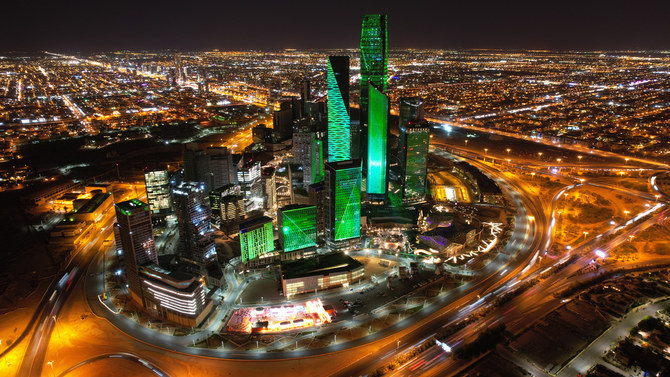
Non-oil revenues are expected to be a key growth driver in the Kingdom, and this shall support higher spending in the future, Alrajhi Capital says. (Shutterstock image)
Short Url
Updated 01 October 2023
Follow

Saudi Arabia revises budget estimates for 2023 on ‘expansionary spending’ policies

  • Kingdom’s debt-to-GDP ration to remain below 27%, analyst tells Arab News

RIYADH: Lowering its growth forecast for 2023, Saudi Arabia expects to post a budget deficit this year rather than an earlier projected surplus, mainly due to “expansionary” spending policies and “conservative revenue estimates.”

Saudi Arabia will continue its fiscal and structural reforms as the Kingdom is steadily embarking on its economic diversification journey in line with the goals outlined in Vision 2030, said Finance Minister Mohammed Al-Jadaan.

He said that continuous implementation of the ambitious plan is necessary for the Kingdom to catalyze its economic growth and maintain fiscal sustainability.

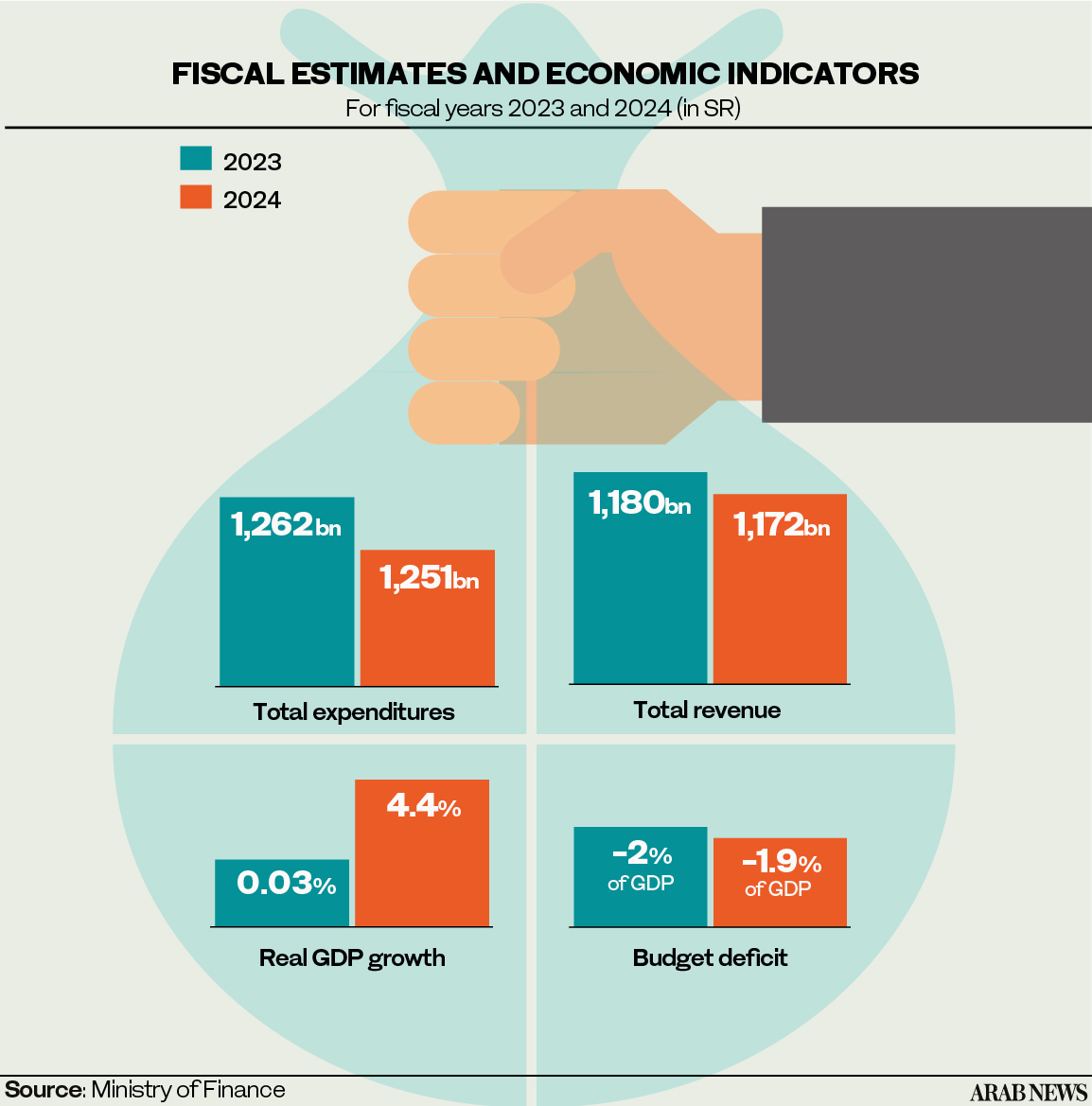
A preliminary budget statement issued on Saturday showed that the largest Arab economy expects real gross domestic product to grow by 0.03 percent this year compared with a previous forecast for growth of 3.1 percent.

The document also projected the government would post a budget deficit of 1.9 percent of the gross domestic project in 2024, 1.6 percent of GDP in 2025, and 2.3 percent of GDP in 2026. It said “limited budget deficits” would continue in the medium term.

Meanwhile, total expenditure is seen rising to SR1.262 billion in 2023, from an earlier estimate of SR1.114 billion, before slowing down marginally to SR1.251 billion in 2024.
However, the Kingdom’s debt-to-GDP ratio is expected to remain below 27 percent due to a gradual decrease in the deficit over the coming years, Mazen Al-Sudairi, head of research at Al Rajhi Capital told Arab News.

“The (budget) deficit is expected to decrease gradually over the coming years, keeping the debt-to-GDP ratio below 27 percent, well below the government’s target of 30 percent,” the analyst said.

Borrowing plan

Al-Sudairi said most of the deficit would be funded through borrowing, demonstrating prudent fiscal management.

According to the ministry, the government is now expecting an SR82 billion ($21.8 billion) deficit for 2023 instead of an SR16 billion surplus projected earlier.

For 2024, the government expects total revenues at SR1.172 trillion and total spending of SR1.251 trillion.

Commenting on the budget statement, Al-Jadaan said the government program will help Saudi Arabia develop promising economic sectors, enhance investment attractions, stimulate industrial growth, raise the percentage of local content, and promote non-oil exports.

The ministry currently expects budget deficits to last through 2026, the statement said.

Saudi Arabia is working to prepare an annual borrowing plan in accordance with a medium-term debt strategy and “access global debt markets to enhance the Kingdom’s position in international markets,” the Finance Ministry said.

Non-oil GDP

The budget statement touted growth in non-oil sectors, whose revenue jumped by 11 percent in the first half of the year.

Commenting on the non-oil sector, Al-Sudairi stressed the importance of focusing on the non-oil GDP, which is expected to grow by 5.9 percent in 2023 and over 4 percent in the following year.

“This growth above 4 percent is very healthy and will help diversify the non-oil economy, creating new sectors and segments inside the economy.”

The expert also highlighted the significance of cities and service-based industries in the Saudi economy.

He stated: “The Vision 2030 concentrates on cities. With the global economy becoming more service-based, cities become much more important as service industries thrive.”


Real Estate Registry signs 10 agreements at forum in Riyadh

Updated 50 min 48 sec ago
Follow

Real Estate Registry signs 10 agreements at forum in Riyadh

RIYADH: The Real Estate Registry concluded its participation in the Real Estate Future 2026, as a partner of the forum, with a distinguished presence that included the launch of its business portal, the signing of 10 agreements and memoranda of understanding with entities from the public and private sectors, the organization of specialized workshops, and the awarding of the Gold Award at the Real Estate Excellence Awards.

During his participation in the forum, the CEO of the firm, Mohammed Al-Sulaiman, reviewed the latest developments in real estate registration in the Kingdom in a keynote speech, highlighting the pivotal role of the Real Estate Registry in building a unified and reliable system for data. He also announced the launch of the national blockchain infrastructure, which aims to enable the microcoding of real estate assets, enhance transparency, expand investment opportunities, and support innovative ownership models within a reliable regulatory framework.

On the sidelines of the forum, Al-Sulaiman met with Nigeria’s Minister of Housing and Urban Development, Ahmed Dangiwa. During the meeting, they discussed areas of joint cooperation, exchanged experiences and advice on shaping the future of the real estate sector, and reviewed best practices in implementing real estate registration systems that enhance reliability and improve the efficiency of property registration.
efficiency of property registration systems.

The Real Estate Registry’s participation included organizing three specialized workshops that focused on the role of geospatial technologies in identifying ownership, enhancing transparency, and improving the quality of real estate data. 

The workshop “Empowering the Real Estate Registry for the Business Sector” reviewed digital solutions that enable the business sector to manage its real estate assets more efficiently and enhance governance and technical integration. The workshop “From Off-Plan Sales to Title Deed” focused on the journey of documenting real estate ownership and the role of the registry in linking the stages of development and documentation within an integrated digital system.

On the sidelines of the forum, the Real Estate Registry signed 10 agreements and memorandums of understanding, including a deal with Yasmina Information Technology Co. to utilize real estate data in developing smarter insurance solutions that support the real estate sector and enhance service reliability. 

Partnerships were also signed with Haseel, NewTech, and Sahl, as well as HissaTech and Droub, to develop innovative digital solutions in property ownership, fractional ownership, and asset tokenization, as well as real estate finance and investment within a trusted regulatory framework.

Further collaborations included an MoU with ROSHN Group, an agreement with the Saudi Water Authority to enable data integration and quality enhancement, an agreement with the Saudi National Bank, and a partnership with Saudi Post to link the national address with the property registry as a unified geospatial identifier supporting data accuracy and integration.

The registry’s participation was crowned with the Golden Award at the Real Estate Excellence Awards in the category of Excellence in Property Documentation, in recognition of its role in building a model based on transparency, accuracy, and speed, as well as advanced digital technologies and specialized legal expertise, contributing to rights protection and increasing the sector’s attractiveness.

The Real Estate Registry emphasized that its participation reflects its continued role as a key enabler of the real estate sector, a trusted data source, and an active partner in driving digital transformation, enhancing market efficiency, and building investor and financier confidence, in line with Saudi Arabia’s Vision 2030 objectives for a fully integrated and sustainable digital real estate ecosystem.