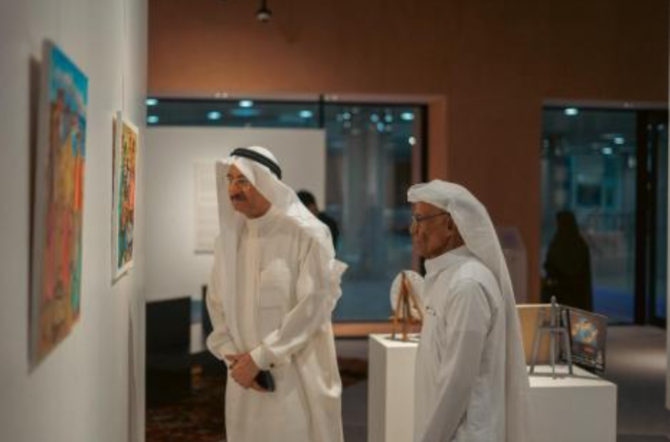
RIYADH: The late Saudi artist Zakia Al-Dubaikhi’s artwork is showcased at the “Once Upon a Time” exhibition at Ahlam Gallery in Riyadh.
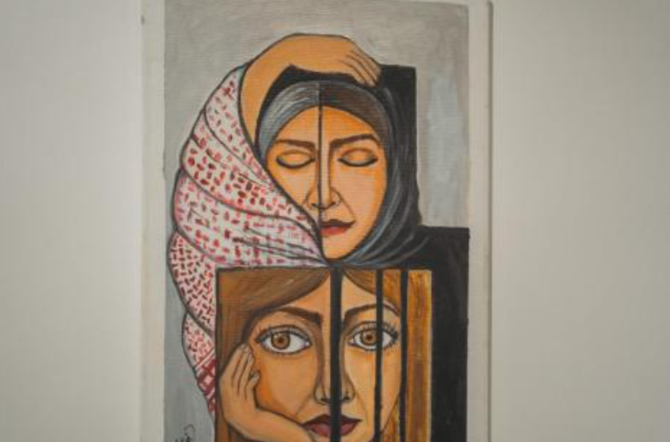
Her work focused on Saudi women’s rights at a time when it was not common to do so, while celebrating multicultural neighborhoods in the Eastern Province.
The exhibition is being hosted by Al-Dubaikhi’s daughter, Basma Al-Zamil, and the artist’s husband, in celebration of the painter’s profound work and legacy.
Al-Zamil said: “It is important to me in this exhibition to keep her legacy and her name alive and to kind of help people know that art never dies.”
Al-Dubaikhi was born in Dammam, in a multicultural neighborhood with narrow streets, and played and grew up with children from different nationalities.
She began painting at a young age, encouraged by her late father who bought her all the required tools, from brushes to painting colors and canvases.
In the 1980s, at a time when being a Saudi artist was uncommon, Al-Dubaikhi overcame many obstacles, taking painting lessons from renowned female Saudi artists, which led to her work being showcased in Dammam, Riyadh, and Jeddah.
Later focusing on her family and her career as an English teacher, Al-Dubaikhi parted company with her brushes but never deserted her artistic inclinations, using her knowledge to help her students.
Her artistic mindset and love for painting never left her and she aspired to present a solo exhibition and open an art gallery.
Her ambitions were never achieved, though, and she died in November 2018.
Al-Zamil and her father have showcased Al-Dubaikhi’s artwork in several cities around the Kingdom, including Dammam, Al-Ahsa, Riyadh, and Jeddah, and outside the Kingdom in Manama, Bahrain.
The “Once Upon a Time” exhibition opened its doors on Sept. 27 and runs until Oct. 2.
Tania Mehanna Cantone, the wife of the Italian ambassador to the Kingdom, attended the opening day of the exhibition.
Pointing at one of Al-Dubaikhi’s paintings, Cantone said: “It is an expression of what Saudi women were feeling in the middle of between 2000 and 2016, and really it touches each one of us because you see the call for freedom.
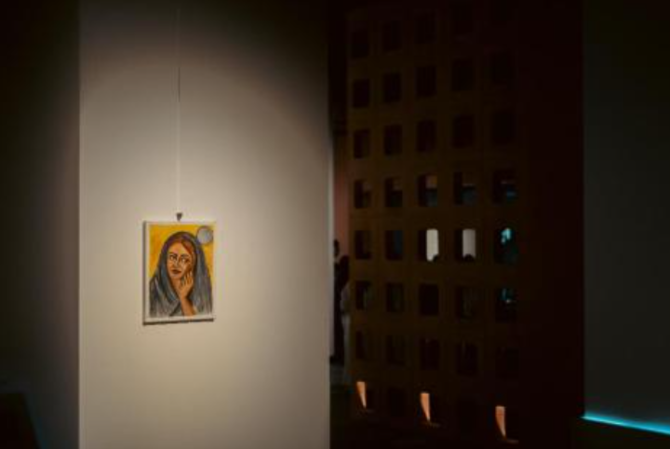
“You see this hope in the eyes of the different ladies, lots of ladies that she has been painting, and it is a beautiful way of looking at Saudi Arabia.”
Another guest of honor on opening night was Ahmed bin Abdullah Al-Maghlouth, an artist and cartoonist from the Eastern Province.
He said: “I was very happy to attend this exhibition. I was impressed with her interest in the environment and heritage portrayed through her paintings, and the depth of her work showcasing the history of the Kingdom and the Gulf region at large.”
Al-Dubaikhi’s paintings reveal her take on Saudi women’s rights, along with her other interests, including Indian culture and her love of cats.
Al-Zamil said: “She was living with neighbors from different nationalities in the Eastern Province, and she was interested in Indian culture, music, and food.”
Al-Dubaikhi saw early changes toward women’s rights in the Kingdom just before her death.
Al-Zamil added: “My mother recorded a time in our history, and not too many artists were able to do that.
“In her humble way she covered the times of Saudi Arabia before Vision 2030 and after Vision 2030.”
“Once Upon a Time” is a walk through Al-Dubaikhi’s life, passing significant moments from her early childhood in the Eastern Province to her artistic journey and roles as Saudi artist and loving mother.


![]()
![]()
![]()
![]()

Riyadh exhibition pays tribute to Zakia Al-Dubaikhi, acclaimed painter, loving mother

Short Url
https://arab.news/gzard
Riyadh exhibition pays tribute to Zakia Al-Dubaikhi, acclaimed painter, loving mother
- The exhibition is being hosted by Al-Dubaikhi’s daughter, Basma Al-Zamil, and the artist’s husband, in celebration of the painter’s profound work and legacy
- She began painting at a young age, encouraged by her late father who bought her all the required tools


Latest updates


© 2026 SAUDI RESEARCH & PUBLISHING COMPANY, All Rights Reserved And subject to Terms of Use Agreement.