
JEDDAH: Boeing is working with Saudi airline companies to implement advanced aircraft and engine technologies that align with global sustainability goals, according to a senior executive of the US-based aerospace company.
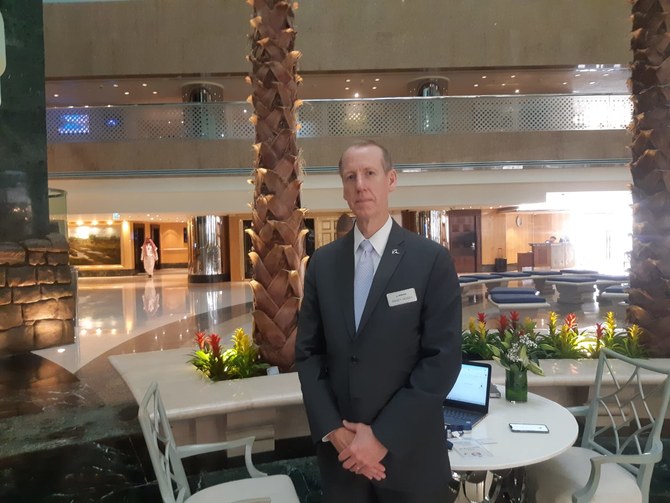
Speaking to Arab News, Randy Heisey, managing director of commercial marketing in Africa and the Middle East region at Boeing, said that the future of flying would incorporate the latest digital design, test and production tools, airframe, propulsion and systems technology, keeping in mind the global sustainability goals.
He added that different power and energy solutions will apply across diverse market segments and aircraft sizes.
“We continue to advance the safety and viability of other renewable energy sources and their use on the aircraft, including electric, hydrogen and other sources of energy which may come to fruition,” said Heisey.
Highlighting some of the critical partnerships and collaborations Boeing has established with Saudi airline companies, he said that the airplane manufacturer enjoys a strong and long-standing relationship with the Kingdom, founded on a partnership back in 1945.
“Since then, Boeing has developed and expanded relationships in the Saudi commercial and other aviation sectors. Our investments have helped strengthen and grow the local aerospace sector, creating jobs and driving innovation for mutual benefit,” he said.
Heisey added that they have over 2,000 people employed in the Kingdom today by various Boeing entities and joint ventures in Saudi Arabia.
Based in Riyadh, Boeing Saudi Arabia is primarily run by the Kingdom’s employees, including its leadership. The company supports all programs in the country, including Boeing Defense, Space & Security, Boeing Commercial Airplanes and Boeing Global Services.
“To support the development of Saudi-led aerospace and defense capabilities in the Kingdom, we stand to partner with the Kingdom as it diversifies and grows the economy here,” said Heisey.
As Saudi Arabia spreads its wings in the aviation sector, Boeing is working with established and emerging companies to drive the industry.
Heisey pointed out that his company supports the growth and operations of its airline partners, focusing on their needs and how they can best succeed in their endeavors.
“As was demonstrated earlier this year with the purchase that was consummated by both Saudia and the new exciting airline Riyadh Air to commit to up to 121 new 787 Dreamliner aircraft, which will deliver not only great efficiency and sustainable operations but an unparalleled passenger experience,” he said.
Moreover, Saudi Arabia’s strategic location at the crossroads of major continents has significantly contributed to its status as a global aviation hub.
The Kingdom’s well-developed aviation infrastructure, geographic position and substantial economic policies have fostered aviation connectivity, making it a crucial transit point for travelers and a center for air cargo transportation.
The Saudi government has invested in expanding the capacity of airports in cities like Jeddah and Madinah to handle the increasing number of Umrah pilgrims, which includes the construction of new terminals and runways.
“That has been a part of helping the commercial aviation industry in the Kingdom grow and prosper, and the Vision 2030 initiatives will be the foundation, which will be accelerated going forward,” said Heisey.
He added: “So, we see bright prospects given the geography and the emphasis put on the diversification of tourism in Saudi Arabia, which will only lead to more and more benefits for the airlines here.”
While discussing the company’s upcoming projects, the Boeing executive said: “We’re participating actively in the fleet renewal with our leading technology products, and those will enable the Saudi airlines to effectively compete against others, not only in this region but globally.”
Moreover, the aviation industry worldwide has been under increasing scrutiny due to its contribution to carbon emissions.
Meeting environmental targets and regulations and developing more sustainable aviation technologies have emerged as significant challenges.
Boeing is working closely with its partners to help Saudi airline companies to counter the problems.
“Boeing has four key approaches we are taking to address this big challenge for the civil aviation industry,” said Heisey while explaining that the strategy’s first pillar is fleet renewal.
The fleet renewal includes bringing in new generations of airplanes that provide efficiency and reduced emissions of anywhere between 15 percent and 40 percent over the generations preceding them.
He added that the second pillar is improving operational efficiency, where fuel consumption and emissions reductions can net around a 10 percent benefit.
“Of course, renewable energy is another major contributor. Sustainable aviation fuel is a major element of how the industry can make progress in this area, but it is not the only element,” reminded Heisey.
He further said that SAF today could contribute to a reduction in emissions of 80 percent and, in the future, could go to a 100 percent reduction in emissions.
“The fourth element is one that we are actively pursuing: research and development in advanced technologies,” said the executive.
Boeing has been leading the aviation space by partnering with the Saudi industry in driving a new fleet, facilitating the flying machines to operate with SAF, and providing its knowledge about other fuels to the industry, including those who are involved in refining and developing new sources of sustainable or alternative fuels.
It has been working closely with governments, regulatory bodies, airlines, airports, and industry stakeholders to take the Saudi aviation industry to new heights.
It is also ushering in innovation and adopting sustainable practices to promote the long-term viability of the aviation sector.