

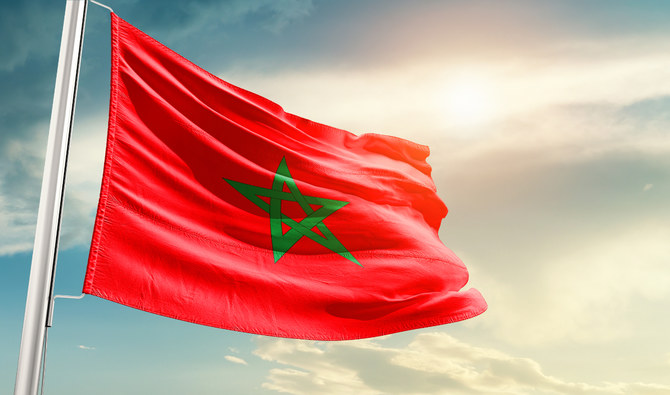
Morocco aims to become key player in green hydrogen

Hydrogen is seen as a clean energy source that can help the world phase out fossil fuels and reduce atmospheric carbon emissions in the battle to slow global warming. (Shutterstock)
Short Url
Updated 27 September 2023
Follow

Morocco aims to become key player in green hydrogen

RABAT: Morocco has voiced ambitious plans to become North Africa’s top player in the emerging “green hydrogen” sector, with plans to export the clean-burning fuel to Europe.

Hydrogen is seen as a clean energy source that can help the world phase out fossil fuels and reduce atmospheric carbon emissions in the battle to slow global warming.

Morocco, which already runs large solar power plants, also hopes to harness green hydrogen — the kind made without burning fossil fuels — for its sizeable fertilizer sector.

Around 1.5 million acres of public land — nearly the size of Kuwait — have been set aside for green hydrogen and ammonia plants, the economy ministry says.

King Mohammed VI has hailed a national green hydrogen plan dubbed l’Offre Maroc (the Moroccan Offer) and called for its “rapid and qualitative implementation.”

Speaking in July, before the country’s earthquake disaster, he said Morocco must take advantage of “the projects supported by international investors in this promising sector.”

Local media have reported about investment plans by Australian, British, French, German and Indian companies.

Hydrogen can be extracted from water by passing a strong electrical current through it.

This separates the hydrogen from the oxygen, a process called electrolysis.

If the power used is clean — such as solar or wind — the fuel is called “green hydrogen,” which is itself emission-free when burnt.

But there are problems: Hydrogen is highly explosive and hard to store and transport. This has set back hydrogen fuel cell cars in the race against electric vehicles using lithium-ion batteries.

However, experts say green hydrogen also has a big role to play in decarbonizing energy-intensive industries that cannot easily be electrified such as steel, cement and chemicals.

Powering blast furnaces with hydrogen, for example, offers the promise of making “green steel.”

Hydrogen can also be converted into ammonia, to store the energy or as a major input in synthetic fertilizers. Morocco is already a major player in the global fertilizer market, thanks mainly to its immense phosphate reserves.

It profited after fertilizer shortages sparked by Russia’s invasion of Ukraine sent prices up to 1,000 euros ($1,060) per ton.

Morocco’s state Phosphate Office has announced plans to quickly produce a million tons of “green ammonia” from green hydrogen and triple the amount by 2032.

Analysts caution that Morocco still has some way to go with its ambitious green fertilizer plans.

The sector is “embryonic and the large global projects will not see the light of day until three to five years from now,” said Samir Rachidi, director of the Moroccan research institute IRESEN.

Morocco’s advantage is that it has already bet heavily on clean energy over the past 15 years.

Solar, wind and other clean energy make up 38 percent of production, and the goal is to reach 52 percent by 2030.

For now green hydrogen is more expensive than the highly polluting “brown hydrogen” made using coal or “grey hydrogen” produced from natural gas.

The goal is to keep green hydrogen production below $1-$2 per kilogram, Ahmed Reda Chami, president of the Economic, Social and Environmental Counsel, told the weekly La Vie Eco.


US military visits contested area in northern Syria to defuse rising tensions

Updated 14 sec ago
Follow

US military visits contested area in northern Syria to defuse rising tensions

  • US has good relations with both sides and has urged calm

DEIR HAFER, Syria: A US military delegation arrived in a contested area of northern Syria on Friday following rising tensions between the Syrian government and a Kurdish-led force that controls much of the northeast.
The US has good relations with both sides and has urged calm. A spokesperson for the US military did not immediately respond to a request for comment.
Earlier in the day, scores of people carrying their belongings arrived in government-held areas in northern Syria ahead of a possible offensive by Syrian troops on territory held by Kurdish-led fighters east of the city of Aleppo.
Many of the civilians who fled were seen using side roads to reach government-held areas because the main highway was blocked by a checkpoint in the town of Deir Hafer normally controlled by the Kurdish-led and US-backed Syrian Democratic Forces, or SDF.
The Syrian army said late Wednesday that civilians would be able to evacuate through the “humanitarian corridor” from 9 a.m. to 5 p.m. Thursday and then extended the evacuation period another day. The announcement appeared to signal plans for an offensive against the SDF in the area.
There have been limited exchanges of fire between the two sides.
Men, women and children arrived in cars and pickup trucks that were packed with bags of clothes, mattresses and other belongings. They were met by local officials who directed them to shelters.
In other areas, people crossed canals on small boats and crossed a heavily damaged pedestrian bridge to reach the side held by government forces.
The SDF closed the main highway but more than 11,000 people were still able to reach government-held areas on other roads, Syrian state TV reported.
A US military convoy arrived in Deir Hafer in the early afternoon accompanied by SDF officials. Associated Press journalists saw SDF leaders and American officials enter one of the government buildings, where they met inside for more than an hour before departing the area.
Inside Deir Hafer, many shops were closed and people stayed home.
“When I saw people leaving I came here,” said Umm Talal, who arrived in the government-held area with her husband and children. She added that the road appeared safe and her husband plans to return to their home.
Abu Mohammed said he came from the town of Maskana after hearing the government had opened a safe corridor, “only to be surprised when we arrived at Deir Hafer and found it closed.”
SDF fighters were preventing people from crossing through Syria’s main east-west highway and forcing them to take a side road, he said.
Kortay Khalil, an SDF official at the Deir Hafer the checkpoint, said they had closed it because the government closed other crossings.
“This crossing was periodically closed even before these events, but people are leaving through other routes, and we are not preventing them,” he said. “If we wanted to prevent them, no one would be able to leave the area.”
The tensions in the Deir Hafer area come after several days of intense clashes last week in Aleppo, previously Syria’s largest city and commercial center, that ended with the evacuation of Kurdish fighters from three neighborhoods north of the city that were then taken over by government forces.
The fighting broke out as negotiations stalled between Damascus and the SDF over an agreement reached in March to integrate their forces and for the central government to take control of institutions including border crossings and oil fields in the northeast.
The US special envoy to Syria, Tom Barrack, posted on X on Friday that Washington remains in close contact with all parties in Syria, “working around the clock to lower the temperature, prevent escalation, and return to integration talks between the Syrian government and the SDF.”
The SDF for years has been the main US partner in Syria in fighting against the Daesh group, but Turkiye considers the SDF a terrorist organization because of its association with Kurdish separatist insurgents in Turkiye.