




RIYADH: Riyadh is well on its way to becoming the fashion capital of the Najd region.
Yet amid Saudi Arabia’s groundbreaking transformations, traditional dress is cherished now more than ever and becoming a source of both inspiration and admiration for locals.
In an interview with Arab News, the first Saudi professor to have studied the heritage of traditional Arab costumes and textiles, Lailah Al-Bassam, recalled the origins and rise of Najdi fashion following the establishment of the third Saudi state.
“Clothes and garments in any place in the world don’t come from nothing — they’re inherited through generations and evolve across time. Therefore, Najdi clothing is at the heart of the Arabian Peninsula and is of Arabic and Islamic roots,” Al-Bassam said.
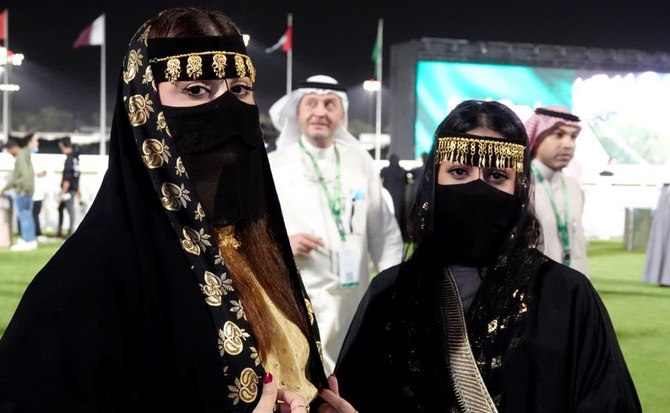
Traditional Najdi dress is characterized by its loose silhouettes, ankle or floor-length hemlines, and decorative embroidery and stitching.
“What’s interesting is how embroidery stitches are universal,” Al-Bassam said. “A stitch founded in the heart of Najd, where women hadn’t encountered other societies or means of communication yet, can also be found in Mexico or Japan — human beings have this sort of telepathy.”
But people in Najd had unique stitches that were named differently than in other parts of the world.
Their names came mostly from the shape produced by the stitch: For example, Jehhah, one of the Arabic words for watermelon, which looks similar to its seeds, or the Sleslah, more commonly known as the chain stitch.
One popular fabric design for women’s clothing in Najdi fashion features gold circles polka-dotted across a solid-base fabric color such as black or green. This is called Daq Al-Lairah, the old Arabic name for gold coins. Other fabrics or styles reference cultural or political moments amid the arrival of radio and television in Saudi Arabia.
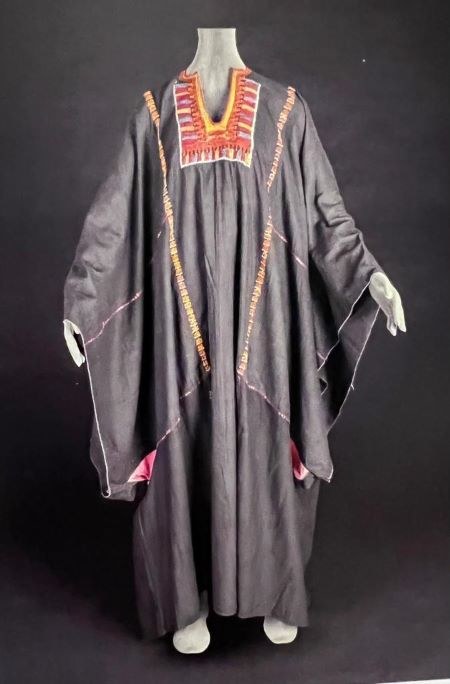
Women also wore thobes, similar to dresses or gowns. These were characterized by their draping silhouette, silk embroidered sleeves and bust. Some were made in green, orange and fuschia fabrics, stitched together in a patchwork style garment and called names including Almutaffat and Almubaddah.
Following the founding of Saudi Arabia in 1932, garments were traditionally made locally and often by hand. Six years later, however, Al-Bassam said there was a significant shift in what locals deemed traditional.
“Because of the discovery of oil (in 1938), women got rid of their cultural heritage in a short period of time and considered it a symbol of poverty,” she said. “The country quickly opened up to the world and foreigners started coming in and mixing with the locals, education began for women, and imports from abroad (arrived), including fashion and clothing in its new forms.”
Years later, traditional heritage enjoyed a resurgence as nostalgia for it grew and national awareness initiatives were held to promote it. One of the most prominent events was the Al-Janadriyah Festival, first organized by the National Guard in 1985. It was a celebration of traditions and customs, and served as an ode to Saudi culture.
“One of the elements (to the fore) was fashion,” Al-Bassam said. “And therefore, we see that heritage’s homecoming was encouraged by governmental sectors that today have really revived our heritage strongly and cemented this through the (formation of the) heritage commission under the Ministry of Culture. This created a place for Saudi fashion.”
Traditional clothing would become staple dress at national and founding day celebrations.
Saudi women would not only teach themselves to read, write and cook, but they would also sew, style and cut their own clothes. Al-Bassam said many women would make their clothing at home using fashion magazines such as Egypt’s Hawwa’a (Eve) to glean the latest trends.
She said fashion in the region was also reinvented amid technological advancements in the industry: It shifted from hand-sewn to machine-made, from embroidery to painting, and from home-made to store-bought.
Historians claim that abayas, which are now considered official female dress, were first introduced 80 years ago.
They were not common at first, as women rarely left the house, but were used when they went to the market. Little girls would wear a traditional headpiece called Al-Bukhnuq when playing outside.
The abaya took on many forms: It was first worn over the head, then transitioned to a shawl-like garment, before being worn over the shoulders during the 1990s — much like today. It was made exclusively in black, and embroidery on the sleeves and the hem was introduced in the early 2000s.
Jeddah fashionistas led the way in creating designs with colored fabrics. They started with muted colors such as gray and navy blue, until brighter colors and designs were normalized and arrived in Najd.
The head abaya is still worn by many Saudis today but is made with much lighter and softer materials.
While an increasing number of Saudi women now wear modern Western styles, the abaya is still a staple in every closet.
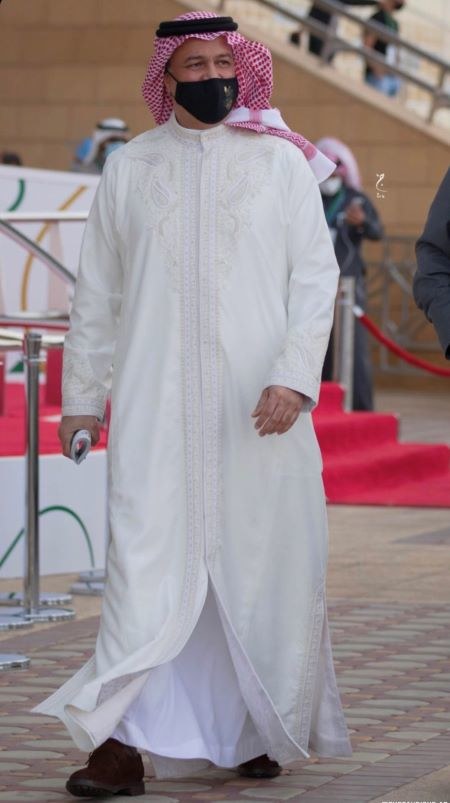
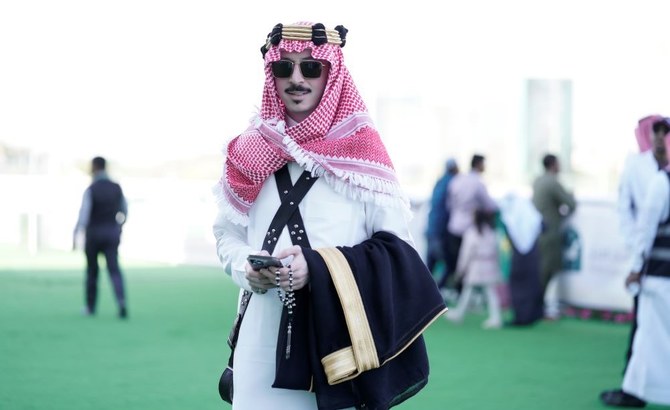
For men, thobes have always been standard and are mandatory in most schools and workplaces. Only recently have trousers pants and T-shirts made their way into Saudi fashion and local brands.
Men’s thobes have over the years developed only in their fit, stitching and material depending on the season, but overall have maintained their authenticity. They are considered suitable dress for any occasion, whether men are at work, out and about or at social gatherings. On formal occasions, it is traditional to accompany the thobe with the shemagh or ghutra, agal and bisht. Some men also wear cufflinks to elevate the look.
“You still see our traditional clothes because our country was never colonized, while in other Arab countries you’ll see them all wearing suits,” Al-Bassam said.
“We must hold on to our traditional clothing because it’s an identity derived from our roots and shapes our unique character as a nation across the globe.”