

Saudi Arabia’s transformation turns it into a must-visit tourism destination

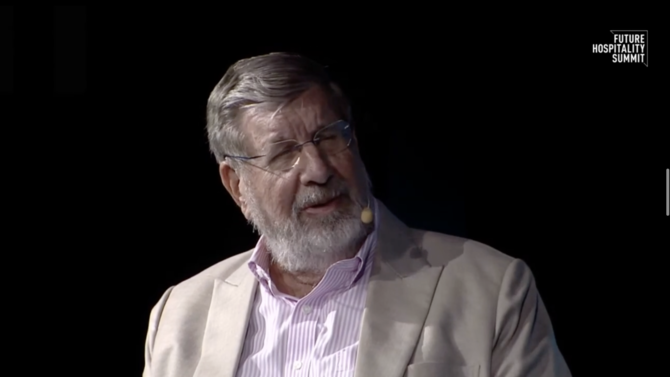
William Heinecke, founder and chairman of Minor Hotels, noted that Saudi Arabia is on the verge of significant change, predicting that the Kingdom will achieve in 10 years what it took Dubai 30 years to accomplish. Screenshot
Short Url
Updated 26 September 2023
Follow

Saudi Arabia’s transformation turns it into a must-visit tourism destination

ABU DHABI: Tourists are expected to add Saudi Arabia to their “bucket list” due to the government’s transformation of the sector, according to industry veteran William Heinecke, founder and chairman of Minor Hotels. 

Speaking during a panel discussion on the second day of the Future Hospitality Summit in Abu Dhabi, Heinecke noted that Saudi Arabia is on the verge of significant change, predicting that the Kingdom will achieve in 10 years what it took Dubai 30 years to accomplish. 

The Kingdom is currently undergoing a remarkable tourism boom, with the sector expanding by 121 percent in 2022, positioning it as the fastest-growing destination in the G20 and surpassing the global average prior to COVID-19, as detailed in an annual report tracking the progress of Vision 2030.   

Data from the real estate consultancy firm Knight Frank revealed that, under Vision 2030, Saudi Arabia’s hotel industry is poised for further expansion, targeting a total of 310,000 hotel rooms by 2030, with an estimated investment of $110 billion. 

Heinecke expressed his admiration for Saudi Arabia’s visionary leader, who is young enough to see through ambitious initiatives. 

“You need someone not only who has the money, but you need someone who has the vision and the passion to stay with it,” he said.  

“When you look at what’s happening in Saudi Arabia, it’s incredible. It’s going to make so many new bucket lists for everybody in the world. And even what’s happened in the Middle East, Dubai, Doha, it's incredible,” Heinecke added.  

In another panel discussion, various factors and trends that are shaping the travel and tourism industry were deliberated. 

Gilda Perez-Alvarado, incoming group chief strategy officer at Accor, a leading hospitality company, highlighted subjects such as innovation, the impact of technology, and broader long-term trends that are affecting the entire ecosystem of travel and hospitality, including hotels.   

“The amount of change we’re witnessing now, which, by the way, was accelerated during the pandemic, is extremely exciting. So, if you ask me what one of the catalysts for change was, it was that,” Perez-Alvarado said during her panel. 

However, she added: “Our industry is still highly fragmented, so there’s plenty of room for growth." 

Perez-Alvarado emphasized that significant changes and developments are taking place in Saudi Arabia that were previously unimaginable. 

“One where you’re seeing things done that no one would have imagined could be done. In 2015, who would have thought that we would have witnessed the changes we’re seeing in Saudi Arabia?” she said. 

Perez-Alvarado concluded by emphasizing that the Middle East is the fastest-growing region, with Saudi Arabia’s Vision 2030 now becoming a reality, demonstrating that ambitious goals can be accomplished, showcasing the region’s ability to turn imaginative ideas into tangible achievements. 


Private sector dynamism driving labor market growth in Saudi Arabia, landmark report says

Updated 4 sec ago
Follow

Private sector dynamism driving labor market growth in Saudi Arabia, landmark report says

RIYADH: A “structural shift” in the Saudi economy has led to the share of citizens employed in the private sector reaching 52.8 percent, surpassing the 51.4 percent target, according to a landmark report.

Prepared in collaboration with the Global Labor Market Conference, World Bank Group and the Kingdom’s Ministry of Human Resources and Social Development, the release titled “A Decade of Progress,” offers an analytical overview of the nation’s job market transformation over the past decade. 

Figures as of the second quarter of 2025 showed the Kingdom was not only ahead of its target for the year for the share of Saudis working in the private sector, but only 5.5 percentage points away from the Saudi Vision 2030 goal of 58.3 percent. 

The analysis also highlights a structural shift in the role of the private sector in Saudi Arabia’s job market, particularly among women.

Strengthening the private sector and enhancing women’s participation in the workforce is a crucial goal outlined in the Kingdom’s Vision 2030 agenda, as the nation is steadily pursuing its economic diversification efforts by reducing its dependence on crude revenues. 

“The private sector is now one of the driving forces behind new job growth in Saudi Arabia, in line with its economic diversification vision. Employment ratios increased as inactive individuals moved into jobs, driving a notable drop in Saudi unemployment and expanding the productive workforce,” said Cristobal Ridao-Cano, practice manager for social protection and labor in the Middle East and North Africa, Pakistan, and Afghanistan at the World Bank. 

He added: “The knowledge attained from Saudi Arabia’s transformation model can be transferred to other countries.” 

The Kingdom has the goal of increasing the share of Saudi citizens employed in the private sector to 58.3 percent by the end of this decade. 

According to the report, the share of employment in micro-enterprises increased from 6 percent in 2015 to 26 percent of total employment by 2025, underscoring the sector’s vitality.

This improvement was supported by a sustained decline in labor market mismatch over the decade, and an increase in education-to-job matching from 41 percent in 2015 to 62 percent in 2025, reducing skills-related barriers to employment. 

“Labor market frictions also declined, reflected in a notable rise in job-to-job transitions and increased labor mobility toward private sector firms,” added the study. 

According to the analysis, the Kingdom witnessed a notable expansion in the productive labor force, driven by an increase in participation to 67.1 percent by 2025. 

Saudi Arabia’s overall unemployment rate recorded a significant decline, reaching 2.8 percent by mid-2025, as increasing numbers of economically inactive individuals moved directly into occupations. 

Female employment increased from 11 percent in 2015 to 32 percent in 2025, while work among mothers rose from 8 percent to 45 percent over the same period.

The employment rate in the category of youth, aged between 18 and 24, increased from 10 percent in 2015 to 33 percent in 2025, while the share of youth not in education, employment, or training declined from 40 percent to 25 percent during the same period. 

The report also highlighted a significant shift in social norms and job search preferences. 

From 2015 to 2025, the share of individuals unwilling to work declined from 49 percent to 12 percent, while the preference gap between the public and private sectors narrowed considerably. 

The share of jobseekers who were exclusively seeking public sector jobs fell from 60 percent to 10 percent for men, and from 48 percent to 22 percent for women.

A large share of jobseekers now target private sector opportunities, reflecting stronger alignment between work preferences and actual job search behavior. 

“Social norms related to women’s employment also shifted substantially. Acceptance of women working in mixed-gender workplaces has increased, directly contributing to higher female employment in private sector companies, expanding opportunities available to women, and strengthening their integration into the labor market,” added the report.