Hilton plans to boost regional presence by more than 125%

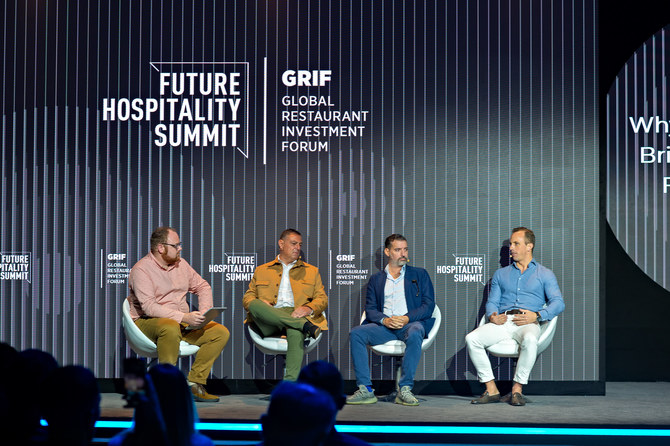
The Future Hospitality Summit is taking place at Hilton Yas Island in Abu Dhabi under the theme ‘Focus on Investment.’ (Photo supplied)
Short Url
Updated 26 September 2023
Follow

Hilton plans to boost regional presence by more than 125%

ABU DHABI: As the travel and tourism industry rebounds in the Middle East post-COVID-19 pandemic, Hilton plans to boost its regional presence by more than 125 percent, according to a statement issued on Monday.

Speaking on the first day of the Future Hospitality Summit in Abu Dhabi, Carlos Khneisser, vice president of development, Middle East and Africa, Hilton, said: “Our multi-brand growth strategy continues to show results, with close to 100 hotels — totaling almost 25,000 rooms — set to open in the Middle East in the near future.”

He said: “We are also proud to be managing an active pipeline, with approximately 70 percent of our Middle East projects currently under construction. We look forward to seeing these hotels come to fruition in the years ahead while continuing to agree on new properties.”

In Saudi Arabia, a key development market, multiple new properties were signed in August, including a Conrad Hotels and Resorts property in Riyadh’s Laysen Valley, two hotels in Abha, and a Canopy by Hilton at the Porta Jeddah Development.

With these signings, Saudi Arabia has become Hilton’s largest pipeline market in Europe, the Middle East, and Africa, and the fourth largest globally.

In Qatar, LXR Hotels & Resorts welcomed The Plaza Doha to its portfolio earlier this year, further strengthening Hilton’s presence in the country. In addition, Hilton celebrated the debut of Waldorf Astoria Hotels and Resorts on the African continent with the opening of Waldorf Astoria Cairo Heliopolis in September.

More openings are expected in the months ahead across a range of brands and countries.


Saudi Arabia exports milk, dairy products worth $1bn in 9 months 

Updated 15 sec ago
Follow

Saudi Arabia exports milk, dairy products worth $1bn in 9 months 

RIYADH: Saudi Arabia’s exports of milk and dairy products reached approximately SR3.9 billion ($1.03 billion) during the first nine months of 2025, according to data released by the General Authority for Statistics and reviewed by Al-Eqtisadiah. 

The agricultural and industrial market for the dairy sector in the Kingdom is estimated at SR22 billion in 2024, according to Saudi Minister of Industry and Mineral Resources, Bandar Al-Khorayef, who spoke at the Saudi Dairy Forum in Al-Kharj. He noted at the time that Saudi Arabia has achieved 129 percent self-sufficiency in dairy products. 

Saudi Arabia’s exports of milk and dairy products in 2024 reached approximately SR4.8 billion, while exports in 2023 amounted to approximately SR4.2 billion, bringing the total export volume for the last three years up to September 2025 to more than SR13 billion. 

The licensed annual production volume of dairy products and infant formula is estimated at more than 29 million bottles, equivalent to 685 million kg and more than 818 million liters. 

Data indicated that the UAE was the largest importer of Saudi products during the three years up to last September, with imports totaling approximately SR4 billion, followed by Kuwait at SR2.6 billion, and Oman at SR1.3 billion as well as Bahrain at SR1.1 billion, Iraq at approximately SR1 billion, Jordan at SR997 million, and Yemen at SR837 million. 

The Zakat, Tax and Customs Authority told Al-Eqtisadiah newspaper that the volume of Saudi exports of dairy products and infant formula during the first half of 2025 reached 296.5 million kg. 

How many dairy and infant formula factories are there in Saudi Arabia? 

The Ministry of Industry and Mineral Resources told Al-Eqtisadiah newspaper that the number of dairy and infant formula production plants in Saudi Arabia reached 218 by the end of the first half of 2025. 

Riyadh and Makkah each have 65 plants, while the Eastern Province has 33, and Madinah has 14. Qassim has 11 plants, Al-Jawf and Tabuk 3 each, Hail and Asir 2 each, and Jazan and Najran 1 each. 

Al-Kharj accounts for more than 70 percent of Saudi Arabia’s dairy production. The protocol signed between Saudi Arabia and China last May approved the export of 13 dairy products, including infant formula. 

Up to 95% of Saudi Arabia’s milk production is certified with the “Saudi GAP” mark 

The Ministry of Environment, Water and Agriculture previously confirmed that 95 percent of Saudi Arabia’s milk production is certified with the “Saudi GAP” quality mark. This step highlights producers’ commitment to applying the highest quality and food safety standards and ensuring that local products conform to national and international standards. 

The Ministry added that the quantity of raw milk produced in specialized dairy farms, according to statistics, reached 2.7 billion liters in 2024. Riyadh led production with 1.6 billion liters, followed by the Eastern Province with 1.1 billion liters. The number of dairy cows in these farms reached 233,000 heads. 

By adopting the certified “Saudi GAP” quality mark, the ministry aims to enhance the reliability of food safety standards and deepen consumer confidence in local products. “Saudi GAP” is one of the ministry’s initiatives aimed at establishing the concept of sustainable agricultural practices and increasing the volume and quality of plant and animal production, thereby supporting the competitiveness of local products and contributing to achieving the goals of Vision 2030.