

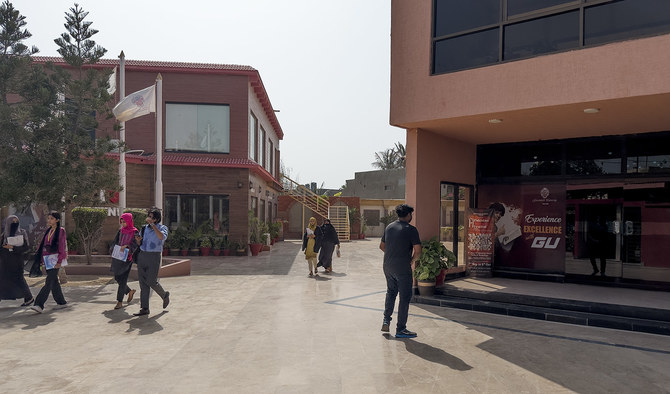

KARACHI: A Pakistani university is set to launch a program that would certify unskilled workers, with its primary focus on enhancing workers’ income levels, especially those employed or seeking employment in the Gulf countries, university officials said.
Titled the Recognition of Prior Learning (RPL) program, Greenwich University Global Institute in Karachi intends to launch the program from next month. According to university officials, the program is designed for Pakistani workers who are equipped with skills but are not certified and hence lose out on better job opportunities. The program’s goal is to enhance their income levels and improve their standard of living.
Gulf countries are an ideal destination for Pakistan’s labor exports, with Saudi Arabia and the UAE alone employing over 73 percent of the country’s migrant workers. Furthermore, this region provided employment to over 90 percent of the 540,282 Pakistani individuals who actively sought job opportunities abroad this year until August 2023, according to data by the Pakistan Bureau of Statistics (PBS).
The South Asian country exported 832,339 workers in 2022 out of which 799,507 or 96 percent were provided job opportunities alone in Saudi Arabia, UAE, Bahrain, Qatar, Oman, Qatar and Kuwait. Out of the total workforce exported during 2022, over 43 percent or 361,105 individuals were unskilled while around 10 percent or 846,60 workers were semi-skilled.
“Our concern at Greenwich Global Institute is that manpower is basically skilled, but they do not have the certifications as the recognition of their prior learning is very important,” Seema Mughal, Greenwich University’s vice chancellor, told Arab News on Saturday.
She said Pakistani workers, especially those living in Gulf countries, were experienced in their craft but did not have the required certification due to which they could not earn more in Pakistan and hence provide an improved standard of living for their families.
RPL will be backed by Pakistan’s provincial technical boards while testing facilities for workers would be available at four locations in Sindh, Punjab and Khyber Pakhtunkhwa (KP) provinces. The program’s data would be available for both local and foreign companies, manpower export promotors, and Pakistani missions abroad to consider, university officials said.
Adnan Paracha, RPL’s project director and an overseas manpower promotor, said the certification would increase employment prospects for Pakistani workers and ensure they derive enhanced salary packages.
“Right now, unskilled workers are getting around 1,000 Riyals or Dirhams in the Gulf states and through this certification, they will be verified and would be able to draw 1,500 to 1,800 Saudi Riyals or Dirhams and they will be categorized as skilled workers,” Paracha told Arab News.
He said the demand for skilled workforce would continue to grow in Saudi Arabia in the coming years as the Kingdom continues to consolidate its economy along modern lines under its Vision 2030 plan, a strategic development framework intended to cut Saudi Arabia’s reliance on oil.
“At present, Saudi Arabia is our main workforce export destination and the trend will continue as the Kingdom plans to pump over $500 billion for the construction of new cities and required infrastructure,” Paracha added.
Mughal and Paracha both expressed confidence that the certification program would also translate into a significant boost in remittances for Pakistan. The South Asian country relies heavily on remittances to keep its cash-starved economy afloat. According to official data by Pakistan’s central bank, the South Asian country received $27 billion in remittances during the outgoing fiscal year, FY23.
Saudi Arabia and the UAE remained the top contributors of money sent home by Pakistani workers during FY23.


