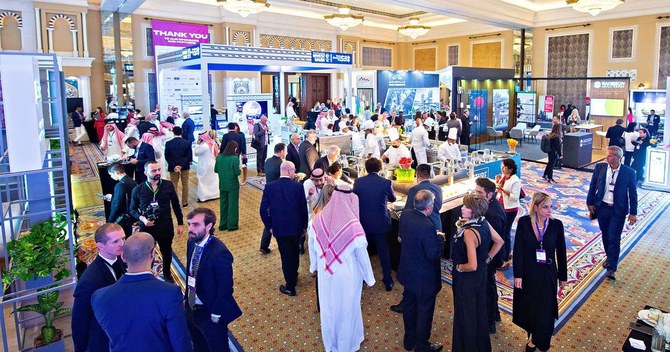

RIYADH: Principles related to environmental, social, and governance are top of the agenda as top names in the hospitality sector meet in Abu Dhabi for the Future Hospitality Summit on Sept. 26.
From increased calls on climate action in the tourism and hospitality sector to Dubai hosting the COP28 this winter, most of the discussions at this year’s event are expected to be centered around measures to reduce the industry’s carbon footprint.
According to the World Travel and Tourism Council, the sector contributes up to 11 percent of the total emissions in the world, and this figure is predicted to double by 2050.
With this in mind, industry leaders and most of the key players in the sector have already taken measures to ensure a greener future
Sustainability factor
Haitham Mattar, managing director of India, Middle East and Africa at IHG Hotels and Resorts, believes the tourism and hospitality sectors play a pivotal role in working toward a sustainable future.
“At IHG, we embrace our responsibility and opportunity to make a positive difference and (are) helping to shape the future of responsible travel,” said Mattar.
He added: “We are determined to contribute toward positive social and economic change, to stand up for key issues such as diversity, equity and inclusion, and human rights, and to make more responsible environmental choices.”
Mattar said IHG is working toward reducing carbon emissions, along with eliminating single-use items and moving to reusable and recyclable alternatives, as well as reducing the food waste from its hotel chain.
Jonathan Brown, chief portfolio officer of Miral Group, the host sponsor of FHS, believes the path to sustainability across the UAE’s leisure, entertainment, and tourism industry has been emboldened by a national strategy accentuating clean energy sources together with net-zero objectives.
Brown said: “Our ambition to accelerate the realization of the Emirate’s tourism growth and contribute to the industry’s ecosystem underpinned by a commitment to creating value for our customers, partners, and society, and positively impacting the communities in which we operate.”
He added: “Ultimately, the key to balancing growth with sustainable development lies in collective action, strategic partnerships, and long-standing investments.”
Richard Williamson, chief operating officer of Considerate Group, said the interest and investments surrounding ESG principles in the hospitality sector have picked up pace in recent years, and are a significant part of the agenda at events such as FHS.
“In 2023, we more often find a chief sustainability officer owning the agenda, with a dedicated ESG budget. Our role has evolved so that we now habitually provide advice and support to the CSO,” said Williamson.
He added: “This reflects the change in ESG engagement moving from a warm, slightly ‘wooly’ industry, to a more quantitative, data-led stage.”
Williamson believes the ESG evolution in the hospitality sector is being driven by four crucial factors: tightening regulations, stakeholder reporting requirements, asset-level carbon footprint analysis, and climate risk and resilience.
Fahad Abdulrahim Kazim, CEO of Millennium Hotels & Resorts, echoed those views and noted the hospitality industry’s investment in ESG and sustainability is becoming increasingly robust and essential.
“We are witnessing a significant shift as more hotels and resorts recognize the long-term benefits of incorporating environmental, social, and governance considerations into their business strategies,” said Kazim.
The executive added that industry leaders in the hospitality sector are steadily adopting energy efficient technologies, waste reduction initiatives, community engagement programs, and responsible sourcing practices.
“As consumer preferences align more with sustainable choices, the hospitality sector’s commitment to ESG is not just a trend but a necessary path to secure a greener and more resilient future,” Kazim noted.
Millennium Hotels & Resorts aims to reduce environmental impact through sustainable practices, including a reduction in single-use plastics, Kazim added.
“We seek to establish and nurture long-term relationships with residents and organizations by supporting local small and medium-sized enterprises. At Millennium Hotels & Resorts, we remain dedicated to leading this charge and setting a strong example for sustainable hospitality practices,” he said.
Kazim further pointed out that the biggest priority in the hospitality sector is striking the right balance between exceptional guest experiences and minimizing the environmental footprint.
Radisson Hotel Group’s Vice President of Business Development Elie Milky noted that the hospitality sector is witnessing a paradigm shift from sustainability being a “nice-to-have” to a fundamental core value.
“Investments in ESG reflect our ethical responsibilities and become vital for business resilience and long-term success,” said Milky.
He added: “As an industry that primarily revolves around physical locations, buildings, and transportation, we have a significant role in driving forward green building practices, efficient energy consumption, and sustainable transportation solutions for our guests.”
Paul Stevens, chief operating officer of the premium, midscale and economy division for Middle East, Africa and Turkiye at Accor, said the company has been a pioneer in bringing sustainable development to the hospitality industry for more than 30 years.
“We drive transformation by collaborating closely with our hotel owners, partners and stakeholders to embed sustainability across all activities, making a positive impact on people and nature, which are two fundamentals at the core of our practices,” added Stevens.
According to the executive, the sustainable transition is not only just a strategic priority but is a fundamental necessity.
“ESG practices are no longer optional; they have evolved into essential requirements for staying competitive, attracting guests, and maintaining long-term viability,” he said.
Possible challenges
Talking about the challenges faced by the hospitality sector while reducing sustainability, IHG Hotels’ Mattar noted the most crucial to tackle is the lack of standardization.
He said: “For governments to set ESG targets, industry level standards are pivotal to mandate across different areas of sustainability. As an industry, standardization is a recurring topic of importance that appears in virtually every conversation, as well as across customer forums.
Mattar added: “It is the need of the hour for governments, businesses and trade bodies to harmonize efforts and as a result, maintain effective tourism and hospitality ESG standards.”
Stevens believes the hospitality sector faces intricate challenges when it comes to the development and execution of ESG strategies and deviating from traditional ways of doing things.
“The strategies are not one-size-fits-all solutions, each destination possesses its own unique challenges and opportunities, demanding a customized approach,” added Stevens.