TEHRAN: An Iranian court has sentenced to death a Tajik man convicted over carrying out a deadly gun attack on a Shiite Muslim shrine in August, the judiciary said Thursday.
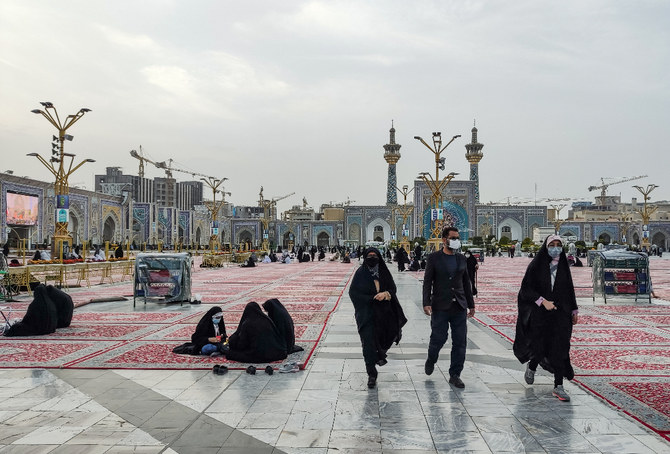
The attack on the Shah Cheragh mausoleum in Shiraz, capital of Fars province in Iran’s south, came less than a year after a mass shooting at the same site that was later claimed by the Daesh group.
Nine suspects — all of them foreigners — were arrested after the August 13 attack, which killed two people and wounded seven others.
The convicted attacker, identified as Rahmatollah Nowruzof from Tajikistan and described as an Daesh member, was handed two death sentences, the judiciary’s Mizan Online website reported.
He was convicted on charges of “moharebeh,” or waging war against God, as well as “sedition and collusion against the security of the country,” the website said.
Two other men were sentenced to five years in prison and deportation from the country over “participating in gatherings and collusion with the intention of disrupting the country’s security,” it added.
Footage and pictures published following the attack showed windows shattered by bullets, and blood staining the ground in a courtyard of the arched and colonnaded complex.
The European Union and several countries including Iraq, Russia and France condemned the shooting and expressed their condolences.
In October 2022, a mass shooting at the shrine left 13 people dead and 30 wounded. Daesh later claimed the attack.
Iran hanged two men in public on July 8 over the killings after their conviction for “corruption on earth, armed rebellion and acting against national security,” Mizan said at the time.
London-based rights group Amnesty International says Iran executes more people than any other country except China and hanged at least 582 people last year, the highest number since 2015.
The Shah Cheragh mausoleum is home to the tomb of Ahmad, brother of Imam Reza — the eighth Shiite imam — and is considered the holiest site in southern Iran.

Iran sentences to death Tajik over Shiite shrine attack
Short Url
https://arab.news/yqdkt
Iran sentences to death Tajik over Shiite shrine attack
- Nine suspects — all of them foreigners — were arrested after the August 13 attack
- The convicted attacker, identified as Rahmatollah Nowruzof from Tajikistan and described as an Daesh member, was handed two death sentences
Israel begins demolishing residential buildings in West Bank camp
- The 25 buildings were home to about 100 families in the Nur Shams refugee camp
- Israeli military claims demolitions are part of effort to root out armed groups in northern areas of the territory
NUR SHAMS, occupied West Bank: Israeli bulldozers began demolishing 25 buildings housing Palestinians in a refugee camp on Wednesday, in what the military said was an effort to root out armed groups in northern areas of the occupied West Bank.
The buildings, home to some 100 families, are in the Nur Shams camp, a frequent site of clashes between Palestinian militants and Israeli forces.
Israeli military bulldozers and cranes tore through the structures early Wednesday, sending thick plumes of dust into the air, an AFP journalist reported. Many residents watched from a distance.
The military said the demolitions were part of an operation against militants.
“Following ongoing counterterrorism activity by Israeli security forces in the area of Nur Shams in northern Samaria, the commander of the Central Command, Major General Avi Bluth, ordered the demolition of several structures due to a clear and necessary operational need,” the military told AFP in a statement.
“Areas in northern Samaria have become a significant center of terrorist activity, operating from within densely populated civilian areas.”
Earlier this year, the military launched an operation it said was aimed at dismantling Palestinian armed groups from camps in northern West Bank — including Nur Shams, Tulkarem and Jenin.
“Even a year after the beginning of IDF operations in the area, forces continue to locate ammunition, weapons, and explosive devices used by terrorist organizations, which endanger IDF soldiers and impair operational freedom of action,” the military said on Wednesday.
Earlier in December, AFP reported residents of the targeted buildings retrieving their belongings, with many saying they had nowhere to go.
The demolitions form part of a broader Israeli strategy aimed at easing access for military vehicles within the densely built refugee camps of the West Bank.
Israel has occupied the Palestinian territory since 1967.
Nur Shams, along with other refugee camps in the West Bank, was established after the creation of Israel in 1948, when hundreds of thousands of Palestinians were displaced from their homes in what is now Israel.
With time, the camps they established inside the West Bank became dense neighborhoods not under their adjacent cities’ authority. Residents pass on their refugee status from one generation to the next.
Many residents believe Israel is seeking to destroy the idea of the camps themselves, turning them into regular neighborhoods of the cities they flank, in order to eliminate the refugee issue.
The buildings, home to some 100 families, are in the Nur Shams camp, a frequent site of clashes between Palestinian militants and Israeli forces.
Israeli military bulldozers and cranes tore through the structures early Wednesday, sending thick plumes of dust into the air, an AFP journalist reported. Many residents watched from a distance.
The military said the demolitions were part of an operation against militants.
“Following ongoing counterterrorism activity by Israeli security forces in the area of Nur Shams in northern Samaria, the commander of the Central Command, Major General Avi Bluth, ordered the demolition of several structures due to a clear and necessary operational need,” the military told AFP in a statement.
“Areas in northern Samaria have become a significant center of terrorist activity, operating from within densely populated civilian areas.”
Earlier this year, the military launched an operation it said was aimed at dismantling Palestinian armed groups from camps in northern West Bank — including Nur Shams, Tulkarem and Jenin.
“Even a year after the beginning of IDF operations in the area, forces continue to locate ammunition, weapons, and explosive devices used by terrorist organizations, which endanger IDF soldiers and impair operational freedom of action,” the military said on Wednesday.
Earlier in December, AFP reported residents of the targeted buildings retrieving their belongings, with many saying they had nowhere to go.
The demolitions form part of a broader Israeli strategy aimed at easing access for military vehicles within the densely built refugee camps of the West Bank.
Israel has occupied the Palestinian territory since 1967.
Nur Shams, along with other refugee camps in the West Bank, was established after the creation of Israel in 1948, when hundreds of thousands of Palestinians were displaced from their homes in what is now Israel.
With time, the camps they established inside the West Bank became dense neighborhoods not under their adjacent cities’ authority. Residents pass on their refugee status from one generation to the next.
Many residents believe Israel is seeking to destroy the idea of the camps themselves, turning them into regular neighborhoods of the cities they flank, in order to eliminate the refugee issue.
© 2025 SAUDI RESEARCH & PUBLISHING COMPANY, All Rights Reserved And subject to Terms of Use Agreement.


